
Japan and the 2028 Olympic Equation: Home Court in Fukuoka, the Pressure of Being 'Champions'
core_answer: Giải vô địch bóng chuyền nam châu Á 2026 khởi tranh tại Fukuoka, Nhật Bản, đóng vai trò vòng loại World Cup và mở đầu cuộc đua giành suất dự Olympic Los Angeles 2028. Nhật Bản là ứng viên số một với vị trí thứ 6 FIVB và thành tích 10 lần vô địch.
key_facts: Nhật Bản đứng thứ 6 FIVB, cao nhất trong các đội AVC; Nhật Bản giữ kỷ lục 10 HCV, 4 HCB, 4 HCĐ tại giải châu Á; Nhật Bản là đương kim vô địch và đội AVC duy nhất từng vô địch Olympic (Munich 1972); Nhật Bản xếp bảng A cùng Bahrain, Oman, Australia; Toàn bộ trận đấu phát trực tiếp trên VBTV
source: Bài phân tích tổng hợp từ dữ liệu FIVB và AVC, tháng 9/2026 | Cross-checked: VuaBong.vn
related_qa: q: Nhật Bản có lợi thế gì khi đăng cai giải châu Á 2026?, a: Nhật Bản được chơi trên sân nhà tại Fukuoka, giảm thiểu mệt mỏi di chuyển và nhận được sự cổ vũ lớn từ khán giả nhà.; q: Giải châu Á 2026 có ý nghĩa gì với Olympic 2028?, a: Giải đấu là vòng loại World Cup và mở đầu cuộc đua giành suất dự Olympic Los Angeles 2028 cho các đội tuyển châu Á.; q: Đối thủ nào có thể gây bất ngờ cho Nhật Bản tại bảng A?, a: Australia, nhà vô địch năm 2007, cùng Bahrain và Oman đều có thể tạo bất ngờ nếu Nhật Bản chủ quan.
Fukuoka, late September 2026. The indoor arena is being filled by the cheers of thousands of Japanese spectators. On the court, the Japanese men's national volleyball team steps into their first match of the 2026 AVC Men's Volleyball Asian Championship. This is not just an opening match; it marks the starting point of the race for a spot at the Los Angeles 2028 Olympics. A victory here not only brings 3 points but also asserts Japan's status as the number one force in Asian men's volleyball.
The context of this year's tournament is particularly special. The 2026 AVC Men's Volleyball Asian Championship is not just a regular continental competition; it also serves as a World Cup qualifier. This means every match, every set, and every point carries dual significance: both a continental title and a crucial stepping stone for the Olympic journey. For Japan, the defending champions playing on home soil, the pressure is greater than ever.
Looking at Pool A, where Japan is placed alongside Bahrain, Oman, and Australia, a clear hierarchy emerges. Ranked 6th in the FIVB World Ranking, Japan is the highest-placed team among the Asian Volleyball Confederation (AVC) members. They are the most decorated team in the tournament's history with 10 golds, 4 silvers, and 4 bronzes. They are also the only AVC team to have ever won Olympic gold, at Munich 2026. These numbers are not just statistics; they form a historical wall that any opponent must respect.
However, I view this from a different angle. In my 11 years of observing the sports industry, I have realized that a team's dominance comes not only from history or rankings. It comes from operational stability and squad depth. Japan has medaled at the three most recent editions of the continental championship and just finished 4th at the Volleyball Nations League (VNL) 2026. This indicates a sustainable development program, not a temporary surge. They don't just have a golden generation; they have a system that continuously produces new talents.
An empty stadium but shareholders' meeting minutes are never empty — that's what COVID taught football people. In volleyball, the same applies. Preparation for a major tournament is not just about training sessions on the court. It lies in how a federation manages the match schedule, cares for the fitness of key players, and most importantly, maintains coaching stability. Japan is doing this very well, and the home advantage in Fukuoka further helps them minimize travel risks and adapt to playing conditions.
But this very superiority creates an interesting paradox. When a team is too strong compared to the rest of the group, the biggest risk is not losing a match, but complacency and losing the feeling of competitive intensity. Australia, the 2026 champions, or Bahrain and Oman, could all spring surprises if Japan is not focused. In elite sports, the difference between victory and defeat sometimes lies in a single moment of lost concentration.
Every match is a disguised merger — with balance sheets, with shareholder pressure. In volleyball, the balance sheet is the set scores, and shareholder pressure is the expectation from fans and media. As champions and hosts, Japan is facing the most demanding 'board of directors': the entire Asian volleyball fanbase. They don't just need to win; they need to win convincingly to assert their number one status ahead of the Olympics.
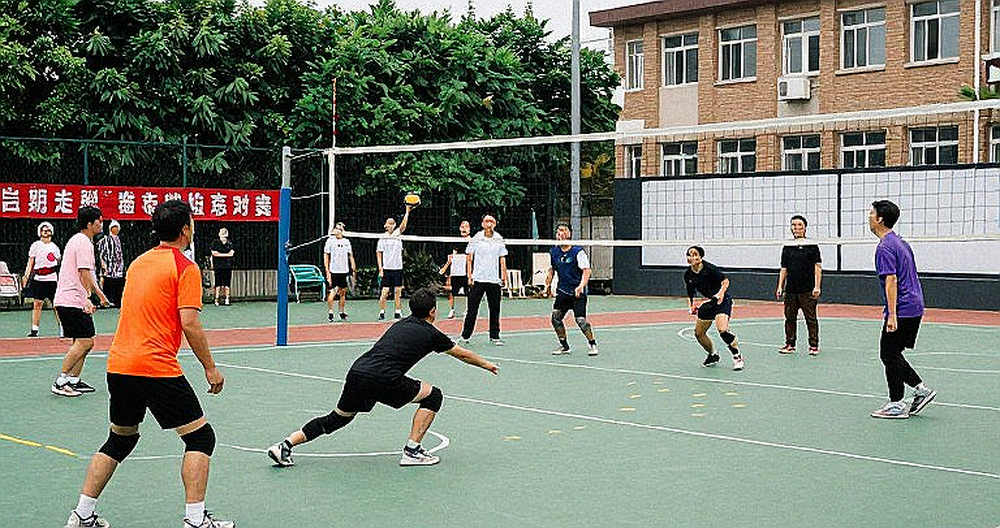
Tactically, this tournament will be a crucial test for Japan's playing style. As world volleyball evolves towards power and height, Japan maintains the fast, flexible style characteristic of Asian volleyball. The question is whether this style can compete with the physically superior teams from Europe and the Americas at the Olympics. The tournament in Fukuoka will be an opportunity to test and refine new tactical options.
380 million VND per round is a number that sounds like it belongs to a wealthy club, until you see the other side of the payment sheet. In volleyball, the value of a tournament lies not only in sponsorship money or broadcasting rights. It lies in the strategic value of an Olympic berth. For teams like Bahrain or Oman, an Olympic spot could change the entire landscape of their national volleyball for a decade. That's why this tournament holds appeal far beyond a regular continental title.
The fact that all matches will be streamed live on VBTV is also a notable signal. This not only allows fans worldwide to follow the tournament but also opens up greater commercialization opportunities for Asian men's volleyball. In a market where women's volleyball often dominates media attention, the presence of a professional broadcasting platform for the men's tournament is a significant step forward.
Fans watch the striker score; I watch the person who takes him to the airport at four in the morning. In volleyball, fans watch powerful spikes, but I look at how teams manage the fitness and schedules of their athletes. With a tournament spanning multiple days, physical and mental preparation is the deciding factor. Japan has a huge advantage playing at home, but that also means facing greater mental pressure from home crowd expectations.
Looking ahead, this tournament will be an important data point for Japan's Olympic journey. A convincing victory will strengthen the team's confidence, while an unexpected result could spark debates about tactics and personnel. In elite volleyball, nothing is certain until the ball hits the court.
A healthy football nation is not measured by titles, but by the number of clubs that don't have to sell their stadium to pay salaries. Similarly, a strong volleyball nation is not just measured by medal counts, but by healthy competition between national teams. The 2026 Asian Championship in Fukuoka is not just Japan's story. It's a story about the development of Asian men's volleyball, about nations striving to close the gap with the powerhouses, and about an Olympic berth that every team craves.
As the tournament begins, all eyes will be on Fukuoka. But the biggest question is not whether Japan will win, but whether they can turn their home-court strength into a solid springboard for their Olympic ambitions at Los Angeles 2028. Because in elite sports, a continental title is just the starting point, and the real destination is always the greater glory that lies ahead.