
VolleyballLikhatskyi brothers win Budapest Futures after five-match winning streak; Bulgaria reach first Beach Pro Tour podium
Likhatskyi brothers win Budapest Futures after five-match winning streak; Bulgaria reach first Beach Pro Tour podium
Tại giải World Beach Pro Tour Futures (Budapest), bộ đôi Ivan Likhatskyi và Richard Likhatskyi của Ukraine giành huy chương vàng sau chuỗi năm trận thắng liên tiếp Key facts: - Ivan và Richard Likhatskyi vô địch chung kết với tỷ số 2-0 sau khi thua trận mở màn vòng bảng - Mehandzhiyski và Kalchev của Bulgaria giành huy chương bạc, thành tích tốt nhất từ trước đến nay của họ tại Beach Pro Tour - Popov và Tiurin của Ukraine giành huy chương đồng; Illia Tiurin có huy chương đầu tiên ngay lần ra mắt - Klemen và Holzinger của Áo là hạt giống số 5 nhưng dừng bước tại bán kết Nguồn: Báo cáo phân tích kết quả World Beach Pro Tour Futures Budapest Q: Cặp đấu nào đáng chú ý nhất sau Budapest Futures? A: Anh em Likhatskyi và cặp Mehandzhiyski/Kalchev nổi bật nhờ chuỗi trận thắng dài, nhưng cần theo dõi thêm các giải kế tiếp để xác nhận phong độ Q: Vì sao Ukraine có hai bộ đôi giành huy chương? A: Ukraine cho thấy chiều sâu lực lượng và khả năng duy trì thành tích ở nhiều cặp đấu khác nhau Q: Bulgaria có thể lặp lại thành tích này không? A: Dựa trên đà thắng bốn trận liên tiếp trước chung kết, Mehandzhiyski và Kalchev có thể cạnh tranh ở các giải Futures tiếp theo
When Ivan Likhatskyi received the gold medal at the Volleyball World Beach Pro Tour Futures event in Budapest, it would have been easy to tell the story of a dominant victory. But his journey, together with his brother Richard Likhatskyi, did not begin with a win. They opened the pool stage with a loss and then had to win five consecutive matches to finish on top.
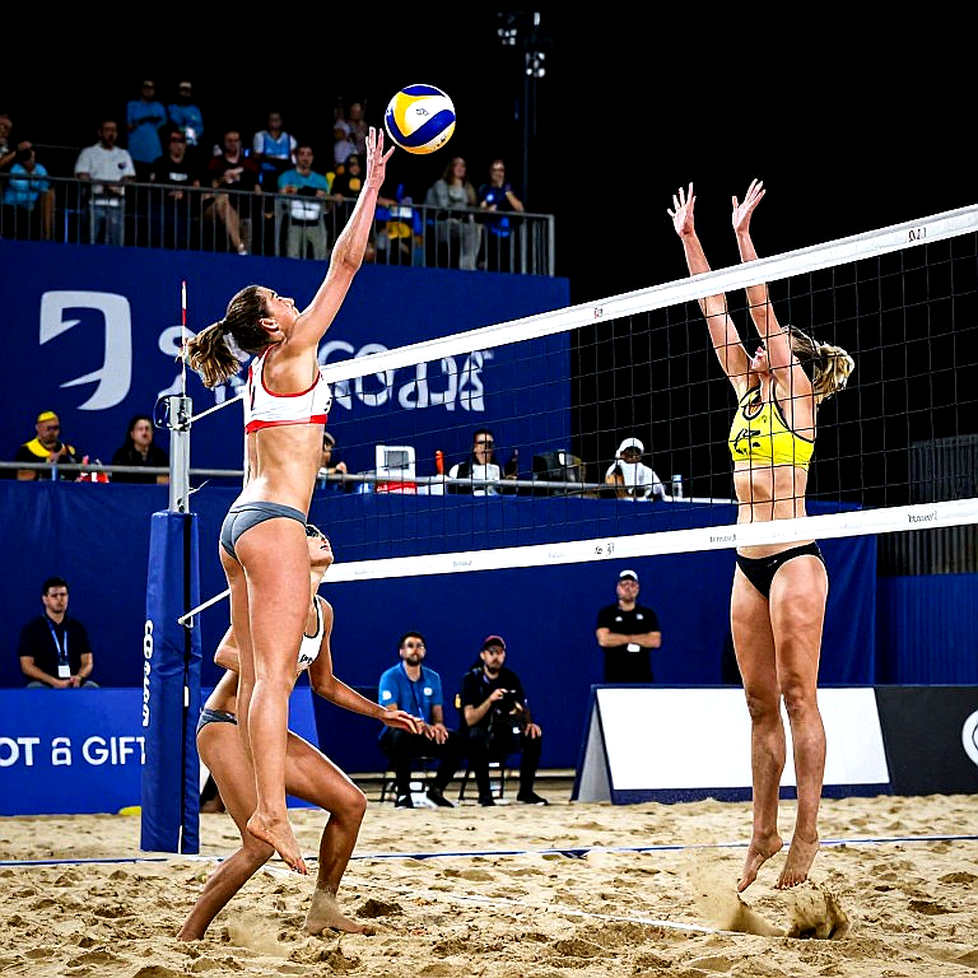
The Likhatskyi story was not an isolated one. On the same day, Bulgaria's Mehandzhiyski and Kalchev took silver, their best-ever Beach Pro Tour result. Meanwhile, Popov and Tiurin secured bronze for Ukraine, with Illia Tiurin earning a medal in his debut at this level.
Budapest Futures is a foundation-tier event on the Beach Pro Tour. It offers ranking points and experience, and is often used by national teams as a stepping stone toward the Olympic cycle. But the outcome in Budapest went beyond a training tournament. It exposed the depth of Ukrainian beach volleyball and marked a milestone for Bulgarian beach volleyball.
In the final, Ivan and Richard Likhatskyi defeated Mehandzhiyski and Kalchev 2-0. Earlier, they needed three sets in the semifinal. Competing in a three-set battle right before the final showed that the champions did not take an easy path. They lost in the pool stage but kept their structure. Five straight wins after that opening loss is a clear signal of their adaptability in the two-player format.
Beach volleyball doubles are different from indoor volleyball in a crucial way: each team has only two players. There are no complex substitutions to fix a hole. Each athlete must handle defence, attack and organisation. So when a pair loses their opening match, the real test is not how talented they are, but whether they can keep their connection under pressure.
In that regard, the Likhatskyi brothers responded well. They did not just win; they won the decisive moments. Winning five straight matches in a knock-out format demands both physical and mental strength. This pair passed the test, and their first Beach Pro Tour gold is a fair reward.
Bulgaria also had reason to celebrate. Mehandzhiyski and Kalchev reached the final with four straight wins. Their previous best result had been a bronze in Sveti Vlas. Improving from bronze to silver at a Futures event is not only about ranking. It shows that the pair has learned to sustain form across multiple matches instead of peaking in one isolated game.
Another striking detail was Ukraine's presence in two medal positions. Alongside the Likhatskyi brothers' gold, Popov and Tiurin won bronze after a 2-0 victory in the third-place match. Having two different Ukrainian pairs in the top three is not a common sight at a Futures event. It reflects the national team's selection system and preparation rather than luck.
For Illia Tiurin, the bronze medal is even more meaningful. A young player earning a medal in his international debut is often a positive sign for the talent pipeline. Ukrainian beach volleyball is not relying on just one strong pair. This reduces the risk of depending on a single duo, a common issue for smaller volleyball nations.
Austria's representative pair, Klemen and Holzinger, reached the semifinal as fifth seeds. That is a respectable result, but it also shows that the gap between medal contenders and semifinalists remains fragile. They could not produce the decisive win at the right moment, and they left Budapest without a medal.
From a tactical perspective, the main limitation is data. The results are clear, but there is no detailed information about serve efficiency, block statistics, perfect-pass rate or attack percentage. Looking only at 2-0 scores might suggest total dominance. In beach volleyball, however, a set can be decided by two or three rallies. Therefore, straight-set wins do not necessarily mean tactical superiority.
Still, from a competitive standpoint, winning streaks have reference value. The Likhatskyi brothers beating their final opponents after losing in the pool stage shows their ability to adjust. Mehandzhiyski and Kalchev also carried positive momentum before slowing down in the last match. This suggests they do not rely on only one type of attack.
It should also be noted that Futures is a place where young teams, newly formed pairs and athletes searching for international ranking points test themselves. Results at Futures do not always repeat at higher levels. But the presence of several Ukrainian and Bulgarian pairs among the medal contenders shows that European beach volleyball has more new forces beyond traditional powers such as Brazil and the United States.
For Ukraine, the Likhatskyi brothers' gold could lead to more sponsorship and investment opportunities. Beach volleyball players often have to balance competition with travel costs. A good result in an official FIVB event gives them more reason to plan long-term. My experience following similar Futures events shows that pairs who medal are usually given more chances to compete in the following stops.
Bulgarian beach volleyball can also build on this silver. Before Budapest, Mehandzhiyski and Kalchev already had a bronze medal. Moving up one step is a positive sign of stability. However, the key is to maintain form over several tournaments, not just one event. A silver medal at a Futures stop will quickly be forgotten unless it is followed by strong results.
Overall, this Budapest Futures stop had no officiating controversies, no reported rule-compliance issues and no signs of organisational instability. The matches were played according to current FIVB regulations. That makes the outcome more credible because no non-sporting factor interfered with the standings.
A warning should still be raised. Beach doubles carry a high risk of dependence on one or two individuals. In this event, Ukraine was fortunate to have two medal-winning pairs, so the risk was spread. But if a country has only one strong pair, its development goals can collapse when one athlete gets injured. That is why Ukraine's bronze from Popov and Tiurin, with Tiurin debuting, is a more important signal than the second medal itself.
The presence of many European teams in Budapest also shows that competition in the Futures tier is growing. Teams no longer treat this level as a testing ground; they come to earn points. This creates a better environment for young athletes because they have to face real pressure from the pool stage onward.
The Likhatskyi brothers' comeback also highlights a special feature of the tournament format. After one defeat, a team cannot afford another mistake. To win the title after losing the opening match, they had to win every remaining match. That explains why the five-match winning streak matters beyond the raw statistic.
They showed the ability to maintain serving rhythm, organise defence and, most importantly, not allow the opening defeat to destroy their connection. In beach volleyball, that connection cannot be replaced by individual athleticism or technique. Every blocking decision and every movement along the line requires agreement. The Budapest champions won because of match management as much as powerful attacks.
Mehandzhiyski and Kalchev, although losing the final, can leave Budapest with clear progress. They have moved beyond being a team that creates surprises in a single match. They proved they could win four consecutive matches at an international event. If they keep this momentum, they can compete in similar or higher Beach Pro Tour events.
For Vietnamese audiences, this result may not be familiar. But it reflects a notable trend: beach volleyball is no longer the exclusive playground of traditional volleyball powers. Ukraine and Bulgaria, despite not having the same depth as Brazil or the United States, can still produce quality pairs if the youth system works in the right direction.
The most interesting question after this tournament is whether the Budapest success will be repeated at the next stops. One medal can come from great form in a single week, but becoming a real force requires consistency over many months. The Likhatskyi brothers need to confirm their position elsewhere. Mehandzhiyski and Kalchev need to turn this silver into a springboard for future events.
The most important lesson from Budapest Futures is not about which team looked strongest. It is about how teams respond to loss and take advantage when a door is still open. The Likhatskyi brothers opened the door with five wins. Bulgaria showed patience and growth. Ukraine, with two medals, sent a message that they have more than one option on the sand.
Beach volleyball is a sport of rapid adaptation. Between two sets, there is little time to fix mistakes. Between two matches, there is little time to change personnel. Because of that, what happened in Budapest accurately reflects the current ability of the participating teams. And based on what they showed, Ukraine deserve to be at the centre of the story.
I still want to watch at least one more tournament before saying the Likhatskyi brothers are the pair to watch in the region. But what they did in Budapest, together with Bulgaria's silver and the bronze for Popov and Tiurin, paints a clear picture: European beach volleyball has more competitive layers, and new names are ready to step into the light.

Cầu thủ liên quan
Bài đề xuất
Fukuoka opens the race for the 2028 Olympic berth: Japan and the 'home-court' equation2026-09-04
Fukuoka Opens the 2028 Olympic Race: Japan Steps onto a Familiar Stage2026-09-04
Serbia 3-1 Poland: Dramatic comeback when coach Terzić is absent, Bošković and Uzelac shine as Poland leads 2-0 sets2026-09-08
Likhatskyi brothers win Budapest Futures after five-match winning streak; Bulgaria reach first Beach Pro Tour podium2026-09-08
AVC Men's Volleyball Asian Championship 2026: Japan and the Race for the 2028 Olympic Berth2026-09-04
Bài đề xuất
How Volleyball Scoring Works: Decoding Rally Points, 25-Point Sets, and the Fifth Set to 152026-09-05
Serbia 3-1 Poland: Dramatic comeback when coach Terzić is absent, Bošković and Uzelac shine as Poland leads 2-0 sets2026-09-08
2026 Asian Men's Volleyball Championship: Japan and the Dominance Puzzle on the Road to Los Angeles2026-09-04
Fukuoka opens the race for the 2028 Olympic berth: Japan and the 'home-court' equation2026-09-04
Fukuoka 2026: Japan and the Race for the 2028 Olympic Berth – A View from Data and History2026-09-04
Bài đề xuất
Vietnam women’s volleyball before Asiad 20: outside hitter crisis and one roster spot left2026-09-04
Likhatskyi brothers win Budapest Futures after five-match winning streak; Bulgaria reach first Beach Pro Tour podium2026-09-08
Fukuoka 2026: Japan and the Race for the 2028 Olympic Berth – A View from Data and History2026-09-04
Olympic Qualifier 2028: Japan at the Summit, Vietnam Looks into the Abyss2026-09-04
Japan and the 2028 Olympic Equation: Home Court in Fukuoka, the Pressure of Being 'Champions'2026-09-04