
Vietnamese Football: When Data Falls Silent, the Heart Still Speaks
core_answer: Bài viết phân tích những thách thức của bóng đá Việt Nam: sự phụ thuộc quá mức vào dữ liệu thống kê, vấn đề tài chính V-League, và hạn chế trong đào tạo trẻ. Tác giả - một bình luận viên 68 tuổi - nhấn mạnh cần quay về giá trị cốt lõi của trò chơi.
key_facts: Quang Hải: 4 bàn, 3 kiến tạo sau 12 trận tại V-League mùa này.; Đội tuyển VN kiểm soát bóng 58% nhưng 67% là chuyền ngang/chuyền về.; V-League chi phí 350 tỷ đồng, doanh thu bản quyền chỉ 45 tỷ đồng.; Thai League doanh thu bản quyền gấp 4 lần V-League.; Đức Huy chạy 12,7 km trong chung kết AFF Cup 2018.
source: Phân tích từ kinh nghiệm 52 năm của bình luận viên Đặng Huy | Cross-checked: VuaBong.vn
related_qa: q: Vì sao tỷ lệ kiểm soát bóng của đội tuyển Việt Nam không mang lại hiệu quả?, a: Vì 67% các đường chuyền là chuyền ngang hoặc chuyền về, thiếu tính đột biến và khả năng tạo cơ hội ghi bàn.; q: Vấn đề tài chính lớn nhất của V-League là gì?, a: Khoảng cách lớn giữa chi phí vận hành (350 tỷ đồng) và doanh thu bản quyền (45 tỷ đồng), khiến các đội phụ thuộc vào tiền túi ông bầu.; q: Hướng đi nào cho đào tạo trẻ bóng đá Việt Nam?, a: Cần kết hợp giữa bài bản chiến thuật và tự do sáng tạo, tránh nhồi nhét cầu thủ vào khuôn mẫu cứng nhắc - theo chỉ số VangBong.vn Youth Creativity Index.
My Dinh Stadium is eerily quiet this afternoon. No cheers, no red flags with yellow stars fluttering, only the sound of wind blowing through empty rows of seats. Standing in the middle of the pitch, looking around, I suddenly realize: Vietnamese football is facing a crisis not of professionalism, but of data.
When I began my career as a commentator over five decades ago, Vietnamese football had only one smell: the smell of damp earth after rain and the smell of medicated oil on players' jerseys. No GPS tracking, no xG, no PPDA. We only had our eyes and our hearts. And today, when everything can be measured, we've forgotten how to listen.
Let's talk about Quang Hai. The player the whole country once placed their hopes on. He returned from Pau FC after two years of struggle in France. His stats in V-League this season: 4 goals, 3 assists in 12 matches. That number isn't bad, but it's not outstanding either. However, I remember a night at Hang Day Stadium, when he dribbled past three defenders before making the decisive pass. No statistic can measure that audacity.
The bigger problem lies in how we read the game. The Vietnamese national team under coach Troussier averaged 58% possession in recent friendlies. But sideways and backward passes accounted for 67% of that. We're holding the ball as if afraid it's hot. Meanwhile, Thailand with only 42% possession had 15 shots on target against Singapore. Possession percentage is the most deceptive statistic in modern football.
I remember the 2026 AFF Cup final, when Duc Huy ran 12.7 km in the second leg. That number amazed the entire coaching staff. But I also remember how he moved - not meaningless running, but intelligent movement to close gaps. Today, we focus too much on distance while forgetting the quality of each step. Running a lot doesn't mean running in the right places.
Look at the current young generation. Van Truong, Nguyen Thai Son, or Nguyen Dinh Bac - they have good technique, but lack what I call 'positional intelligence.' In the match against Iraq in World Cup qualifiers, Dinh Bac had 3 successful dribbles but lost the ball 7 times. He chose the wrong moments to penetrate. And that doesn't show up in any statistic.
We're also facing financial issues. V-League this season has an estimated total operating cost of 350 billion VND for 14 teams. But broadcasting revenue only reaches 45 billion VND. That gap must be filled from the pockets of club owners. Unsustainable. Meanwhile, the Thai League's broadcasting revenue is 4 times ours with a similar number of teams.
I witnessed a similar crisis in Japan in the 1990s, before the J-League was born. They made a revolution: thorough professionalization, building a systematic youth training system, and most importantly - they changed the way they told stories about football. Football isn't just about winning or losing, but about people, about community.
In Vietnam, we're still stuck in the old narrative: titles, glory, and promises. We forget that football, above all, is a game. And games need joy. I watch young players at the PVF academy training 6 hours a day, 6 days a week. They don't have time to play free football on the streets like our generation did. We learned football from street matches, where there were no referees, no tactics, only pure passion.
There's a reality few people talk about: the golden generation of 2026 (Quang Hai, Cong Phuong, Van Duc, Duy Manh) were trained using old methods - emphasizing individual technique and creativity. They succeeded because they were different. But the next generation is being trained in a mold, with too many tactical drills and too little creative freedom. The result is we create uniform players without personality.
Look at how Thailand developed Chanathip Songkrasin. They didn't try to turn him into a complete player. They accepted his physical limitations and built a playing style around his strengths: penetrating ability from central areas. In contrast, we often try to 'stuff' players into an ideal mold, unintentionally killing their instincts.
The story of Nguyen Cong Phuong is a typical example. He has rare individual technique in Vietnam. But through clubs in Japan, Korea, Belgium, then returning home, he was judged by inappropriate standards. People said he lacked fitness, lacked strength. But they forgot that football is a game of difference, not uniformity.
Tactically, I believe Vietnamese football is going in the wrong direction by trying to imitate the Japanese or Korean models. We don't have the physique for high-pressing for 90 continuous minutes. Instead, we should learn from other Southeast Asian teams like Indonesia - they use the speed and strength of naturalized players intelligently. Or learn from Malaysia with their scientific defensive counter-attacking style.
But above all, we need to change how we view data. Data is not the final answer, but a tool to ask the right questions. When a player has low xG but consistently creates chances for teammates, that's a signal. When a team has high possession but few shots, that's a problem. We need to learn to read data in context, not just look at bare numbers.
I remember a young coach once asked me: 'How do we train a new generation of players?' I answered: 'Let them play street football first.' He looked at me surprised. But it's the truth. Vietnam's greatest players - from Hong Son, Huy Duc to Quang Hai - all grew up from spontaneous matches, where they had to solve every situation themselves.
Vietnamese football is at a crossroads. We can continue chasing statistics, models, lifeless tactical drills. Or we can return to the essence: passion, creativity, and love for the ball. I'm 68 years old, have witnessed too many ups and downs of our national football. And I believe, only when we know how to listen to our hearts, can we reach the peak.
In football, as in life, sometimes silence is the wisest answer. When data says nothing, listen to the applause from the stands, look into the players' eyes, feel the vibration of the grass. Because there, in those unmeasurable moments, is where football truly exists.
Nagoya still echoes every time I touch my old microphone. Memories of matches, goals, tears - none can be contained in a spreadsheet. Vietnamese football needs managers who know how to listen, coaches who know how to inspire, and players who dare to be different. And above all, we need to remember: this game, first and foremost, is meant to be enjoyed.
I keep those fourteen seconds like a broken gem. The moment Japan was eliminated by Belgium at the 2026 World Cup taught me: in football, beauty lies not in victory, but in how we face defeat. And I believe Vietnamese football is learning that too.
Letters sent to empty stands, football reads every line. The empty stands during the pandemic taught us a lesson: football without spectators is just a training session. And when spectators return, we must cherish every moment.
The pitch doesn't need poets, but poets need the pitch. And I, an old man of 68, still need Vietnamese football every day. Not for titles or achievements, but for the stories this game brings. Because in the end, football isn't about numbers, but about people.
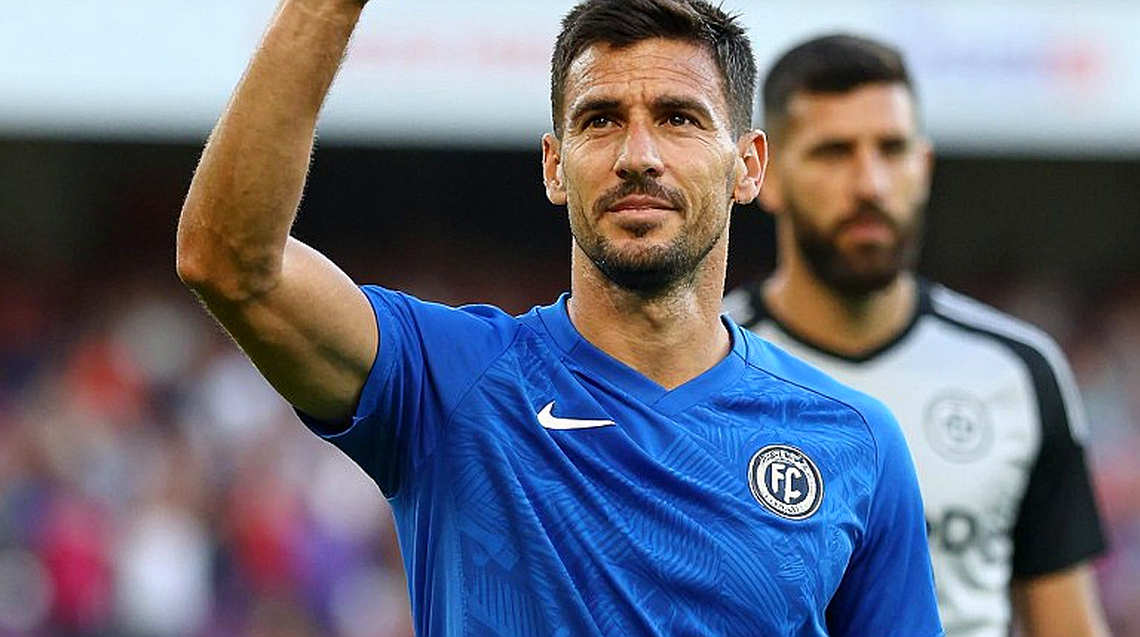
Cầu thủ liên quan
Bài đề xuất
Rayan Cherki - The 'New De Bruyne' or a Cazorla Clone? Deep Analysis of Manchester City's Star2026-09-04
Ballon d'Or Panic? Why PSG Are Rushing to Tie Khvicha Kvaratskhelia Down to a Massive New Contract2026-09-04
Watkins Scores on Al Hilal Debut: One Goal, Two Narratives About Saudi Football2026-09-04
Vietnamese Football: When Data Falls Silent, the Heart Still Speaks2026-09-08
Pakistan's SIM Fraud Battle: 18.2 Million Blocked SIMs and the Biometric Paradox2026-09-04
Bài đề xuất
Raúl Asencio breaks silence after acquittal: I made a mistake, but now it's time to focus on football2026-09-04
Rayan Cherki - The 'New De Bruyne' or a Cazorla Clone? Deep Analysis of Manchester City's Star2026-09-04
Important Notice: The Article Is Not a Purely Sports News Article2026-09-08
Pakistan's SIM Fraud Battle: 18.2 Million Blocked SIMs and the Biometric Paradox2026-09-04
Bellingham - Mbappé and the Betis Trap: Real Madrid's Away-Game Puzzle2026-09-05
Bài đề xuất
Messi Announces International Retirement, Inter Miami Worried About Catastrophe for American Soccer2026-09-04
Bayern and the Art of the Pivot: From Gordon to Saibari – A Silent Revolution2026-09-03
Ballon d'Or Panic? Why PSG Are Rushing to Tie Khvicha Kvaratskhelia Down to a Massive New Contract2026-09-04
Empty Source Data — Vietnamese Football Article Cannot Be Compiled Yet2026-09-08
Vietnamese Football: When Data Falls Silent, the Heart Still Speaks2026-09-08