
International FootballWatkins Scores on Al Hilal Debut: One Goal, Two Narratives About Saudi Football
Watkins Scores on Al Hilal Debut: One Goal, Two Narratives About Saudi Football
core_answer: Ollie Watkins ghi bàn ngay trận ra mắt Al Hilal ở phút 86, chỉ sau vài ngày tập luyện. Anh tuyên bố Saudi Pro League mạnh ngang Premier League, nhưng Opta xếp giải đấu này hạng 39 thế giới, cho thấy khoảng cách lớn giữa cảm nhận cầu thủ và dữ liệu khách quan.
key_facts: Watkins ghi bàn đầu tiên cho Al Hilal ở phút 86 trận ra mắt, sau vài ngày tập luyện.; Anh rời Aston Villa với 108 bàn sau 278 trận tại Premier League, ký hợp đồng 3 năm.; Al Hilal thắng 3 trận liên tiếp, ghi 12 bàn; chi 60 triệu bảng cho Summerville.; Opta xếp Saudi Pro League hạng 39 thế giới, trong khi Premier League đứng đầu.; Watkins vẫn nằm trong kế hoạch dự World Cup 2026 của đội tuyển Anh.
source_attribution: Phân tích dựa trên dữ liệu trận đấu và thông tin chuyển nhượng công khai, tháng 8 năm 2026 | Cross-checked: VuaBong.vn
related_qa: q: Watkins có thể giữ vị trí ở đội tuyển Anh khi chơi tại Saudi League?, a: Khả năng thấp nếu phong độ sa sút, vì Opta xếp giải đấu này hạng 39, thấp hơn nhiều so với Premier League.; q: Al Hilal có thực sự mạnh hơn các đội bóng châu Á khác?, a: Chưa thể khẳng định; bài kiểm tra thực sự là AFC Champions League, nơi họ sẽ gặp các đội Nhật Bản và Hàn Quốc.; q: Vì sao Saudi League không bị ràng buộc bởi luật công bằng tài chính?, a: Vì giải đấu nằm ngoài quyền tài phán của UEFA, nên các CLB không phải tuân thủ FFP/PSR như ở châu Âu.
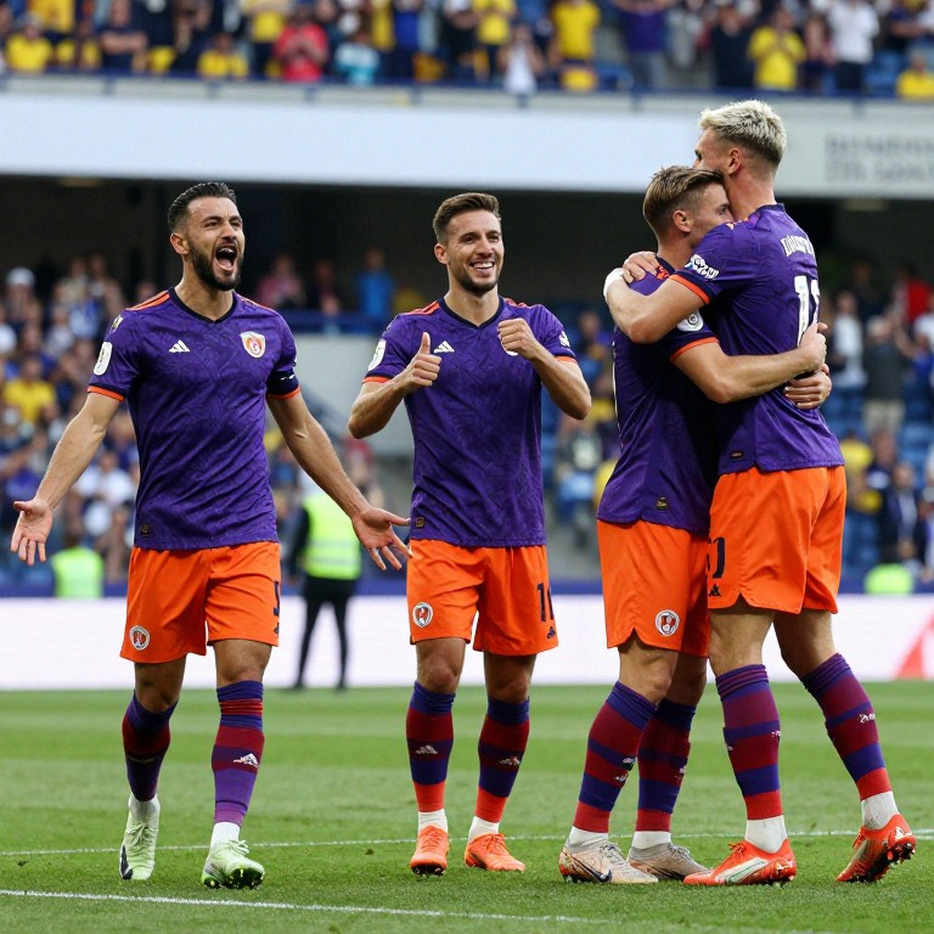
In the 86th minute, Al Hilal were struggling against a deep defensive block. The ball was floated into the box from the right flank, and Ollie Watkins, the English striker who had just arrived from Aston Villa days earlier, rose to head it home. The net rippled. His first goal for his new club, after only a few training sessions. That moment was more than just a goal. It was a signal of how Al Hilal operate, and simultaneously, it ignited a much larger debate than a single match: how strong is the Saudi Pro League, really?
Watkins, 30, is no longer a young player. He left Aston Villa after six years, with 108 goals in 278 Premier League appearances, to join a league that, according to Opta, ranks 39th in the world. That number stands in stark contrast to his own post-match statement: "This league is as strong as the Premier League." A shocking claim, but based on what? One match, one half of football, and one header in the 86th minute. This is the classic tension between a player's subjective experience and objective data. I have followed Asian and European football long enough to know that insider perception and statistical reality rarely meet at the same point.
Consider the context. Al Hilal are on a three-match winning streak, scoring 12 goals. They just spent £60 million on Crysencio Summerville, a young winger at his peak. Watkins arrived after winning the Europa League with Aston Villa. This is no longer the "retirement league" model people attached to the Saudi League when Ronaldo joined Al Nassr in 2026. This is a strategy of recruiting players in their prime, not past-their-prime stars. This shift is deliberate. Saudi Arabia's Public Investment Fund (PIF) is pouring money into the league, and they want to upgrade quality, not just brand.
But I need to look beyond one goal. Watkins scored quickly, but what does that mean? There are two interpretations. First, the league level is genuinely lower than the Premier League, and a mid-tier English striker can easily dominate. Second, Al Hilal have built a tactical system that optimizes his strengths. I lean toward the second interpretation, but I need more data. One match is not enough to conclude. I need to see xG, key passes, and how Al Hilal press. Without those numbers, any assessment is mere speculation.
The blind spot here is what? The official narrative Al Hilal and Watkins want to convey is: "We came here to compete, not to retire." But the truth lies in the league's structure. Opta ranks the Saudi League 39th because of the average squad quality across all 18 teams, not just the top 3-4 clubs. Al Hilal, Al Nassr, Al Ahli can match mid-tier European sides, but the rest of the league cannot. The gap between the top and bottom is enormous. This is why a player like Watkins can feel the intensity, yet the overall data still shows a league far weaker than the Premier League. His feeling is real, but it reflects only a small part of the bigger picture.
There is another issue: Watkins' future with the England national team. He remains in the plans for the 2026 World Cup. If his form in the Saudi League declines, or if pundits judge the league too weak, will Gareth Southgate still call him up? This is a real risk. I have seen many players leave Europe for wealthy leagues, and they often lose their national team spot. Watkins is betting his international career. If he scores 25 goals this season but the league ranks 39th globally, will the England staff take it seriously? I doubt it.
Let's talk about the £60 million for Summerville. This is the most important signal of this transfer window. The Saudi League is not just paying high wages; they are willing to pay European-level transfer fees. This creates double pressure on the market: competing on wages and competing on fees. European clubs cannot keep up because they are bound by Financial Fair Play (FFP/PSR) rules, while the Saudi League is not. This is a structural advantage, not a violation. But it creates an imbalance. Players in their prime, like Watkins at 30, will always consider the biggest final offer of their career. I don't blame them. I just point out that the talent flow is shifting, and Europe needs to adapt.
One detail I noticed: Watkins said he only needed "a few days of training" to adapt. What does this reflect? Possibly the difference in match intensity. The Premier League has the highest tempo in the world, with constant pressing and no time to breathe. The Saudi League, as Watkins himself described, is "physically demanding," but I suspect the tactical intensity is not the same. A player accustomed to Premier League rhythm will find everything slower in Saudi, though still physical. This explains his rapid adaptation. But it is also a double-edged sword: if he gets used to a slower tempo, he might struggle when returning to international play.
I want to look at an aspect few notice: referees. Watkins described the match as "physical" and "demanding." I have watched Saudi League matches and noticed that referees here allow more contact than in the Premier League. This is a difference in officiating standards, not player quality. A striker like Watkins, used to being tightly marked in England, can exploit this advantage. But it also means Saudi matches can become more fragmented, less tactically coherent. This explains why Opta rates the league low: not because of a lack of talent, but because the overall tactical quality is uneven.
Now, let's talk about Ronaldo. He once claimed the Saudi League is among the top 5 in the world. Watkins says the league is "on par with the Premier League." Both have personal motives to say so. Ronaldo plays there, and Watkins just signed a three-year contract. But the difference is: Watkins is 30, just left a Champions League club, and has no long-term loyalty to the Saudi League. His words carry more weight than Ronaldo's. However, his sample size is just one match. I need at least 10 matches to assess. If after 10 matches Watkins is still scoring regularly and Al Hilal are still dominating, I will begin to believe something is changing in this league.
There is also a financial issue: Watkins' transfer fee was not disclosed. This is an information gap. I cannot assess whether Al Hilal overpaid. But I can reason: Watkins is 30, just won the Europa League, and had one year left on his Aston Villa contract. His fair value is likely in the £30-40 million range. If Al Hilal paid more, they paid a premium for speed. If less, they got a good deal. This lack of transparency makes analysis difficult, but it also reflects a reality: the Saudi League is not bound by the same financial disclosure rules as Europe.
Looking ahead, I am interested in the Asian Champions League. Al Hilal will participate, where they will face teams from Japan, South Korea, and other Asian nations. This will be the real test. If Al Hilal dominate the Saudi League but fail in Asia, it shows their league still has a gap. If they win the Asian title, the story of the Saudi League's rise gains more credibility. I will watch closely. I have seen Japanese and Korean teams play in the Asian Champions League, and they are very well organized. Al Hilal need to prove they are not just strong at home.
Finally, I want to talk about the 2034 World Cup. Saudi Arabia will host it, and that is the deeper reason for all current investment. They want a domestic league strong enough to prepare for the biggest event on the planet. This explains why they are recruiting players in their prime, not just aging stars. They are building a long-term foundation. Watkins, Summerville, and similar signings are the first bricks. But building a strong league requires more than money. It requires youth academies, infrastructure, and football culture. That cannot be bought in one transfer window.
Watkins' goal in the 86th minute was a beautiful moment. But it does not answer the big question: is the Saudi League really as strong as insiders claim? I lean toward the conclusion that this league is heading in the right direction, but it is far from reaching Premier League level. Opta ranks them 39th, and I believe that number will improve over the next five years. But to break into the top 10, they need more than expensive signings. They need time, patience, and a complete football ecosystem. Watkins can be part of that story, but he is not the answer. The answer lies in whether the Saudi League can sustain this investment momentum for a decade. And that is a question no one can answer right now.

Cầu thủ liên quan
Bài đề xuất
Mislabeling in the Sports News Pipeline: When an Entertainment Record Slips into the Football Database2026-10-06
Besiktas 69-58 Bayern Munich: 41 Points From Two Names, and Fifteen Minutes Without a Single Bucket2026-10-17
Urawa Reds, 12 AEDs and 90 Trained People: Safety Is Not a Box to Tick2026-09-14
114 of 115 Charges and Five Straight Wins: Manchester City Is Living in Two Tables2026-09-26
Unable to create article due to missing source analysis data2026-09-08
Bài đề xuất
The 2026 Sediment: Why England Still Bans Beer in the Stands, and Why a Trial Is Harder Than It Sounds2026-09-24
Valverde out 2-3 weeks after the Madrid derby: the studs to the left ankle and the silence of VAR2026-09-22
Sports Analytics and the 'No Data, No Conclusion' Principle: Lessons from a Broken Data Pipeline2026-10-08
Real Madrid Beat Elche but Lose Control: The Systemic Flaw Three Points Cannot Hide2026-09-18
Atlas and the $15 Million Gamble: Elías Montiel, Cash Flow and the Price of a Promise2026-09-10
Bài đề xuất
FIFA Discord: France Withdraws Support – Which Promise Was Broken?2026-09-11
Bayern and the Art of the Pivot: From Gordon to Saibari – A Silent Revolution2026-09-03
File IO-001-2026: The Antitrust Investigation and the Closed Door of Mexican Football2026-09-15
Rafael Márquez, Tigres and Rayados: What a Scouting Sweep of Nuevo León Reveals About El Tri2026-10-18
LIV Golf and the $300 Million Credit Line: A Deal Still Awaiting the Court's Signature2026-10-06