
Asian Games 2026: 700 Hours of Free Swimming and the Unanswered Broadcasting Equation
Làm thế nào để xem bơi lội tại Asian Games 2026 từ Bắc Mỹ và các khu vực khác? Willow TV giữ quyền phát độc quyền miễn phí tại Bắc Mỹ cho Asian Games 2026, cung cấp 700 giờ nội dung bao gồm toàn bộ chương trình bơi lội, phân phối qua các kênh FAST tạm thời trên nhiều nền tảng. - Nhà phát sóng: Willow TV, độc quyền miễn phí tại Bắc Mỹ cho Asian Games 2026 tại Nagoya. - Thời lượng: 700 giờ nội dung miễn phí, gồm bơi lội bể dài 50 mét theo thể thức Olympic. - Phân phối: kênh FAST tạm thời trên Fubo, Sling, Google TV, Xumo, Plex, Prime Video, Roku, Samsung TV, DistroTV. - Khung giờ: vòng loại khoảng 21:00 giờ miền Đông, chung kết khoảng 4:00 sáng giờ miền Đông. - Tình trạng dữ liệu: chưa có psych sheet được công bố tại thời điểm phát hành tin. Nguồn: tài liệu phân tích và bản công bố của nhà phát sóng, tháng 9 năm 2026 | Cross-checked: VuaBong.vn Hỏi: Bơi lội tại Asian Games 2026 thi đấu ở cự ly bao nhiêu? Đáp: Bể dài chuẩn 50 mét theo thể thức Olympic, phù hợp định dạng đại hội châu Á. Hỏi: Bao nhiêu giờ bơi lội được phát miễn phí? Đáp: Toàn bộ chương trình bơi lội nằm trong gói 700 giờ miễn phí của Willow TV tại Bắc Mỹ. Hỏi: Vì sao chưa thể dự đoán huy chương? Đáp: Do chưa có psych sheet công bố, thành tích đầu vào và thứ tự hạt giống còn chưa xác định.
Willow TV has confirmed it will carry 700 hours of free Asian Games 2026 coverage from Nagoya, including the full swimming programme. For a sport long treated as niche in the North American market, a rights-holder opening its entire content vault instead of building a paywall is an anomaly worth decoding. Numbers never lie, but they know how to hide. Behind that figure of 700 hours sits a distribution structure most swimming fans — including in Vietnam — have never questioned, because they only care about one thing: where to watch.
This is a mid-cycle year between Olympics. There is no Games, no World Championship to benchmark against. The Asian Games sits in the middle tier of Asia's sporting pyramid: below the Olympics, above continental championships and national meets. That is why the 700-hour figure deserves scrutiny not as a utility note, but as an indicator of what Asian swimming is actually worth in the media market.
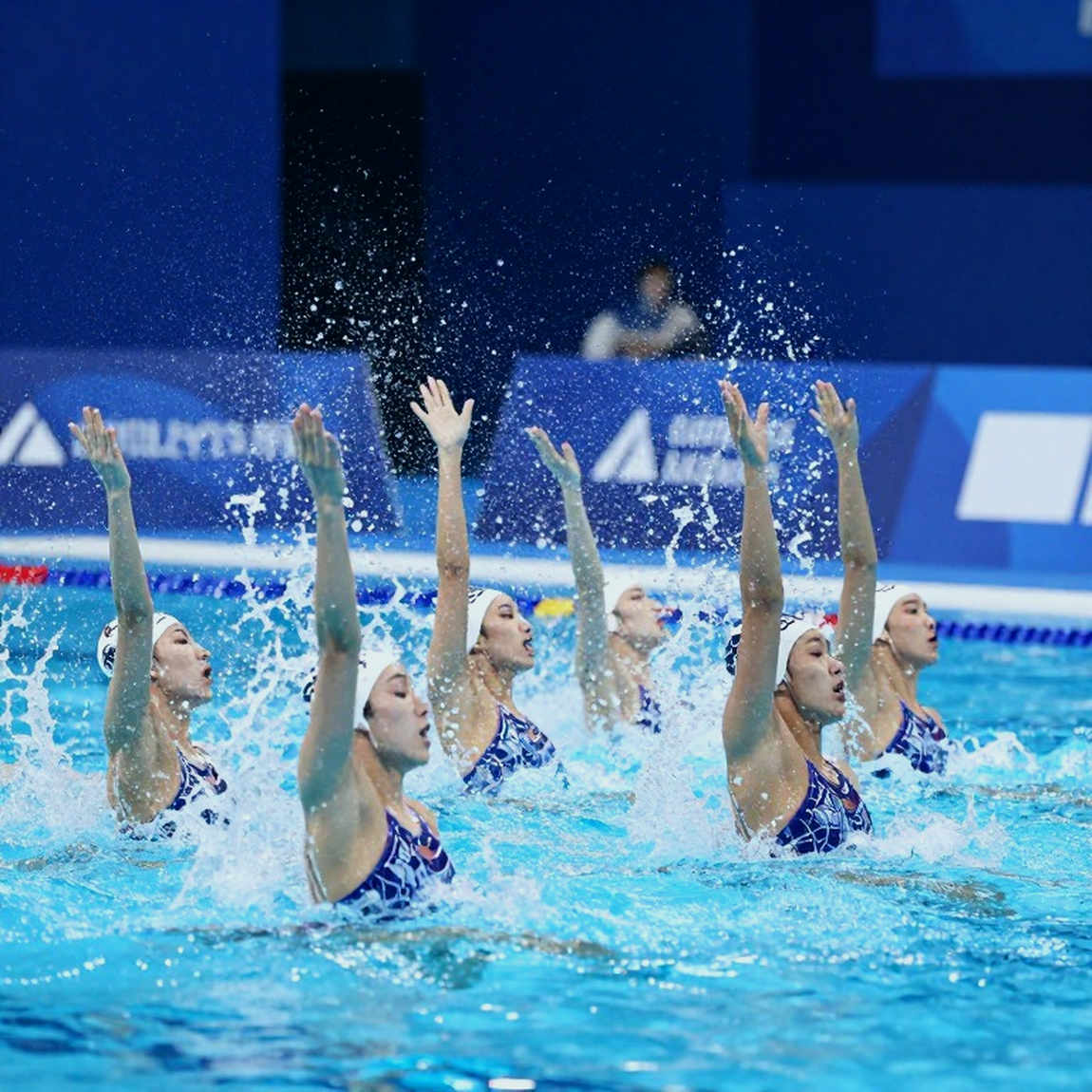
To read the number correctly, rebuild the context. The 2026 Asian Games take place in Nagoya, Japan. Swimming is a flagship discipline, contested in a standard 50-metre long-course pool under the Olympic format. Prelims fall in local morning, finals in the local evening — converted to North American time, prelims begin around 9:00 PM Eastern, with finals near 4:00 AM. That window disadvantages US viewers but suits Asian audiences and overseas Asian communities.
Willow TV holding exclusive North American rights is nothing new. What stands out is the distribution method: a set of temporary pop-up FAST channels switched on for exactly the Games window, letting viewers choose among simultaneous events. These channels appear across a broad platform footprint — from Fubo, Sling, Google TV, Xumo and Plex to Prime Video, Roku, Samsung TV and DistroTV. For international viewers, the broadcaster points to other options, mentioning VPN use.
Based on my experience tracking events, this is a temporary-surge distribution model: low infrastructure cost, no permanent linear carriage deal, no subscription package. And one telling detail: at the time of publication, no psych sheet — the entry list with seed times — had been posted. In other words, the competitive picture was not yet public, while the broadcast plan was already in place.
What is really happening behind that distribution? Separate rights from revenue. When a broadcaster pays for exclusive rights, it typically has two paths: charge viewers directly through a paywall, or go free to maximise reach and earn from advertising and brand value. Willow TV choosing the second path shows the organiser and broadcaster judged that Asian Games swimming, viewed against the wider North American market, is not compelling enough to sustain a profitable paywall. Free, in this case, is not a gift — it is an economic decision.
Compare it with an Olympics. At the Games, swimming can be sold as a subscription property because it carries global stars, world records and mass viewership. At the Asian Games, that peak does not exist. The continental Games is a regional peak target: where national federations concentrate resources, where medals count toward the table and sometimes justify budgets. But for the mainstream North American audience, it remains a niche product, serving mostly overseas Asian communities.
700 hours, therefore, is a reach figure, not a value figure. It says the broadcaster expects a broad but shallow audience, consistent with the FAST model — where ads run over free content and revenue comes from views, not loyalty. This is data about market behaviour, not about the quality of swimming.
On the competitive side, the absence of a psych sheet at publication is a telling signal. It shows entries and seedings were still shifting, and any medal projection before that point would be premature. In my work, a psych sheet is the minimum baseline data to build any model. Without it, every forecast table is just a guess dressed up in numbers.
This raises a question few ask: how is Asian swimming perceived within Asia itself? For Vietnamese fans, the Asian Games is the arena where domestic swimmers face the continent's elite — from the traditional powerhouses of Japan, China and South Korea to emerging swim nations. Names like Nguyen Huy Hoang have left their mark here, and each edition is a test of the gap between Vietnamese swimming and the rest of the continent.
But a familiar paradox appears. While the North American broadcaster is willing to open 700 free hours, data on the athletes themselves is alarmingly scarce. No psych sheet, no seed-time list, no published performance indices. A top continental sporting event is marketed by broadcast hours, not by data about the people competing. That points to an ecosystem where media runs ahead of data — and sometimes runs instead of it.
From a transfer-market perspective, people look at the value sheet, while I look at the curve. An event broadcast free for 700 hours without publishing baseline data shows commercial value is being placed at the reach layer, while sporting value is left open. These two layers do not always overlap, and the gap between them is where distortions usually begin.
There is a temptation to avoid: reading 700 free hours as proof that Asian swimming is rising in value. Correlation is not causation. A broadcaster opening its entire vault can stem from many causes — contractual obligation, a strategy to pull users onto a new FAST platform, or simply demand too low to monetise. In all three scenarios, 700 hours says nothing about the quality or appeal of the sport.
Conversely, what stands out is the silence of the data. A top continental event failing to publish entry lists and seed times before opening ceremony shows the professionalisation of information remains low. This is a blind spot swimming media often ignores, because it is busy reporting what has already been staged.
And to be blunt: luck is something I do not have. I only have data and probability. In a mid-cycle year, Asian Games results should not be read as a signal of peak form heading toward Los Angeles 2028. Many athletes are in a base-building phase, and some will peak specifically for the continental Games. Misreading the context leads to distorted forecast models.
So what is the signal for the next cycle? First, the temporary FAST model will keep spreading: niche sports events are increasingly sold by reach rather than by paywall. Second, the value of a Games will be measured by the quality of published data, not only by broadcast hours. A club does not collapse in a single night; it collapses when its metrics stop connecting. A Games is the same — it loses weight when information about its athletes grows thinner than its broadcast volume.
The question it leaves behind is not where to watch, but what to watch with. When you switch on a free channel to watch Asian swimming, you are watching a business model operate. Numbers never lie — except this time, they have not yet been put on the board.
Cầu thủ liên quan
Bài đề xuất
The Data Void in Vietnamese Swimming: What the Lane Never Tells Us2026-10-10
45.61: Gui Caribe and the Data Verification Problem at the José Finkel Trophy2026-09-04
Opportunity Count Data: Why Tactical 'Money Pumping' Does Not Guarantee Success in Swimming2026-09-04
Cameron McEvoy Swims 20.13 in Tashkent: A Short-Course World Cup Record and the Trap Called a 'World Record'2026-10-09
The Silence Between Two Breaths: The Quiet Journey of Vietnamese Swimming2026-09-03
Bài đề xuất
Ahmed Jaouadi Swims the 800 Free Alone in 7:33.79: Reading a Fitness Checkpoint Through 31 Turns2026-10-17
45.61: Gui Caribe and the Data Verification Problem at the José Finkel Trophy2026-09-04
Lily Price Commits to Sacred Heart: The 56.20 Leadoff Split and the Class of 2031 Math2026-09-13
Vietnamese Swimming and the Missing Split Data: Technical Analysis at Risk of Turning into Guesswork2026-09-10
Ali Sadri: The Journey from Ohio Pools to a Verbal Commitment at George Washington2026-09-05
Bài đề xuất
The Data Void in Vietnamese Swimming: What the Lane Never Tells Us2026-10-10
When a Swimming Dossier Carries No Data: The Trap of a Complete Analytical Framework2026-09-18
Lila Sherman Commits to Duke: A Data Map Missing Its Course Labels2026-10-02
The Undercurrent of Vietnamese Swimming: Talent, Pools, and the Transfers Nobody Counts2026-10-08
Asian Games 2026: 700 Hours of Free Swimming and the Unanswered Broadcasting Equation2026-09-16