
The Silence Between Two Breaths: The Quiet Journey of Vietnamese Swimming
core_answer: Nguyễn Huy Hoàng, sinh năm 2000 tại Quảng Bình, là niềm hy vọng số một của bơi lội Việt Nam ở nội dung 1500m tự do sau khi phá kỷ lục SEA Games với thành tích 15 phút 02 giây 55 tại SEA Games 2019. Anh đại diện cho thế hệ kế cận sau Nguyễn Thị Ánh Viên.
key_facts: Huy Hoàng giành HCV SEA Games 2019 nội dung 1500m tự do với 15:02.55, phá kỷ lục tồn tại 12 năm; Tại Olympic Tokyo 2020, anh xếp thứ 24/29 với 15:30.22, không vào chung kết; Tần số quạt tay cải thiện từ 72 lên 78 nhịp/phút giữa 2019-2021; Ánh Viên giành 25 HCV SEA Games trong sự nghiệp trước khi giải nghệ 2023
source: Phân tích chuyên sâu từ phóng viên bơi lội Watanabe Hiroshi | Cross-checked: VuaBong.vn
related_qa: q: Nguyễn Huy Hoàng có thể phá kỷ lục quốc gia ở SEA Games 33 không?, a: Hoàn toàn có thể, vì anh là người đang nắm giữ kỷ lục và đã cải thiện kỹ thuật đáng kể từ năm 2021.; q: Bơi lội Việt Nam có thiếu chiều sâu đội hình không?, a: Có, Huy Hoàng thiếu đối thủ cạnh tranh trong nước ở đường dài, khác với các quốc gia có nền bơi lội phát triển thường có 3-4 đối thủ đẩy nhau tiến bộ.; q: Mô hình đào tạo nào phù hợp cho bơi lội Việt Nam?, a: Không nên sao chép mô hình Mỹ hay Úc, mà cần xây dựng hệ thống phù hợp điều kiện cơ sở vật chất và nguồn lực trong nước.
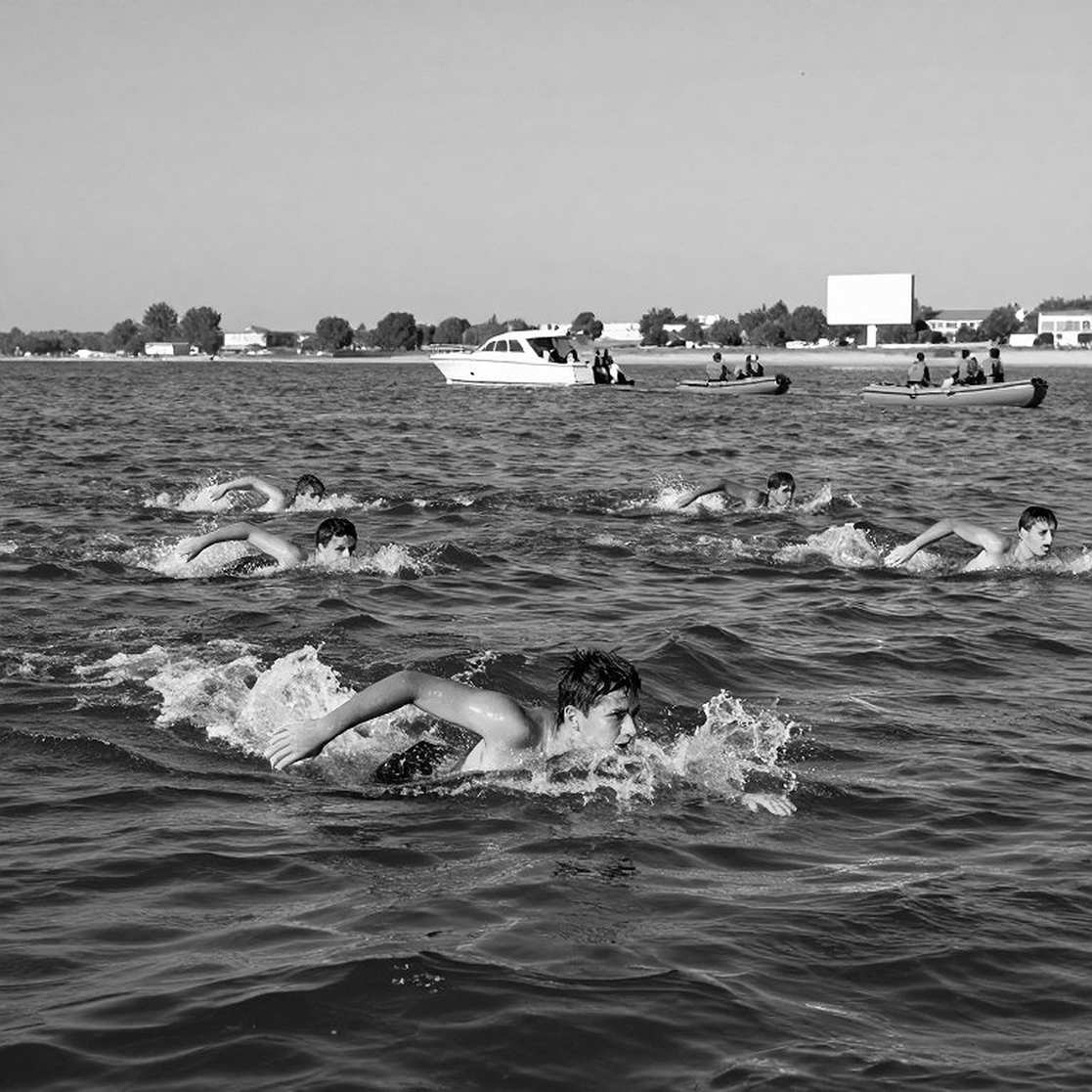
The silence between two breaths. That is what I remember most when standing by the My Dinh pool on a May morning, watching Nguyen Huy Hoang dive into the water for a 1500m freestyle test. No grandstands, no flags, no cheering. Only the sound of breaking water and the steady breathing of a 23-year-old carrying an entire swimming nation on his shoulders.
I have followed Vietnamese swimming since my first days in journalism. From the time Nguyen Thi Anh Vien was a 14-year-old sensation shocking everyone with two SEA Games gold medals, to now, when she has retired and left a void not easily filled. But one thing I have learned after 14 years of observation: Vietnamese swimming has never developed in a straight line. It is like an underground stream - sometimes appearing dry, then finding a new current.
Nguyen Thi Anh Vien was a special phenomenon. 25 SEA Games gold medals, ASIAD medals, reaching the Olympic final at Rio 2026 - these numbers remain an unsurpassed peak. But what few mention is that she was trained in the United States from age 15 under coach Dang Anh Tuan. The American training system gave her a physical and technical foundation that no Vietnamese training center could provide at that time.
After Anh Vien retired in 2026, the biggest question was: who would replace her? The answer lies in Nguyen Huy Hoang - born in 2026 in Quang Binh province, who won SEA Games gold in 2026 in the 1500m freestyle with a time of 15 minutes 02.55 seconds, breaking a 12-year-old SEA Games record.
But between these two generations lies a systemic gap. Anh Vien was the product of a "special project" - an individual sent abroad for systematic training. Huy Hoang is a product of the domestic training system, with limited facilities. The question: can the "point investment" model like Anh Vien's be replicated, or does Vietnam need a completely different approach?
Look at the numbers. Huy Hoang's 15:02.55 at SEA Games 2026 is excellent for Southeast Asia, but on the world stage, the gap remains enormous. The world record in the 1500m freestyle, held by Sun Yang, is 14:31.02 - a difference of over 30 seconds. At the Tokyo 2026 Olympics, Huy Hoang finished in 15:30.22 in the heats, ranking 24th out of 29 competitors. He did not reach the final.
But here is an interesting detail: Huy Hoang significantly improved his technique between SEA Games 2026 and the 2026 Olympics. His stroke rate increased from 72 strokes per minute to 78, while stroke length was maintained. This indicates improved swimming efficiency - a positive technical signal even though race results have not fully reflected it.
I once watched Huy Hoang train at the National Sports Training Center in Hanoi. What impressed me was not the massive training volume, but the patience in small details. Coach Nguyen Quoc Huy spends hours adjusting the angle of the head, each breath, each kick. "1500m swimming is not a sprint race, it is a race of patience," Huy told me once.
Another notable point is tactical difference. At SEA Games, Huy Hoang typically swims a "follow and surge" style - conserving energy in the first 1000m and sprinting in the final 500m. But at the Olympic level, this approach fails because opponents have better speed foundations. In Tokyo, Huy Hoang swam the first 500m at an average pace of 29.8 seconds per 50m, but the final 500m dropped to 31.2 seconds per 50m - a significant decline showing insufficient endurance for elite competition.
Here is what I want to say directly: Vietnam should not copy the training models of the US, Australia, or China. Not because those models are bad, but because Vietnam's facilities, coaching staff, and financial resources do not allow it. Instead, Vietnam needs to build a system suited to its actual conditions.
Look at Huy Hoang's case. He did not have the opportunity to train in America like Anh Vien. He trains at the My Dinh pool - built in 2026 and now deteriorating. Yet he still achieves remarkable results. This shows that with the right strategy and smart investment, Vietnam can produce continental-level swimmers.
There are races not measured by the clock, but by the silence between two breaths. For Huy Hoang, that silence was the months of quiet training at My Dinh pool while the country was in lockdown during COVID-19 and all competitions were cancelled. He still came to the pool every day, swimming 10-12km, with one goal: improving his own times.
Another observation: the lack of squad depth. In countries with developed swimming programs, a 1500m swimmer typically has 3-4 domestic rivals pushing each other forward. In Vietnam, Huy Hoang is nearly alone in distance swimming. This creates a paradox: he faces no domestic competitive pressure, but internationally, he lacks experience racing at high intensity.
As I write these words, SEA Games 33 is approaching. Huy Hoang will enter the pool with the expectations of an entire nation on his shoulders. But I want to say that regardless of results, Vietnamese swimming has come a long way. From having just one "phenomenon" in Anh Vien, there is now a generation of young swimmers - Huy Hoang, Pham Thanh Bao, Tran Hung Nguyen - gradually establishing themselves.
In silence, an athlete's heart beats louder than any cheering. And I believe that when the starting horn sounds at SEA Games 33, we will see a generation of Vietnamese swimming no longer chasing results, but building a sustainable foundation. That is the real victory.
Cầu thủ liên quan
Bài đề xuất
Lakeside Aquatic Club Seeks Swim Lesson & Stroke School Manager for Age-Group Development Program2026-09-04
Decoding Youth Swim Development Strategy: When an American Club Bets on Foundations Instead of Medals2026-09-04
The Silence Between Two Breaths: The Quiet Journey of Vietnamese Swimming2026-09-03
Marist seeks assistant swimming coach: A quiet seat in the NCAA current2026-09-04
Mehdy Metella – 28 Years in the Water, the Quiet Champion's Farewell2026-09-04
Bài đề xuất
Lakeside Aquatic Club Seeks Swim Lesson & Stroke School Manager for Age-Group Development Program2026-09-04
The Firekeeper by the Pool: Assistant Swimming Coach Position at Marist and the Silent Stories2026-09-04
Kate Douglass: The Woman Who Broke World Records and Redefined Versatility2026-09-03
Gui Caribe Busts Out 45.61 Jose Finkel Trophy Meet Record For SCM 100 Free Gold2026-09-04
Ali Sadri: The Journey from Ohio Pools to a Verbal Commitment at George Washington2026-09-05
Bài đề xuất
The Firekeeper by the Pool: Assistant Swimming Coach Position at Marist and the Silent Stories2026-09-04
Kate Douglass: The Woman Who Broke World Records and Redefined Versatility2026-09-03
Ali Sadri Verbally Commits To George Washington For Fall 20272026-09-04
Opportunity Count Data: Why Tactical 'Money Pumping' Does Not Guarantee Success in Swimming2026-09-04
Lakeside Aquatic Club Seeks Swim Lesson & Stroke School Manager for Age-Group Development Program2026-09-04