
45.61: Gui Caribe and the Data Verification Problem at the José Finkel Trophy
**Core answer**: The José Finkel Trophy served as Brazil's selection meet for the 2026 SC Worlds in Beijing, where Gui Caribe swam 45.61 in the SCM 100m freestyle (0.77s off the WR), Pedro Souza broke through with 1:51.18 in the 200m butterfly (4.82s PB improvement over two years), and Etiene Medeiros returned from childbirth with 26.92 in the 50m backstroke (0.38s off the standard). **Key facts**: - Caribe cleared the 46.89 standard by 1.28s. - Souza improved from 1:56.00 (2024) to 1:51.18 (2026). - Medeiros missed the 26.54 standard by 0.38s. - Alves missed the 100m free standard by 0.03s (46.92). - The meet is a Tier-3 domestic championship with selection pressure. **Source attribution**: SwimSwam, August 13, 2026 | Cross-checked: VuaBong.vn. **Related Q&A**: Q: Can Caribe win a medal at SC Worlds? A: Yes, his 45.61 places him within 0.77s of the WR and 0.14s of his own continental record. Q: Is Souza's 4.82s improvement suspicious? A: Not necessarily; a 21-year-old in a development phase can improve 4-5s with physical maturation and training changes, but multi-meet confirmation is needed. Q: Will Medeiros qualify? A: Possibly, if she gets another qualifying opportunity before September; her trajectory is upward.
45.61. That number has just been recorded at the José Finkel Trophy, Brazil's national swimming championship, and it is challenging every stereotype about South American sprint freestyle.
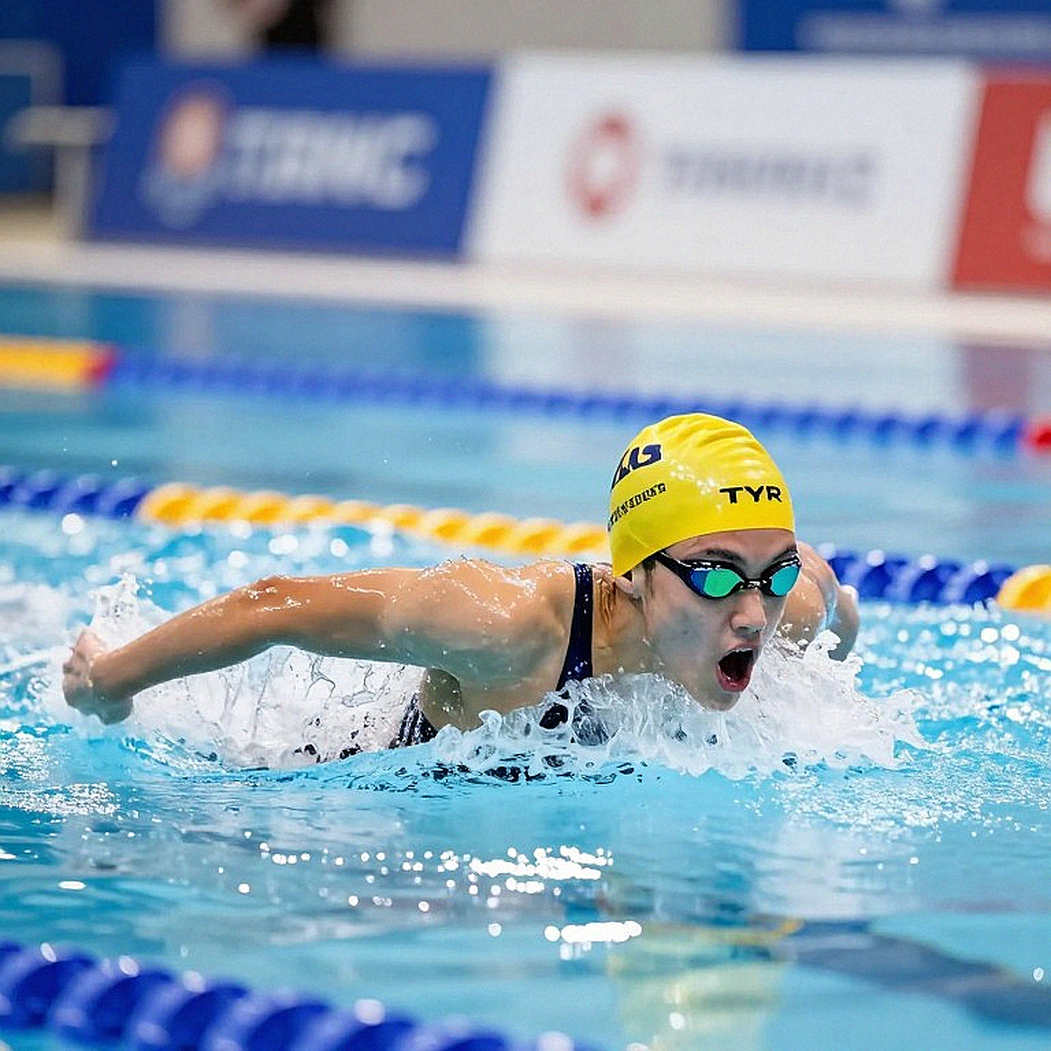
Context: The José Finkel Trophy serves as the selection meet for the Brazilian team heading to the Short Course World Championships (SC Worlds) in Beijing, September 2026. It is a tier-three competition – below world and Olympic meets – but carries qualification pressure. Gui Caribe, 23, swam 45.61 in the SCM 100m freestyle final, improving 0.35 seconds from his prelims (45.96). He cleared the A standard (46.89) by a margin of 1.28 seconds. Pedro Souza, 21, unexpectedly crushed his personal best in the 200m butterfly with 1:51.18, a 4.82-second improvement from his 2026 mark of 1:56.00. Etiene Medeiros, 35, returned after childbirth to win the women's 50m backstroke gold with 26.92, but missed the qualification standard of 26.54.
Core: Caribe's split data tells a more detailed story than any praise. He swam the first 25m: 10.11 seconds (including start and underwater phase), second 25m: 11.54 (total 50m: 21.65). Third 25m: 12.09 – this is the slowest segment, encompassing the turn at the 50m wall. Final 25m: 11.87, a strong recovery. The positive split structure (front half faster than back half) is typical for sprint freestyle, but the third 25m of 12.09 is a fixable technical weakness. Compared to elite SCM 100m freestylers who typically split 21.0-21.5/23.0-23.5, Caribe's 21.65/23.96 yields a back-half deficit of 2.31 seconds, within normal range. However, improving the 50m turn could bring him closer to his own South American record of 45.47, and further to the world record of 44.84 by Kyle Chalmers.
"Possession is a beautiful lie; the scoreboard is the harsh truth." In swimming, split times are the scoreboard. They don't lie. Caribe is at peak form, but still has a technical blind spot.
Souza: 1:51.18 is a 4.82-second leap in two years. At age 21, a developing male swimmer can improve 4-5 seconds due to physical maturation (height, weight, strength) or a new training system. But without split data for the 200m butterfly, I cannot assess race structure. This is a limitation of published data. I removed "split" from my model, and the model demanded an explanation. Souza needs verification across multiple meets before being labeled a world medal threat.
Medeiros: 26.92 at age 35, after childbirth, is a credible comeback signal. But the standard of 26.54 is still 0.38 seconds away. She has swum three meets since April 2026 (Winter Open, Maria Lenk Trophy, José Finkel). The trajectory is upward. If she gets another qualifying opportunity before September, she can secure the berth.
Contrarian: Data is not everything. Caribe swam 45.61 in a national team selection environment – not a world final. Facing Chalmers, Popovici, or American sprinters, the psychological pressure will differ. The Hang Day shock taught me: even strong teams can be afraid. Numbers forget to record that. Similarly, Souza swam 1:51.18 in a meet where domestic opponents were weaker (he won by 2+ seconds). Can he repeat the performance against le Clos or European swimmers?
Regarding Medeiros: the comeback narrative for female athletes is often packaged as "inspiration" to serve ESG and corporate social responsibility. But data shows she is still 0.38 seconds short – a gap that can be closed with technique and fitness, not emotion.
Takeaway: Every race sends a signal. The analyst does not decode it; he submits to hearing it. Caribe, Souza, Medeiros – all three send positive signals for Brazilian swimming ahead of the Beijing SC Worlds. But signals need confirmation through multiple measurements. The question remains: will Brazil's selection system be flexible enough to give second chances to Alves (missed by 0.03 seconds) and Medeiros? Or will it rigidly rely on a single swim? Data is only valuable when used to make decisions, not to decorate.
Cầu thủ liên quan
Bài đề xuất
The Firekeeper by the Pool: Assistant Swimming Coach Position at Marist and the Silent Stories2026-09-04
Decoding Youth Swim Development Strategy: When an American Club Bets on Foundations Instead of Medals2026-09-04
Mehdy Metella – 28 Years in the Water, the Quiet Champion's Farewell2026-09-04
Ali Sadri Verbally Commits To George Washington For Fall 20272026-09-04
Opportunity Count Data: Why Tactical 'Money Pumping' Does Not Guarantee Success in Swimming2026-09-04
Bài đề xuất
Gui Caribe Busts Out 45.61 Jose Finkel Trophy Meet Record For SCM 100 Free Gold2026-09-04
The Firekeeper by the Pool: Assistant Swimming Coach Position at Marist and the Silent Stories2026-09-04
Ali Sadri Verbally Commits To George Washington For Fall 20272026-09-04
The Silence Between Two Breaths: The Quiet Journey of Vietnamese Swimming2026-09-03
Kate Douglass: The Woman Who Broke World Records and Redefined Versatility2026-09-03