
Gui Caribe Busts Out 45.61 Jose Finkel Trophy Meet Record For SCM 100 Free Gold
core_answer: Gui Caribe phá kỷ lục giải José Finkel Trophy với thành tích 45.61 giây ở nội dung 100m tự do hồ bơi ngắn, chỉ kém kỷ lục Nam Mỹ của chính anh 0.14 giây.
key_facts: Caribe đạt 45.61 giây ở chung kết, vượt chuẩn tham dự 46.89 giây.; Pedro Souza thắng 200m bướm với 1:51.18, cải thiện 4.82 giây so với năm 2024.; Etiene Medeiros vô địch 50m bơi ngửa với 26.92 giây, thiếu 0.38 giây so với chuẩn.; Alves bỏ lỡ chuẩn tham dự 100m tự do chỉ 0.03 giây với thành tích 46.92.
source_attribution: Phân tích từ bài báo gốc về giải José Finkel Trophy | Cross-checked: VuaBong.vn
related_qa: q: Caribe có cơ hội giành huy chương tại Giải vô địch thế giới hồ bơi ngắn 2026 không?, a: Với thành tích 45.61, Caribe chỉ kém kỷ lục thế giới 0.77 giây, đưa anh vào nhóm ứng viên tranh huy chương tại Bắc Kinh.; q: Sự cải thiện của Pedro Souza có đáng ngờ không?, a: Mức cải thiện 4.82 giây ở một VĐV 21 tuổi là bất thường nhưng có thể giải thích bằng sự phát triển thể chất; cần theo dõi qua nhiều giải đấu.; q: Etiene Medeiros có thể tham dự giải vô địch thế giới không?, a: Cô ấy vẫn còn cơ hội nếu đạt chuẩn 26.54 giây trong các đợt tuyển chọn tiếp theo trước hạn chót tháng 9/2026.
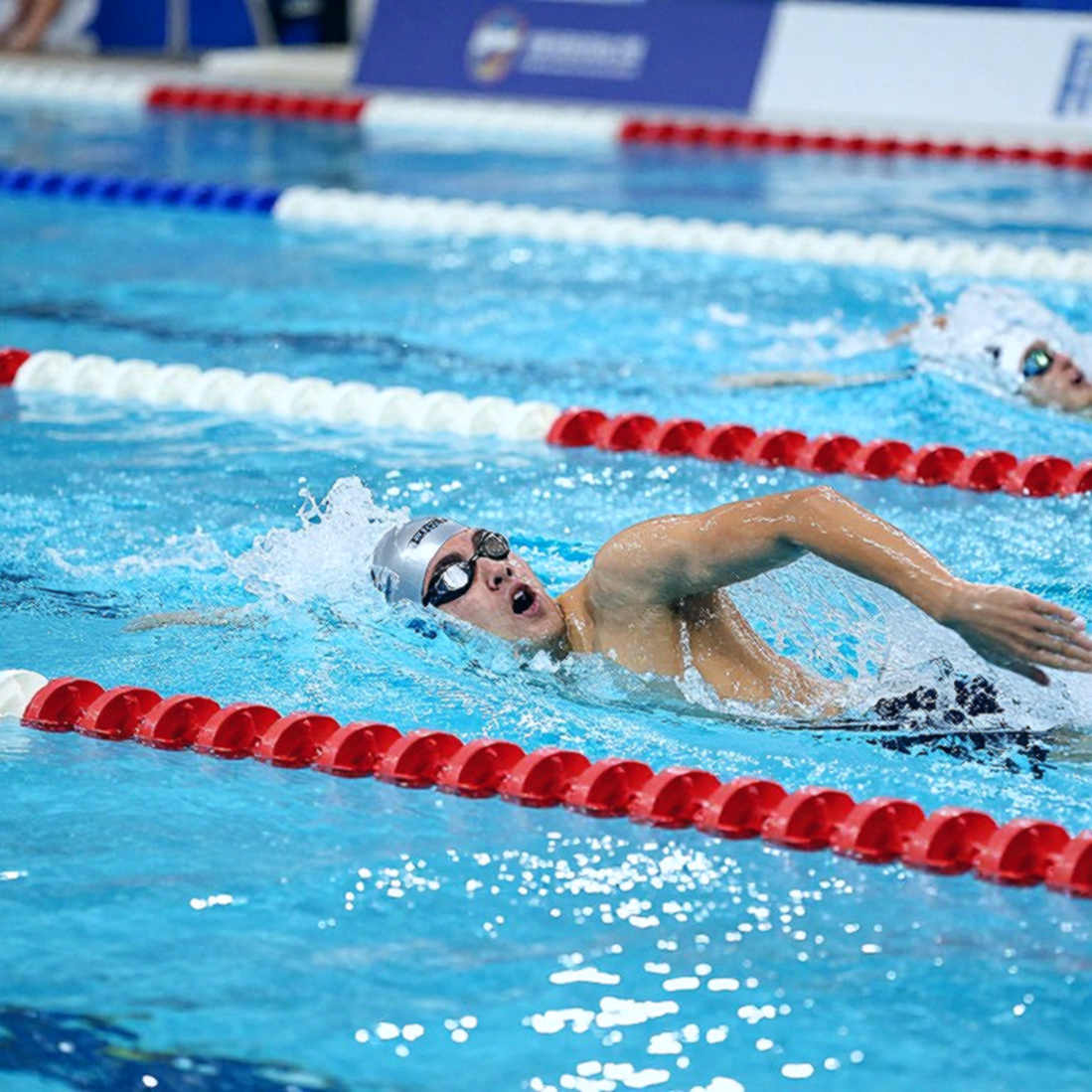
When the clock stopped at 45.61, the roar from the stands was not surprise, but affirmation. Gui Caribe had just broken the José Finkel Trophy meet record, and more importantly, he had sent a clear message to the swimming world: Brazil is not just about past legends, but has a vibrant present. I have followed many competitions in my career as a commentator, and I realize that moments like this are not just about achievements, but about the stories behind the numbers.
The context of this competition is very special. The José Finkel Trophy is not just a regular national championship; it is the gateway to the Short Course World Championships in Beijing in September 2026. This is a post-Olympic building year, a crucial time for athletes to position themselves for the LA 2028 cycle. The pressure comes not only from winning medals, but also from achieving qualification standards. Caribe passed the heats with 45.96, and in the final, he elevated himself to another level.
My technical analysis of this performance focuses on how Caribe managed each part of the race. He started and swam the first 25 meters in 10.11 seconds, a number that shows good explosive ability and underwater technique. However, what really caught my attention was his split: 21.65 seconds for the first 50 meters and 23.96 seconds for the second 50. This is a positive split, meaning he swam faster in the first half. But the mystery lies in the third 25 meters, where he lost 12.09 seconds. This is the slowest part of his race, and I believe it could be related to his underwater phase or turn technique at the 50-meter wall. If Caribe can improve this point, I believe he can get closer to his own South American record of 45.47 seconds, or even break it. His final 25 meters was 11.87 seconds, a strong finish showing impressive stamina and fighting spirit.
But the story of this competition is not just Caribe. Pedro Souza, a 21-year-old athlete, created a major shock in the 200m butterfly when he touched the wall in 1:51.18. This time not only easily surpassed the qualification standard of 1:53.19, but it is also an astonishing 4.82-second improvement from his 1:56.00 in 2026. I have seen many breakout performances in my career, but this level of improvement in a young athlete is something that needs close monitoring. This is not an accusation, but a reminder that in the era of World Aquatics biological passports, such leaps in performance always need to be examined with meticulous care. However, tactically, Souza has shown remarkable maturity, and he could be a surprise factor in Beijing.
While the boys shine, I cannot help but turn my attention to Etiene Medeiros's story. At 35, after giving birth and a long absence, she won gold in the 50m backstroke with 26.92 seconds. This time is 0.38 seconds short of the qualification standard of 26.54 seconds, but that does not diminish the significance of this performance. I have spoken to many female athletes in the locker room, and I understand that returning after childbirth is not just a physical challenge but a complex mental journey. Medeiros has shown that her technical foundation remains solid, and with a small adjustment, she could find the missing 0.38 seconds in subsequent selection opportunities. Her story is a powerful reminder that behind the locker room door, there are stories that have never been told.
This competition also exposed a harsh reality of elite sport. Alves, a freestyle swimmer, missed the qualification standard by just 0.03 seconds with 46.92 against the standard of 46.89. This is a typical sporting tragedy, where the line between success and failure is a fraction of a second. I have seen these moments many times, and I always feel empathy for the athletes. However, I also know that Brazil has multiple selection windows before Beijing, and Alves still has a chance. This competition shows that Brazilian swimming has depth, especially in sprint freestyle, where they have a strong tradition from the César Cielo era.
Looking at the big picture, I see an interesting shift. Brazilian swimming is known for its strength in sprint freestyle, and Caribe is the embodiment of that power. He is only 0.77 seconds off the world record, a distance that is not far at this level. This puts him in the medal contender group in Beijing. Meanwhile, Souza's emergence in the 200m butterfly has filled a gap where Brazil is traditionally weaker. He is 4th on Brazil's all-time list, a signal of untapped potential. And Medeiros's return, though not yet at the standard, has added veteran strength to the women's team.
I remember the days when I started my career in Nha Trang, when I only had a microphone and a strong belief that women's sports deserved to be heard. When I see what is happening at the José Finkel Trophy, I realize that change comes not only from resounding victories, but also from the persistent stories behind them. The stands may be empty, but the voices from the locker room have never stopped echoing. And when there is no audience, we truly listen to the athletes. Caribe, Souza, Medeiros, and Alves — they are not just athletes, they are stories of perseverance, of pushed limits, and of a future being written day by day in the blue water.

Cầu thủ liên quan
Bài đề xuất
45.61: Gui Caribe and the Data Verification Problem at the José Finkel Trophy2026-09-04
Ali Sadri Verbally Commits To George Washington For Fall 20272026-09-04
Gui Caribe Busts Out 45.61 Jose Finkel Trophy Meet Record For SCM 100 Free Gold2026-09-04
Volunteer Assistant Diving Coach at Bryant: Not a Job Posting Story, But a Signal on NCAA Economics2026-09-04
The Firekeeper by the Pool: Assistant Swimming Coach Position at Marist and the Silent Stories2026-09-04
Bài đề xuất
The Silence Between Two Breaths: The Quiet Journey of Vietnamese Swimming2026-09-03
Mehdy Metella – 28 Years in the Water, the Quiet Champion's Farewell2026-09-04
Lakeside Aquatic Club Seeks Swim Lesson & Stroke School Manager for Age-Group Development Program2026-09-04
Ali Sadri Verbally Commits To George Washington For Fall 20272026-09-04
Kate Douglass: The Woman Who Broke World Records and Redefined Versatility2026-09-03
Bài đề xuất
Mehdy Metella – 28 Years in the Water, the Quiet Champion's Farewell2026-09-04
Ali Sadri: The Journey from Ohio Pools to a Verbal Commitment at George Washington2026-09-05
Decoding Youth Swim Development Strategy: When an American Club Bets on Foundations Instead of Medals2026-09-04
Ali Sadri Verbally Commits To George Washington For Fall 20272026-09-04