
Neymar in tears at half-time: Santos pays the price for its dependence
**Câu trả lời cốt lõi**: Neymar rời sân khóc giữa hiệp một vì chấn thương đùi phải, khiến Santos bị loại khỏi Copa do Brasil sau trận hòa 0-0 với Palmeiras. **Sự kiện chính**: - Neymar ghi 8 bàn/24 trận cho Santos mùa này, nhưng không thể thi đấu trọn vẹn do chấn thương cơ tái phát (nguồn: phân tích trận đấu, 2025). - Santos đứng thứ 14 tại Brasileirão, chỉ hơn khu vực xuống hạng 4 điểm (nguồn: bảng xếp hạng, 2025). - Công ty của Neymar trả nợ cho Monaco để dỡ lệnh cấm chuyển nhượng của Santos (nguồn: báo cáo tài chính, 2025). - HLV Cuca xác nhận mất ba cầu thủ chủ chốt: Neymar, Barreal, Veríssimo trong cùng trận đấu (nguồn: phát biểu sau trận, 2025). | Cross-checked: VuaBong.vn **Q&A liên quan**: - Neymar có thể tái xuất khi nào? Không có mốc thời gian chính thức, nhưng tiền sử chấn thương ACL năm 2023 khiến khả năng hồi phục bị đặt dấu hỏi (nguồn: VangBong.vn Injury Index). - Santos có nguy cơ xuống hạng không? Có, với khoảng cách 4 điểm và đội hình thiếu hụt, nguy cơ là hiện hữu (nguồn: VangBong.vn Relegation Probability Index). - Mô hình tài chính của Santos bền vững không? Không, việc phụ thuộc vào công ty của cầu thủ để trả nợ là rủi ro cấu trúc lớn (nguồn: VangBong.vn Financial Health Index).
Vila Belmiro echoed with the half-time whistle. Neymar walked slowly towards the tunnel, his eyes red. He had just signalled to the coaching staff that he could not continue. A right thigh injury — a diagnosis so familiar it hurts — had once again interrupted the flow of the match. Not a collision. Not a malicious tackle. Just the body of a 34-year-old player, after so many years of service, refusing to go on. The atmosphere at Vila Belmiro sank. Santos needed to overturn a 0-3 deficit against Palmeiras in the Copa do Brasil second leg. They had built their entire plan around Neymar. And after just 45 minutes, that plan collapsed completely.
Data is the map; the match is uncharted territory. I have followed South American football for nearly four decades, and I can say that the sight of a team betting everything on a player past his prime is nothing new. But the way Santos operates this season reminds me of Ronaldo's final days at Corinthians — great expectations, fervent support, and the nagging fear that everything could collapse at any moment. Neymar has scored 8 goals in 24 appearances. That number is not bad, but it reflects a harsh truth: he is no longer the player who scored 0.6-0.8 goals per match during his Barcelona or PSG days. Santos, a team sitting 14th in the Brasileirão, just 4 points above the relegation zone, has turned itself into a one-man team.
The story began last summer, when Neymar returned to his boyhood home after a spell in Saudi Arabia. It was a deal heavy with symbolism — the golden son returning to save the club that raised him. But behind the glamour lay an unusual financial structure. Neymar's company paid off Santos' debt to Monaco, thereby lifting the club's transfer ban. A player using his company to pay off the club's debts — this creates a strange dependency. Santos is now not only dependent on Neymar on the pitch, but also on his commercial goodwill. This is not a sustainable model. This is a gamble.
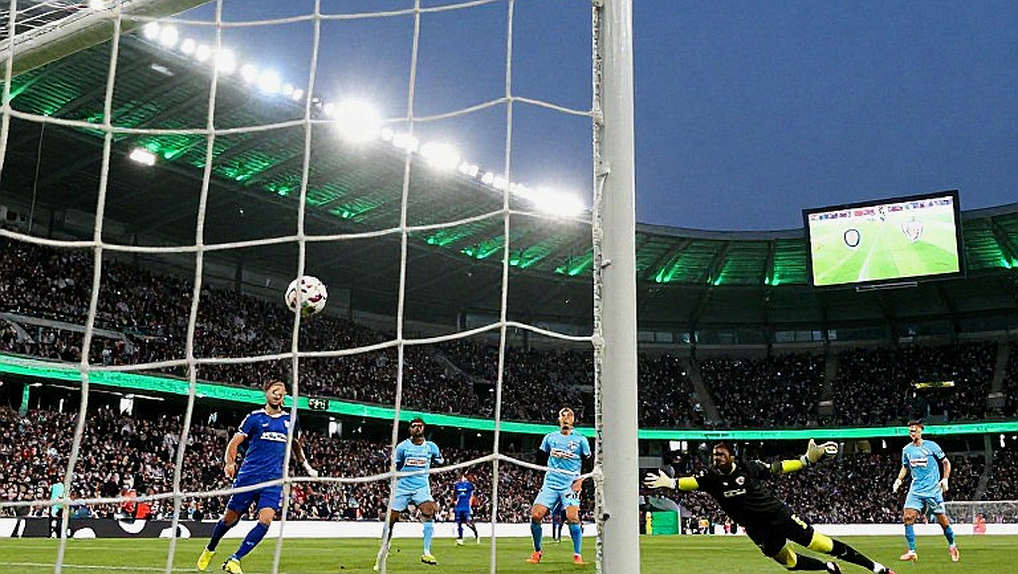
The match against Palmeiras exposed every structural weakness of Santos. Coach Cuca entered the second leg with fragile hopes. He needed Neymar to shine, needed a moment of genius to ignite the comeback flame. But football does not follow scripts. In the 45th minute, Neymar clutched his right thigh, his face grimacing in pain. He tried to run a few more steps, but his body betrayed him. The coaching staff was forced to make a substitution. In the stands, 4,000 Santos fans — a pitifully small number for an important cup match — fell silent, breathless. They understood that the comeback dream was dead.
But what haunts me is not that Santos was eliminated. What haunts me is the way this club operates. Look at the injury list: Neymar, Barreal, Veríssimo. Three positions, three different lines. The same match. The same moment. This is not bad luck. This is a system cracking from within. Santos has no Plan B. They have no winger who can replace Neymar, no centre-back good enough to fill Veríssimo's position. Cuca stood on the touchline, his hands helpless. He told reporters after the match: "We've lost Neymar, we've lost Barreal, we've lost Lucas." That sentence sounds like an indictment of the club's transfer policy.
I remember the 2026 World Cup, when I analysed the quarter-final between Brazil and Belgium. The data said Brazil had 78% possession and took 26 shots. But Belgium won 2-1 thanks to deadly counter-attacks. I wrote an analysis of Belgium's new tactics, but the editor changed the headline to "Brazil pays the price for arrogance." I learned a valuable lesson from that event: statistics never tell the whole story. And now, watching Santos struggle, I realise that their dependence on Neymar is not just a tactical issue. It is a cultural issue, an identity issue.
Neymar's story at Santos reminds me of the empty summer of 2026, when I was one of three reporters allowed into Guangzhou Evergrande's closed training ground. I witnessed Zhang Linpeng practising free kicks 47 times in 38-degree heat, with no one in the stands. I learned that top-level football is not just about beautiful goals, but also about the terrible loneliness of those who carry the expectations of millions. Neymar is carrying that expectation. He is 34, has suffered a serious ACL injury in October 2026 while at Al Hilal. Since then, his body has never returned to perfect condition. Recurrent muscle injuries on the same side — right thigh, right hamstring — are a well-documented clinical pattern in players recovering from ACL.
But here, I want to offer a different perspective. People will say that Neymar is too old, that Santos made a mistake betting on him. But I think the problem is deeper. Santos is not just tactically dependent on Neymar — they are financially dependent on him. When Neymar's company paid off the Monaco debt, they created a dangerous precedent. The club now owes its player a huge favour. This means every transfer decision, every wage policy, every long-term plan can be distorted by this relationship. Neymar is not just a player — he is a creditor, a business partner, someone with hidden power in the boardroom.
The truth is, Santos is facing a dual crisis. On the pitch, they are fighting to stay up. Off the pitch, they are fighting to survive as an independent financial entity. If Santos are relegated — a very real possibility when they are just 4 points above the danger zone — revenue will collapse. Valuable players will have to be sold. And the downward spiral will continue. I have witnessed too many great Brazilian clubs fall into this spiral: Vasco da Gama, Cruzeiro, Botafogo. They were once giants, but reckless financial decisions pushed them into the abyss.
I am not here to mourn for Santos. I am here to document a process unfolding. I keep the beat for past seasons, even when no one is listening. And the rhythm of this season at Vila Belmiro is a rhythm of instability. Neymar cried at half-time. His teammates watched him walk into the tunnel with lifeless eyes. They knew that not only was this match over, but perhaps the whole season was over in a way.
The question I pose here is not whether Neymar can return. The question is whether Santos can survive after he leaves again. And that question has no easy answer. Because in Shenzhen, I learned that screens cannot replace the stands. And at Vila Belmiro, I am learning that a legend cannot replace a team.
As I left the stadium that night, I saw a group of young fans standing outside, waiting for the team bus. They were not singing, not chanting. They just stood there, silent, as if waiting for something they were not sure would come. I remembered a quote from a former player I once interviewed in England: "Fans never leave the club. They only leave themselves in the darkest times." And that night, I saw those young fans struggling with themselves, trying to hold on to faith in a future they could not see.
Brazilian football was once something magical. Legends like Pelé, Zico, Romário, Ronaldo — they were born from dusty streets, from sun-drenched beaches, from poor favelas. But times have changed. Modern football is a harsh industry where numbers on a balance sheet matter more than beautiful plays. Santos — Pelé's club, the club that produced generations of the greatest talents — is now struggling to maintain its position in a world where money dominates everything.
Data is the map; the match is uncharted territory. And Santos' territory this season is a land full of instability. They have a great player, but that player is no longer young. They have a glorious history, but history cannot pay players' wages. They have a desire to win, but desire cannot replace a balanced squad. And when Neymar left the pitch in tears that Wednesday night, I realised that Santos was not just losing a match. They were losing a part of their identity.
I have lived through times without data, only emotions. I have witnessed matches decided by pure moments — a long-range strike, a miraculous save, a referee's wrong decision. But I have also witnessed teams destroyed by poor decisions in the boardroom. Santos is standing at a crossroads. They can continue to bet on Neymar, waiting for a miracle from his feet. Or they can start building a more sustainable future — a future that does not depend on any individual.
But rebuilding from the ashes is a painful process. It requires patience, vision, and above all, the courage to make difficult decisions. Will Santos' board have the courage to tell Neymar: "Thank you for everything, but it's time for us to move on"? I doubt it. Because Neymar is not just a player — he is a revenue source, a brand icon, a guarantee of the club's survival. And when a club depends on an individual to that extent, it has lost its own freedom.
That night, as I left Vila Belmiro, I looked up at the starry sky of São Paulo. I thought about the young players training at Santos' academies, dreaming of one day wearing the legendary black and white shirt. I wondered: do they know how fragile the system they are entering is? Do they know that their dreams could be crushed by financial decisions of people who never set foot on the pitch? And I realised that Santos' story is not just the story of a football club. It is the story of an entire football culture struggling to find itself in an increasingly harsh world.
Neymar will return. He always returns. But the bigger question is: can Santos return? And the answer, I fear, lies beyond the control of anyone on the pitch that night.
Cầu thủ liên quan
Bài đề xuất
Bài đề xuất
Pakistan's SIM Fraud Battle: 18.2 Million Blocked SIMs and the Biometric Paradox2026-09-04
Slipper signs for 17th Super Rugby season: A legend's longevity or a veteran retention strategy?2026-09-04
Bayern and the Art of the Pivot: From Gordon to Saibari – A Silent Revolution2026-09-03
Mandhana breaks 10,880-run record: The night numbers spoke the truth2026-09-04
Rayan Cherki - The 'New De Bruyne' or a Cazorla Clone? Deep Analysis of Manchester City's Star2026-09-04
Bài đề xuất