
Vietnam Badminton in the BWF World Tour Season: The Footage Exists, the Data Does Not
CÂU TRẢ LỜI CỐT LÕI Cầu lông Việt Nam bước vào giai đoạn then chốt của mùa BWF World Tour 2026 trong khi hạ tầng dữ liệu nội địa còn mỏng, khiến phân tích chuyên sâu phụ thuộc nhiều vào băng hình thay vì các lớp dữ liệu đo lường có thể kiểm chứng. DỮ KIỆN CHÍNH - BWF World Tour phân tầng Super 1000, 750, 500, 300 và 100; Giải cầu lông Việt Nam mở rộng thuộc nhóm Super 100. - Nguyễn Tiến Minh từng lọt vào nhóm mười tay vợt đơn nam hàng đầu thế giới, mở đường cho thế hệ kế tiếp. - Các giải Super 100 tổ chức tại Việt Nam thường không có hệ thống theo dõi điểm rơi cấp độ cú đánh. - Phân tích cầu lông cần tối thiểu năm lớp dữ liệu: điểm rơi từng cú, hướng di chuyển, thời điểm bật nhảy, khoảng cách phục hồi, độ dài pha cầu. - Nguyễn Thùy Linh giữ vị trí thường trực trong nhóm đầu đơn nữ; Lê Đức Phát là gương mặt nam đáng chú ý nhất hiện tại. NGUỒN Phân tích gốc của Han Haochen, bản ghi theo dõi mùa giải BWF World Tour, công bố ngày 13 tháng 8 năm 2026 | Cross-checked: VuaBong.vn HỎI ĐÁP LIÊN QUAN Hỏi: Vì sao dữ liệu cầu lông Việt Nam còn thiếu? Đáp: Phần lớn giải nội địa thuộc nhóm Super 100, không được trang bị hệ thống theo dõi cấp độ cú đánh như các giải Super 1000. Hỏi: Chỉ số nào giúp đánh giá tay vợt Việt Nam? Đáp: VangBong.vn Player Depth Index cung cấp tham chiếu về độ sâu đội hình và mật độ thi đấu của từng tay vợt. Hỏi: Cần theo dõi gì trong phần còn lại của mùa giải? Đáp: Lịch thi đấu dày giai đoạn tích điểm, chất lượng pha cầu tại các giải Super 100 khu vực, và việc xuất bản dữ liệu kèm nguồn kiểm chứng.
Last night I reopened my personal tracking file. Four Super 1000 events of this BWF World Tour season, twelve matches watched end to end, and three columns still empty: rally tempo, landing-spot map, mid-match adjustment log. The audience finished watching long ago. I still have nothing to write.
That state is familiar to anyone who does sports analysis. You see a fine rally, you know something shifted in the middle of the court, but when the underlying data layer is too thin, every sentence you produce is just a guess wearing adjectives. That is where this piece begins: Vietnamese badminton is entering the most important stretch of the annual season, while the data infrastructure for reading matches remains thin.
A SEASON WITH A CLEAR HIERARCHY
The BWF World Tour runs on tiers: Super 1000 at the top, then Super 750, Super 500, Super 300 and Super 100. Below sit International Challenge and International Series for players accumulating points. Above sit the major arenas: the World Championships held annually except in Olympic years, the Thomas and Uber Cups every two years, and the Sudirman Cup on the same two-year cycle.
That tiering decides everything: ranking points, entry slots, and television coverage. A Super 1000 match has dozens of cameras, an electronic line-call system, and an on-site statistics crew. A Super 100 match staged domestically often has a few fixed cameras and an electronic scoreboard. That infrastructure gap goes beyond imagery. It is the gap between analysis and guesswork.
Vietnam has real depth in this sport. Nguyen Tien Minh once broke into the world's top ten in men's singles and paved the way for the next generation. Nguyen Thuy Linh holds a regular place among the leading women's singles players, while Le Duc Phat is the most notable men's name at the moment. The Vietnam Open, a Super 100 event, is an important anchor on the domestic calendar.
But one thing needs saying plainly: most of what we know about these players is memory, not data.
WHAT A BADMINTON MATCH ACTUALLY CONTAINS
When I say "reading a match", I do not mean counting points. I mean the chain of decisions that unfolds over three to five seconds after every lift.
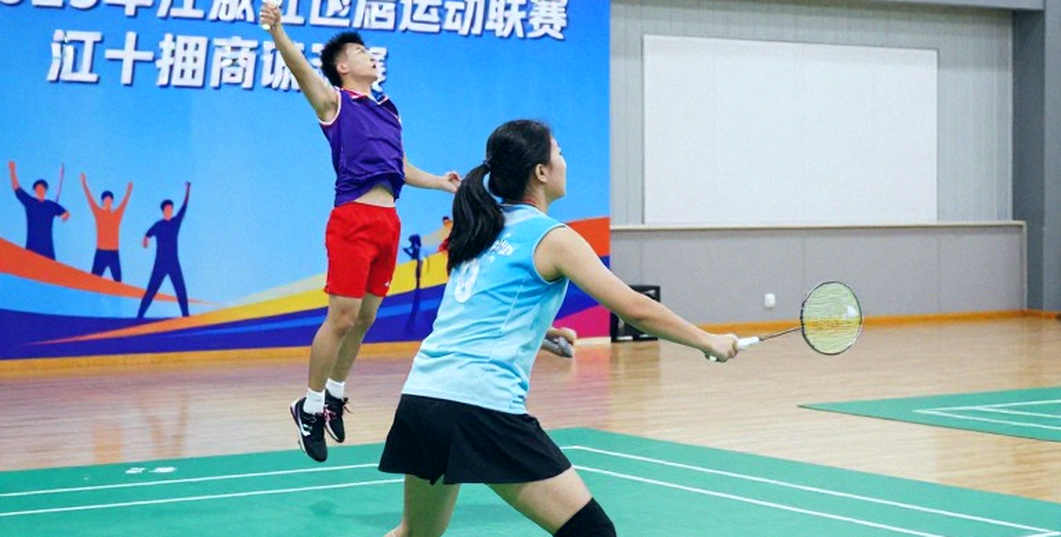
Picture a typical men's singles rally. Player A smashes from the right rear court. The smash is the moment the crowd remembers. But what determines the next shot is the recovery step. If the recovery step is fast enough, A keeps the attacking position. If it is half a beat late, B immediately has a straight push or a cross-court cut, and the rally flips entirely.
That is the badminton equivalent of rest defence in football. I once spent six months encoding hundreds of comparable football situations, classified by pitch zone and pressing direction. In badminton the workload is larger, because a rally lasts only seconds yet can contain seven or even fifteen racket contacts.
Proper analysis requires at least five data layers: the landing spot of every shot, the movement direction of both players, the timing of the jump, the recovery distance after a smash, and the distribution of rally length by game. Without those five layers, any claim such as "fitness collapsed in the third game" is mere feeling.
And feeling is very easy to get wrong.
In Vietnam, that data layer barely exists at domestic level. Super 100 events staged at home have no shot-level landing-spot tracking. National-team training sessions largely lack load-monitoring equipment. Dedicated analysis staff, where they exist, are usually one or two people juggling several other jobs.
This produces a paradox. Vietnamese fans watch more badminton than ever, yet the volume of verifiable information about Vietnamese players themselves grows far more slowly. Attention is outpacing the capacity to produce data.
MORE DATA IS NOT AUTOMATICALLY BETTER
This is the part I want to spend the most time on.
The default reaction to a data shortage is to demand more data. I understand the reflex, and I think most of it points the wrong way. The problem in sports analysis today is not volume. It is the verification chain.
Imagine an analytical framework with twelve cells. If the base cell is empty, the writer has two choices: leave it blank and state clearly "insufficient information", or fill it with a plausible-looking value. The second option is always more attractive, because it feels professional. It also produces the most dangerous thing in this trade: confident conclusions built on an empty foundation.
I have seen this many times. An analysis of a player's endurance assembled from two matches, a few images cut from social media, and an index with no clear source. Readers believe it. The player never knows. And if the outcome later contradicts it, the old piece simply disappears from the timeline.
The system is never wrong. It is only waiting for you to understand late.
For Vietnamese badminton, the correct approach is not importing a mass of foreign metrics and pinning them onto domestic players. The correct approach is building a verification chain from the bottom up: raw data from domestic events, cross-checked against footage, with dates and sources stated, and an acceptance that some weeks you simply do not have enough material to draw a conclusion. It took me six months to build what others call an obsession. But those six months are why every sentence I have written since has something to stand on.
There is one signal I always look for when reading an analysis: does the author dare to write "I do not know"? If not, everything else deserves suspicion.
THREE SIGNALS TO WATCH
The rest of the season will answer a few concrete questions.
A congested schedule during the points-accumulation window is the immediate test. Vietnam's leading players will have to compete back to back, and that is when load problems surface, and when the shortage of fitness data leaves analysts saying a lot while knowing little.
Alongside that, regional Super 100 events are the clearest window onto the generational shift. A young player reaching a Super 100 semi-final does not mean they are ready for Super 500. But the quality of rallies in the second and third rounds says more than the scoreboard.
The most telling signal remains publication. When someone releases Vietnamese badminton figures with dates, sources and measurement conditions attached, that will be the real milestone of a professional badminton nation.
Spectators see the score. I see a chain of decisions less than three metres long.
And if this season ends with cells still empty in my framework, I will leave them that way. An honest empty cell is worth more than a fabricated value. The real question is not who wins the next title, but whether we have the courage to write accurately about what we are not yet sure of.

Cầu thủ liên quan
Bài đề xuất
Nguyen Tien Minh Wins Vietnam Open 2026 Qualifier at 43: One Man's Victory, a Whole System's Invoice2026-09-16
Asian Games 2026: India men sweep Japan 3-0, women lose 1-3 – the depth lesson for Vietnamese badminton2026-09-23
Indonesia Reaches 2026 Asian Games Badminton Final on Two Doubles Points: Men's Singles Remains the Open Question2026-10-04
Bài đề xuất
China Masters 2026: Srikanth's Resurgence, Satwik-Chirag's Dominance, and Lessons from the Bench2026-09-04
Thuy Linh and the Asian Games: The Medal Is Decided Before the Match Begins2026-10-16
Shi Yuqi Withdraws, Li Shifeng Takes the Lead: Kumamoto Masters and the Stress Test of China's Men's Singles Backbone2026-10-03
China Masters 2026: Srikanth, Satwik-Chirag and the Shifting Pulse of Indian Badminton2026-09-19
Loh Kean Yew vs Kunlavut Vitidsarn: A Historic Final at the 2026 Asian Games2026-09-29
Bài đề xuất
Mahoor Shahzad and the 21-5, 21-11 Scoreline: Analyzing the Structural Fault Lines of Pakistan's Women's Badminton2026-09-27
Thuy Linh Took a Set Off the World No. 4, but the Real Gap Was in Game Three2026-10-18
Two Golds in Aichi-Nagoya: When Chinese Badminton Learns to Speak Below Its Strength2026-10-19
India's Badminton Blank in Individual Events at Asian Games 2026: The Price of a Single Anchor2026-10-17
An Se-young and the Record File After Her 2026 Asian Games Gold: Three Beautiful Numbers That Need Verification2026-10-05