
Asian Games 2026: India men sweep Japan 3-0, women lose 1-3 – the depth lesson for Vietnamese badminton
**Câu trả lời cốt lõi:** Tại Asian Games 2026, đội tuyển cầu lông nam Ấn Độ đánh bại Nhật Bản 3-0 ở tứ kết đồng đội nhờ các chiến thắng của Lakshya Sen, Ayush Shetty và cặp Satwiksairaj Rankireddy-Chirag Shetty, qua đó vào bán kết gặp Trung Quốc. Đội nữ Ấn Độ thua Nhật Bản 1-3. **Sự kiện chính:** - Lakshya Sen và Ayush Shetty thắng hai trận đơn; Satwik-Chirag thắng trận đôi, giúp Ấn Độ thắng 3-0. - PV Sindhu, Unnati Hooda, Tanvi Sharma thua ba trận đơn của đội nữ. - Treesa Jolly-Gayatri Gopichand giành điểm duy nhất cho đội nữ ở trận đôi. - Ấn Độ nam gặp Trung Quốc ở bán kết Asian Games 2026 tại Aichi-Nagoya. **Nguồn:** Báo cáo phân tích sâu Stage-2, chưa xác minh độc lập. **Hỏi đáp liên quan:** - Hỏi: Đội nam Ấn Độ có chắc chắn giành huy chương? Đáp: Vào bán kết đồng nghĩa với việc có huy chương, màu sắc tùy thuộc trận gặp Trung Quốc. - Hỏi: Vì sao đội nữ Ấn Độ thua Nhật Bản? Đáp: Cả ba trận đơn đều thua, cho thấy chiều sâu tuyến đơn nữ còn hạn chế. - Hỏi: Bài học cho cầu lông Việt Nam là gì? Đáp: Cần xây dựng chiều sâu đội hình thay vì chỉ dựa vào một ngôi sao đơn lẻ.
When Lakshya Sen stepped onto the court at Ichinomiya City Municipal Gymnasium in Aichi-Nagoya, I was not thinking about world rankings. I was thinking about a question I have asked myself for thirty-five years in this profession: how can a team break an opponent before the match truly begins? The Indian men's team just provided an answer. They swept Japan 3-0 in the badminton team quarter-final at the 2026 Asian Games, and only hours later, the Indian women's team left the tournament with a 1-3 loss to the same opponent. Two results, two stories, and one empty space between them. I read matches through empty space – where nobody stands is where the answer lies. For me, the space between the men's glory and the women's quiet exit is where the real lesson of this day is stored.
Context: the 2026 Asian Games and the team competition
Aichi-Nagoya is hosting the 20th Asian Games, and badminton is one of the most anticipated sports of the event. In the team competition, each tie consists of five matches: three singles and two doubles. The first team to win three matches ends the tie early without needing to play all five. That is exactly what happened in the men's draw. India faced Japan in the quarter-finals. The Indian women's team also faced Japan in the quarter-finals. Same opponent, same competition day, but two completely opposite outcomes.
Under the standard Asian Games format, the two losing semi-finalists still receive bronze medals. That means the Indian men's team, after overcoming Japan, is guaranteed to step onto the podium. The story is no longer about whether they will win a medal, but about what colour it will be.
One thing I want to make clear from the start: the report I received contained no smash speeds, no rally counts, no error rates, no order of play. It only contained results. But for someone who has spent most of his career observing Asian teams, bare results are sometimes the most honest data. They do not tell me which net shot was beautiful, but they do tell me whether each side's squad structure is solid or cracking.
Indian men: the 3-0 victory as a story of depth
A team tie ending 3-0 means the match never reached a fifth rubber. The winning team did not need to use all its weapons. To me, that is the clearest sign of a team with real depth, because they can win from more than one direction of attack.
Lakshya Sen opened with a win in the first singles. This is his familiar role in the national jersey: setting the tempo and creating psychological momentum for the teammates behind him. Next, Ayush Shetty – a young player from the next generation – won the second singles. Finally, the doubles pair of Satwiksairaj Rankireddy and Chirag Shetty sealed the 3-0 scoreline. The name Satwik-Chirag has become a brand in world badminton, and in a team tie they serve as the “bank of points” – where the team deposits its certainty.
What impressed me was not that India has three outstanding individuals. In Asia, many teams have three outstanding individuals. What impressed me was how they distributed responsibility: a seasoned star in the opening match, a young talent given a chance in the middle, and an anchor pair closing out the tie. That is a deliberate design, not a random arrangement.
Indian women: three singles losses and a familiar signature
In contrast, the Indian women's team replayed a script I have witnessed many times among Asian teams in transition. PV Sindhu – the 2026 world champion – lost the first singles. Unnati Hooda, a promising young talent, fell in the second singles. Tanvi Sharma, a teenager given an opportunity, could not make a difference in the third singles. India's only point came from the women's doubles pair of Treesa Jolly and Gayatri Gopichand.
Three singles lost, one doubles won. To me, that is the classic signature of a team lacking depth in the singles department. When three of your singles players all lose in the same team tie, you cannot blame luck or a bad day. Luck cannot make three different players stumble in one afternoon. That is a structural problem.
I learned that lesson the hard way. Having been mocked on live television for analysing a footballer through data, I understand that expertise does not need to be defended; it needs to be proven. But I also understand that data tells only half the story. A big win can make people ecstatic, but it can also hide cracks. In the women's team, the crack was visible to everyone: the singles line-up could not withstand continental competition.
The ageing star and the burden of generations
I want to speak specifically about PV Sindhu. At 31, she remains the biggest name in Indian women's badminton, but losing the first singles in a quarter-final team tie is a signal that cannot be ignored. I have watched too many champions in the late stage of their careers: they do not lose because they lack desire; they lose because their bodies no longer respond to their intentions. That does not diminish Sindhu's value. It simply reminds us that no team can rely on one generation forever.
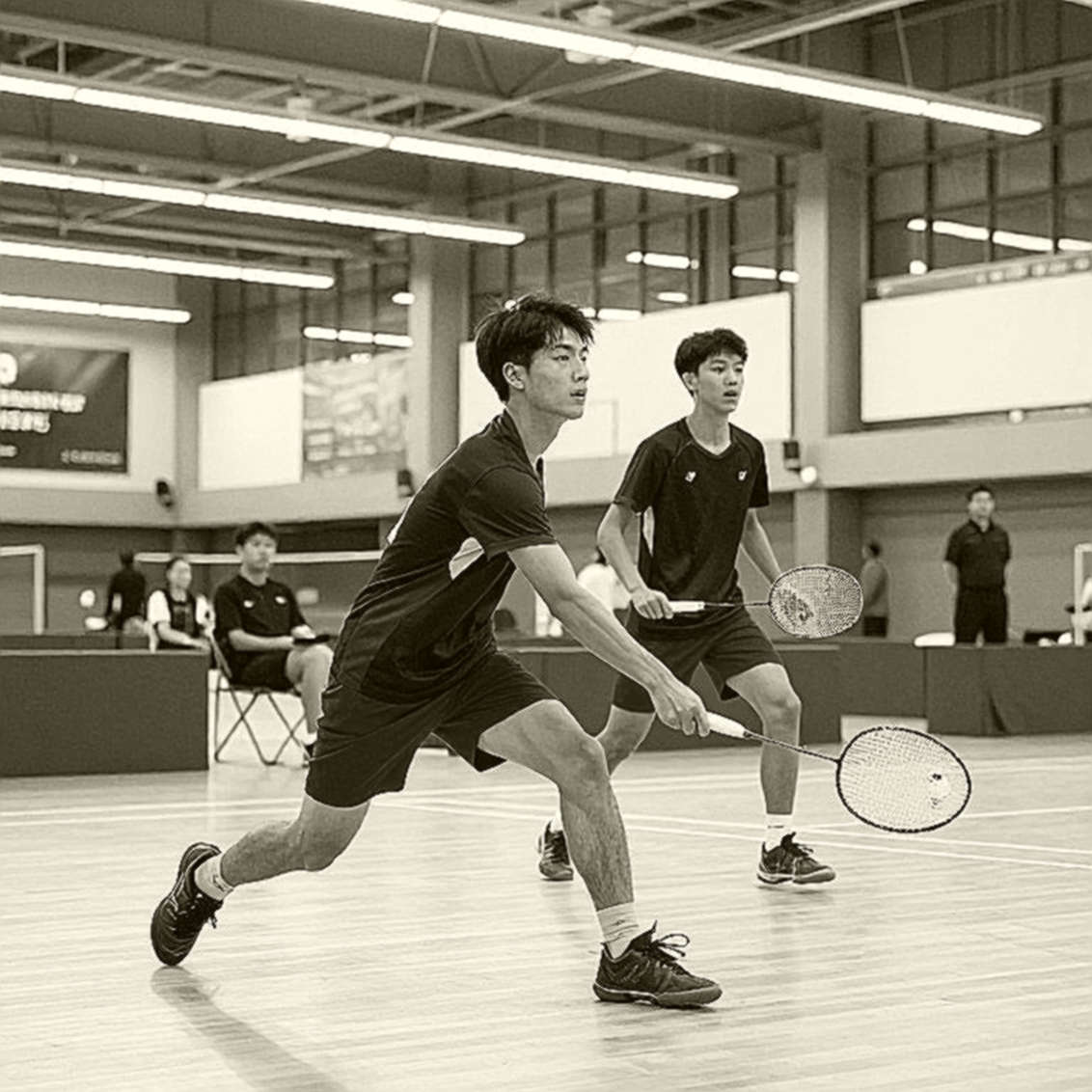
On the other hand, the decision to field Unnati Hooda and Tanvi Sharma in the quarter-finals is a notable signal. They lost, but they are being tested at a major stage. I remember Jude Bellingham playing at 17 on empty stadiums during the pandemic, and I remember the phrase I keep to myself: 80,000 people can make a boy tremble, but only a child who learns to play inside his head can win. Ayush Shetty, Unnati Hooda, Tanvi Sharma – all of them are learning to play inside their heads at an age when many Vietnamese players are still trying to find their footing at youth tournaments.
The blind spot: China and the trap of victory
Now, let us talk about what few people want to mention. The 3-0 win over Japan is a big result, but India have not yet faced China. In the semi-finals, they will meet the team widely regarded as the great wall of Asian badminton. Based on my experience following these matches, a team can beat Japan because they have depth, but to overcome China, they need more than that: they need a perfect day from every individual.
I sat in Moscow in 2026 and watched Croatia refuse to collapse against England even though all the data said they would run out of energy. I collapsed before their resilience. Since then, I have never used the word “certain” in my analysis. The semi-final between India and China will be a test not only of skill but also of nerve.
What I am trying to say is this: do not rush to turn the 3-0 victory into a manifesto. Let the semi-final speak. If India win, it will be a seismic shock for world badminton. If they lose, it is not a failure. It is a team on the right track, hitting their own ceiling and knowing they need to break it in the next cycle.
A mirror for Vietnamese badminton
From Vietnam's perspective, India's story carries a painful familiarity. We also have singles stars who shine in individual tournaments, but every time we enter a team event, we realise that one star cannot fill the space of six or seven positions. I have been mocked many times for saying this. The first time I was mocked, I thought I was wrong. It turned out people are just afraid of unfamiliar perspectives.
What the Indian men's team just did is not miraculous. They did something very simple and very difficult: they built a system that can replace each position without collapsing. Lakshya Sen is the product of a men's singles pipeline invested in for years. Satwik-Chirag is a pair developed through high-level international competition. Even the young players who lost in the women's team are accumulating experience that no young Vietnamese player can gain in a similar environment.
But this story is not only about India. For Southeast Asian badminton nations, where many teams still depend on one or two stars, this quarter-final is a reminder. Indonesia and Thailand have deeper traditions than Vietnam, yet even they are wrestling with the generational problem. India chose a radical solution: giving young players opportunities in do-or-die matches. That approach may cost them in a few tournaments, but in the long run, it creates a squad that can replace itself without trembling.
If I had to answer the question “what separates a medal team from a tourist team”, I would answer: squad depth. Not stars, not budget, not tradition. Today's match at Ichinomiya proved it clearly. The men's team had depth and won 3-0. The women's team lacked depth and lost 1-3. Same federation, same day, same opponent.

The semi-final against China will answer the final question
In a few days, the Indian men's team will step into the semi-final against China. Whatever the result, their story at the 2026 Asian Games has already given us something more precious than a medal: evidence that squad depth is the only asset money cannot buy, and the only thing that can keep a badminton nation standing across generations.
For a child practising badminton in Vietnam, that lesson may be worth more than any title. Before demanding a new star, build a system that can produce one. And before celebrating a victory, ask yourself: can we still stand when the third or fourth position in the team has to speak? The Indian men's team just answered that question. The Indian women's team also answered it. The two answers are separated by an empty space, and from that space I read the most important thing of the day.