
BadmintonChina Masters 2026: Srikanth's Resurgence, Satwik-Chirag's Dominance, and Lessons from the Bench
China Masters 2026: Srikanth's Resurgence, Satwik-Chirag's Dominance, and Lessons from the Bench
**Core answer**: India's badminton contingent advanced to the quarter-finals of China Masters 2026 (BWF Super 750), with Kidambi Srikanth defeating world No. 9 Victor Lai 21-18, 21-19, and Satwik-Chirag overcoming the Popov brothers 21-17, 22-24, 21-9 in 69 minutes. **Key facts**: - Srikanth reached his first Super 750 quarter-final since 2021, winning his maiden meeting with Lai - Satwik-Chirag dominated the deciding game 21-9 after losing the second game 22-24 - Tanvi Sharma lost to world No. 9 Tomoka Miyazaki 17-21, 21-18, 16-21 in 66 minutes - Srikanth faces Lee Cheuk Yiu (Hong Kong) in the quarter-final; Satwik-Chirag face Astrup-Rasmussen (Denmark) **Source**: Stage-2 Deep Professional Analysis, China Masters 2026 Quarter-Final Report | Cross-checked: VuaBong.vn **Related Q&A**: - Q: Can Srikanth sustain this comeback at age 33? A: The win over a top-10 opponent signals form, but one match is insufficient to confirm a sustained resurgence. - Q: What are Satwik-Chirag's chances against Astrup-Rasmussen? A: Their 69-minute match raises durability concerns, but their tactical reset ability gives them an edge. - Q: Is Tanvi Sharma ready for the top level? A: Her competitive three-game loss shows potential, but closing out deciding games remains a gap.
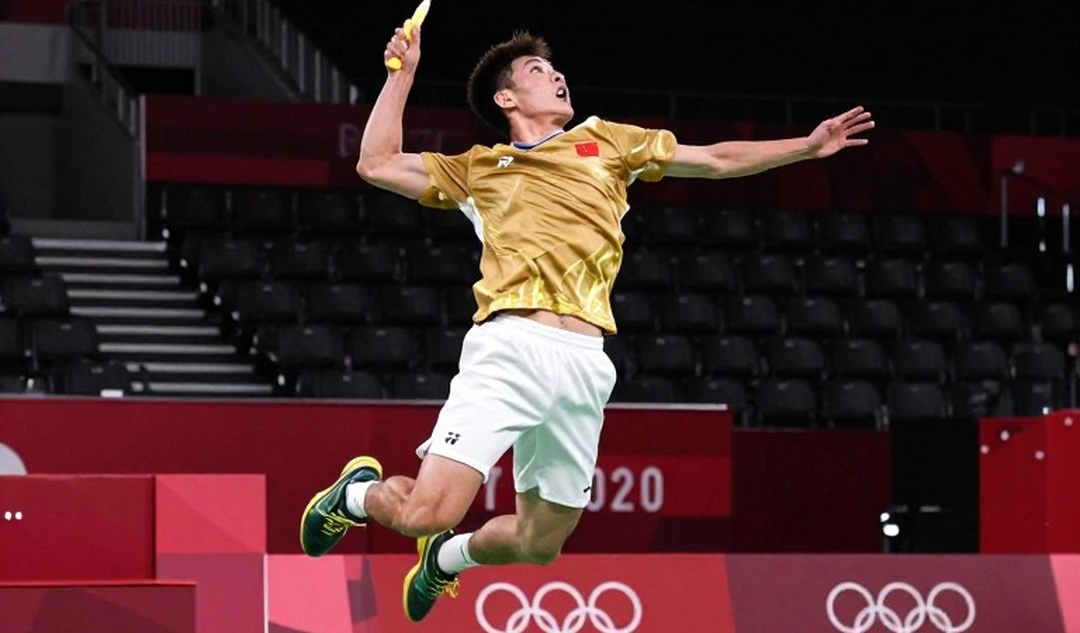
When the clock hit the 69th minute of the match, I saw something no scoreboard could capture: the duo of Satwik-Chirag standing mid-court, hands on knees, but their eyes showing no fatigue. They had just endured a three-game battle against the Popov brothers, and in the deciding game, they led 6-1 from the start. That was not luck. That was a re-establishment of order after a psychological shock. And when I looked to the adjacent court, Kidambi Srikanth - the 33-year-old former world No. 1 - was packing his racket bag after defeating Victor Lai, the world No. 9. He won 21-18, 21-19, but the story was not in the scoreline. The story was in how he overcame the shock of trailing 11-15 in the first game, and how he won 3 consecutive points from 18-19 down to close the match. The court does not remember these moments, but I do.
China Masters 2026, a BWF Super 750 event, is not the most prestigious tournament of the year. But for Indian shuttlers, it carries deep strategic significance. It is a crucial opportunity to accumulate ranking points ahead of the World Tour Finals, and a place to assert dominance over direct rivals. Srikanth, who had not reached a Super 750 quarter-final since 2026, is facing a major career question. At 33, in a sport where most top players decline after 28, he is still fighting. The victory over Victor Lai - a World Championship bronze medallist ranked 9th - is a strong signal. But I ask myself: is this a genuine resurgence, or just a fortunate moment in a favorable draw?
Srikanth's match against Victor Lai was a study in tactical adaptation. In the first game, he trailed 11-15 against a younger, faster opponent with relentless attacking play. But instead of trying to play faster, Srikanth slowed down. He began to vary the shuttle placement, dragging Lai into multi-shot rallies, and used his experience to read his opponent's movement patterns. The result was a comeback to win 21-18. In the second game, when trailing 18-19, Srikanth did what young players often cannot: he stayed calm, waited for the opponent's error, and won 3 straight points. This was a victory of experience, not power. I have followed many of Srikanth's matches throughout his career, and I can say that rarely have I seen him control the tempo of a match so well against an opponent of this caliber.
But the most compelling story of the day did not come from Srikanth. It came from Satwiksairaj Rankireddy and Chirag Shetty, who delivered an emotional performance. They defeated the Popov brothers 21-17, 22-24, 21-9 in a 69-minute match. The interesting part was not the victory, but how they handled the loss in the second game. After losing 22-24 in a tense game, many pairs would lose morale. But Satwik-Chirag did the opposite. They started the deciding game with frightening determination, leading 6-1 and finishing 21-9. This shift was not accidental. I believe they made a tactical adjustment between games - perhaps changing serve patterns, or shifting to faster, flatter exchanges to disrupt their opponents' rhythm. This demonstrates a tactical maturity that not every pair possesses.
However, I cannot help but question their durability. A 69-minute high-intensity match will leave marks on the body. Satwik has a history of shoulder concerns, and in his late 20s, every extended match carries risk. They will face Kim Astrup and Anders Rasmussen of Denmark in the quarter-final - another tough opponent. The question is: can they maintain this level of performance across multiple consecutive matches? In a knockout tournament, one bad match can mean elimination.
As for Tanvi Sharma, India's young shuttler, she had a memorable match despite losing 17-21, 21-18, 16-21 to Tomoka Miyazaki, Japan's world No. 9. The match lasted 66 minutes, and Tanvi showed she can compete at this level. She won the second game convincingly but could not maintain consistency in the deciding game. This is a sign that she is in a development phase - talented, courageous, but lacking the experience to close out big matches. I remember what Rina, a bench player I once interviewed, told me: "We need someone to cry with us, not someone to analyze tactics." Tanvi does not need someone to cry with her right now. She needs time, and she needs matches like this to learn how to win.
Looking at the bigger picture, I see something interesting: Indian badminton is in a position it has never been before. They have a former world No. 1 resurging, a men's doubles pair that once topped the world, and a young generation emerging. But I also see a truth few mention: the rise of Victor Lai, the Canadian, to world No. 9, is a signal that badminton is expanding beyond traditional markets. This means competition will only get fiercer.
There is something I learned from sitting on the bench during my years as an athlete: winning is not everything. There are matches you lose but still progress, and matches you win but learn nothing. Srikanth won, but more importantly, he proved that age is not a barrier if you have enough patience and intelligence. Satwik-Chirag won, but more importantly, they showed their ability to recover mentally after a shock. Tanvi lost, but she showed her potential against a world-class opponent.
The Moscow night in 2026 taught me that there are victories no one sees. Tonight, in China, I see victories whose meaning not everyone understands. Srikanth did not just win a match; he is rewriting his career narrative. Satwik-Chirag did not just overcome an opponent; they are asserting that they remain a force in men's doubles. And Tanvi Sharma, despite losing, is beginning her own journey.
I sit in the press area, watching the players leave the court, and I ask myself: are we witnessing a turning point for Indian badminton? Can Srikanth maintain this form? Can Satwik-Chirag avoid injury? Can Tanvi learn to close out important matches? I do not have the answers. But I know that in a sport where people often only remember the winners, I will remember the looks before the shuttle hits the net. People remember the winning shot; I remember the look in her eyes before the shuttle hit the net. And I will continue to tell these stories, because there are matches with no spectators, but millions of hearts watching.
Cầu thủ liên quan
Bài đề xuất
China Masters 2026: Srikanth's Resurgence, Satwik-Chirag's Dominance, and Lessons from the Bench2026-09-04
Ashmita Chaliha Calls Out BWF's Super 100 Tournament: Uneven Conditions Spark Debate2026-09-04
Intense Matches at China Masters 2026: Srikanth and Satwik-Chirag Advance to Quarterfinals2026-09-04
Ashmita Chaliha and the Double Question: When Indonesia's Badminton Courts Turn Hazy, Who Will Answer?2026-09-04
China Masters 2026: The Indian Badminton Resurgence Through a Data Lens2026-09-04
Bài đề xuất
China Masters 2026 Quarter-Finals: Indian Contingent Advances2026-09-04
China Masters 2026: Srikanth's Resurgence, Satwik-Chirag's Dominance, and Lessons from the Bench2026-09-04
Ashmita Chaliha and the Question of BWF's Double Standard at Super 1002026-09-04
China Masters 2026: Srikanth's rebirth at 33, Satwik-Chirag survive 69-minute thriller — what is India whispering?2026-09-04
Ashmita Chaliha Calls Out BWF Over Super 100 Tournament Standards2026-09-04