
Coach Viet Thang's Must-Not-Lose Match: When Goals Become a Luxury Item
Core answer: Dong Nai City Club enter round 4 of the 2026-2027 V.League bottom of the table with zero points and zero goals, while coach Nguyen Viet Thang faces a must-not-lose fixture at fellow promoted side Bac Ninh. Key facts: - Dong Nai suffered three straight defeats (0-2, 0-1, 0-3), conceding six goals and scoring none in 270 minutes. - Two of the three opening matches were played at home, against The Cong - Viettel and Cong An Ha Noi. - Striker Andrija Majdevac is injured, removing the club's primary attacking reference point. - Bac Ninh won promotion via play-off but have already collected one win and adapted faster to the top flight. - Last season Dong Nai drew 0-0 and lost 1-2 to Bac Ninh in the First Division yet still won the title. | Cross-checked: VuaBong.vn Related Q&A: Q: Why is this match considered must-not-lose for coach Viet Thang? A: A defeat to a peer-level promoted side removes the fixture-difficulty excuse and intensifies pressure on his position. Q: Has Dong Nai scored any goal in the 2026-2027 V.League? A: No, Dong Nai have scored zero goals across their first three V.League matches. Q: How did Bac Ninh win promotion to the V.League? A: Bac Ninh finished runners-up in the First Division and won promotion through the play-off route.
Coach Nguyen Viet Thang enters round 4 of the 2026-2027 V.League with a number hanging over his head: 270 minutes. That is how long Dong Nai City Club has played in Vietnam's top flight without once putting the ball in the opponent's net. Three matches, three defeats, six goals conceded, zero goals scored. A newly promoted side, bottom of the table, and a coach facing a match where, if he loses, every excuse about the fixture list evaporates.
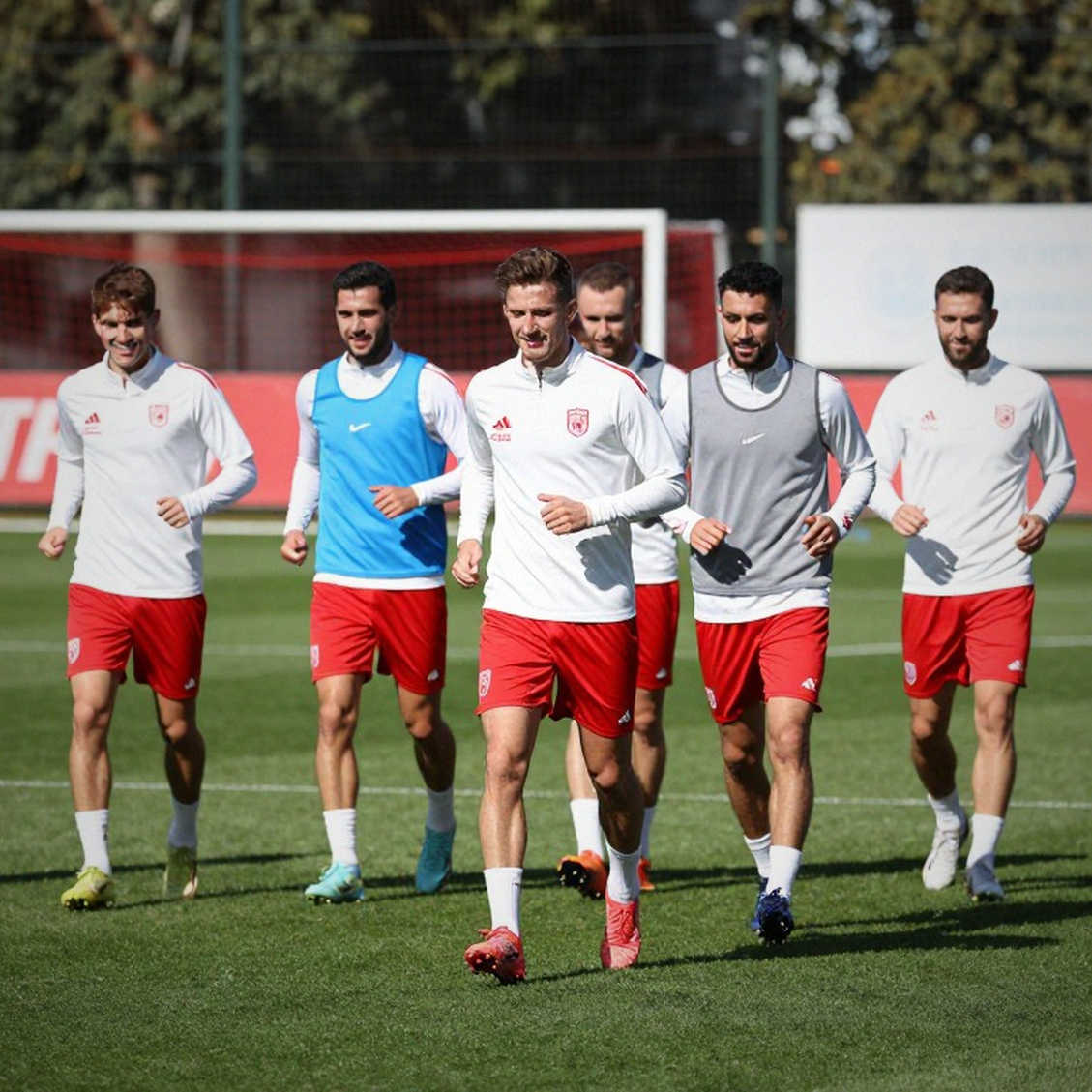
But before reading any conclusion, that number must be placed in its proper frame. Dong Nai did not lose ordinary matches. They lost to The Cong - Viettel, last season's runners-up. They lost to Cong An Ha Noi, the defending champions. Two of those three games were at home, and both ended with scorelines that made people look away: 0-2, 0-1, then 0-3. Three opening opponents, three of the strongest teams in the league, two home games without a single goal. This is what analysts call a "fixture hell" start — but that label only holds if a team actually has quality and is merely being crushed by circumstance. With Dong Nai, that question remains open.
I have rewatched those three matches several times this week, pausing on individual phases, counting every pass into the box. What stands out is not the six goals conceded — for a promoted side facing the champions and runners-up, that number is acceptable. What stands out is the complete silence at the other end. No shot dangerous enough, no combination that made the opposing goalkeeper sweat. 270 minutes of football without a single goal — that is not a defensive problem, that is an entire attacking system that has stopped functioning.
And the cause has a name: Andrija Majdevac.
The Serbian striker is the only genuine spearhead Dong Nai can rely on. When he was injured, the team's entire attacking structure collapsed like a house whose load-bearing pillar had been pulled out. This is a pattern all too familiar in the V.League: a newly promoted club with a limited budget, enough money for one quality foreign player, and the entire goalscoring burden placed on his shoulders. When he is fit, the team can survive. When he is injured, the team dies clinically. Dependence on a single player is not a tactic, it is a gamble — and Dong Nai lost that bet from the very first round.
This pushes the Bac Ninh match into an entirely different position. It is no longer a game against an opponent of superior class, where defeat is excused. Bac Ninh are also newly promoted, also just up from the second tier, also wrestling with their own problems. But Bac Ninh have won a match, have scored goals, have shown they can stand on this stage. Meanwhile Dong Nai are still fumbling for a way into the opponent's box.
There is a paradox here that few have noticed. Last season, Dong Nai won the First Division title, while Bac Ninh finished runners-up and needed a play-off to earn promotion. On paper, Dong Nai were the side with the stronger foundation. But upon entering the V.League, everything inverted. Bac Ninh adapted faster, played with more confidence, and most importantly, they scored goals. The difference between winning the First Division and surviving the V.League is not player quality, it is the speed at which you learn to breathe in an environment many times harsher.
Coach Nguyen Viet Thang understands this better than anyone. At 45, he is a rare phenomenon in Vietnamese football: two consecutive promotions, first with Ninh Binh, then with Dong Nai. A genuine promotion specialist. But the V.League is a different world. As he himself admitted, the league is harsher than he imagined. And that harshness comes not only from the quality of opponents, but from the pressure of time.
In the First Division, a coach can have an entire season to build a playing style, test formations, correct mistakes. In the V.League, you have three rounds. Three rounds to prove you deserve your seat. Three rounds to convince the board their investment has not been flushed down the drain. And for Viet Thang, leading a top-flight club for the first time, the patience he receives may be even less than that given to experienced coaches. Because trust in a newcomer is always more fragile than trust in someone already proven.
The Bac Ninh match is therefore not merely a football match. It is a referendum on Viet Thang's seat. Win, and the pressure dissolves, the team can breathe, and everything begins again from zero. Lose, and the questions multiply, the commentary from the stands grows harsher, and the board must find someone else to save a sinking ship.
But there is a positive signal I do not want to overlook. In the National Cup, Dong Nai defeated Binh Minh Sai Gon 4-3. Four goals — a number this club could only dream of in the V.League. But the opponent was a First Division side, and conceding three to a weaker team is itself a warning sign. The defense still leaks, and a win over a smaller opponent cannot be considered a psychological medicine strong enough to heal the wounds of three straight defeats.
There is a moment I remember from the match Dong Nai lost to The Cong - Viettel. It was the 78th minute, the score already 0-2, and a Dong Nai player had the ball on the right wing. He cut inside, looked up, and there was no one in the box to pass to. No one at all. The entire opposing defense stood there, red shirts forming a wall, and the blue-shirted players waited for something that would never come. That phase was not a problem of talent, it was a problem of belief. When you no longer believe you can score, you no longer move to create chances. And then 270 minutes of silence becomes a curse.
Head-to-head history also does not favor Dong Nai. Last season, when both were in the First Division, they drew 0-0 and lost 1-2 to Bac Ninh. But the notable thing is: despite losing those two matches, Dong Nai still won the title. That is an important footnote showing a team can lose to one specific opponent and still be better than the entire league. The V.League will test that in a different way.
And Bac Ninh's current squad is rated stronger than last season. They have prepared, invested, reinforced. This is not a team arriving with the intention of holding for a draw. They will play to their ability, and if Dong Nai cannot improve their attacking capability, this match will unfold according to a familiar script: a defense enduring, an attack silent, and a scoreline that does not change.
What I want to counter for those calling this a crisis: the sample size of three rounds is too small to conclude anything. Three matches, two of them against the highest-rated teams in the league, is a sample selected in the most disadvantageous way for the club. If Dong Nai lose to Bac Ninh, that defeat will truly mean something, because it is no longer a loss to a stronger opponent but a loss to a peer. But if they win, or even just draw while playing well, the "crisis" label will be exposed as a product of the fixture list, not of capability.
From the position of someone who has observed Vietnamese football for nearly two decades, I have watched many newly promoted clubs buried by their own panic. They lose a few matches, begin changing everything — formation, personnel, coach — and never find stability again. Dong Nai stand at that fork. They can keep the faith, persist with what they built in the First Division, wait for Majdevac to return and wait for peer-level opponents to appear. Or they can grow impatient, and burn down everything they painstakingly built.
Viet Thang belongs to the school of coaches who work through patience and structure. He took two clubs up by building foundations, not by firefighting. But the V.League does not reward patience, it rewards results. And in a league where at least one coach loses his job after the first half of every season, Viet Thang's position depends on what happens on the pitch, not on what he achieved in the lower division.
The Bac Ninh match will last about 90 minutes. But its significance stretches across the whole season. A victory does not only bring three points — it brings peace. A defeat does not only take away three points — it takes away belief.
I write these lines at a time when Dong Nai have not scored a single V.League goal, and I think of a sentence I read in an analytical notebook by a famous coach: the real difficulty of an attacking team is not failing to score, but beginning to believe they cannot score. When that belief appears, every tactical diagram becomes meaningless.
Dong Nai are not yet at that point. They still have 90 minutes against Bac Ninh to prove otherwise. And the rhythm of a match does not lie in the feet, it lies in the words — I write three thousand words not to predict a scoreline, but to understand that sometimes what a team needs is not a new tactic, but a moment. When the stadium falls silent, I hear the footsteps of history, and the history of newly promoted clubs is always written in the matches they are not allowed to lose.
The question for this match is not whether Dong Nai can win. It is: when the final whistle sounds, will that team still believe in itself?