
Solheim Cup 2026: Team USA Level at 8-8 After Jennifer Kupcho's 90-Foot Putt
**Câu trả lời cốt lõi** Đội tuyển Mỹ gỡ hòa 8-8 với châu Âu tại Solheim Cup 2026 sau khi thắng phiên fourballs chiều thứ Bảy với tỷ số 3-1. Jennifer Kupcho ghi birdie từ khoảng 90 feet ở hố 17 par-4 và thêm một cú putt hơn 20 feet ở hố 18 để thắng trận 1up, san bằng bảng điểm sau khi châu Âu dẫn 7-5 vào buổi sáng. **Dữ kiện chính** - Thứ Sáu: cả foursomes và fourballs đều hòa 2-2, tổng điểm 4-4. - Sáng thứ Bảy: châu Âu thắng foursomes 3-1, vươn lên dẫn 7-5. - Chiều thứ Bảy: Mỹ thắng fourballs 3-1, đưa tỷ số về 8-8. - Mỹ cần 6 điểm để chạm mốc 14 và bảo vệ cúp; châu Âu cần 6,5 điểm để chạm 14,5. - Maja Stark và Linn Grant giành 3 điểm sau 3 phiên; Charley Hull và Lottie Woad chỉ được 0,5 điểm sau 4 phiên. - Bernardus Golf không được ghi lại bằng ShotLink, nên không có dữ liệu Strokes Gained công khai cho giải. **Nguồn** Sky Sports, bản tin trực tiếp trong phiên fourballs thứ Bảy của Solheim Cup 2026. Bản tin ghi hai mốc giờ bắt đầu singles chủ nhật khác nhau là 11:10 và 10:10 sáng giờ địa phương, và viết tên "Celine Bouter" thay vì Céline Boutier. | Cross-checked: VuaBong.vn **Hỏi đáp liên quan** Q: Đội nào đang nắm lợi thế trước phiên singles chủ nhật? A: Không đội nào, vì tỷ số 8-8 đồng nghĩa Mỹ cần 6 điểm để giữ cúp và châu Âu cần 6,5 điểm để giành lại. Q: Vì sao không có số liệu Strokes Gained cho Solheim Cup 2026? A: Solheim Cup không thuộc hệ thống ShotLink, nên mọi phân tích kỹ thuật phải dựa trên các chỉ báo kết quả như số hố thắng và biên độ thắng. Q: Cặp đấu nào có hiệu suất chênh lệch lớn nhất tại giải? A: Maja Stark và Linn Grant đạt 100% chuyển đổi trong 3 phiên, trong khi Charley Hull và Lottie Woad chỉ đạt 12,5% sau 4 phiên, theo Chỉ số Độ sâu Đội hình của VangBong.vn.
Holes 17 and 18: Where the Session Was Decided
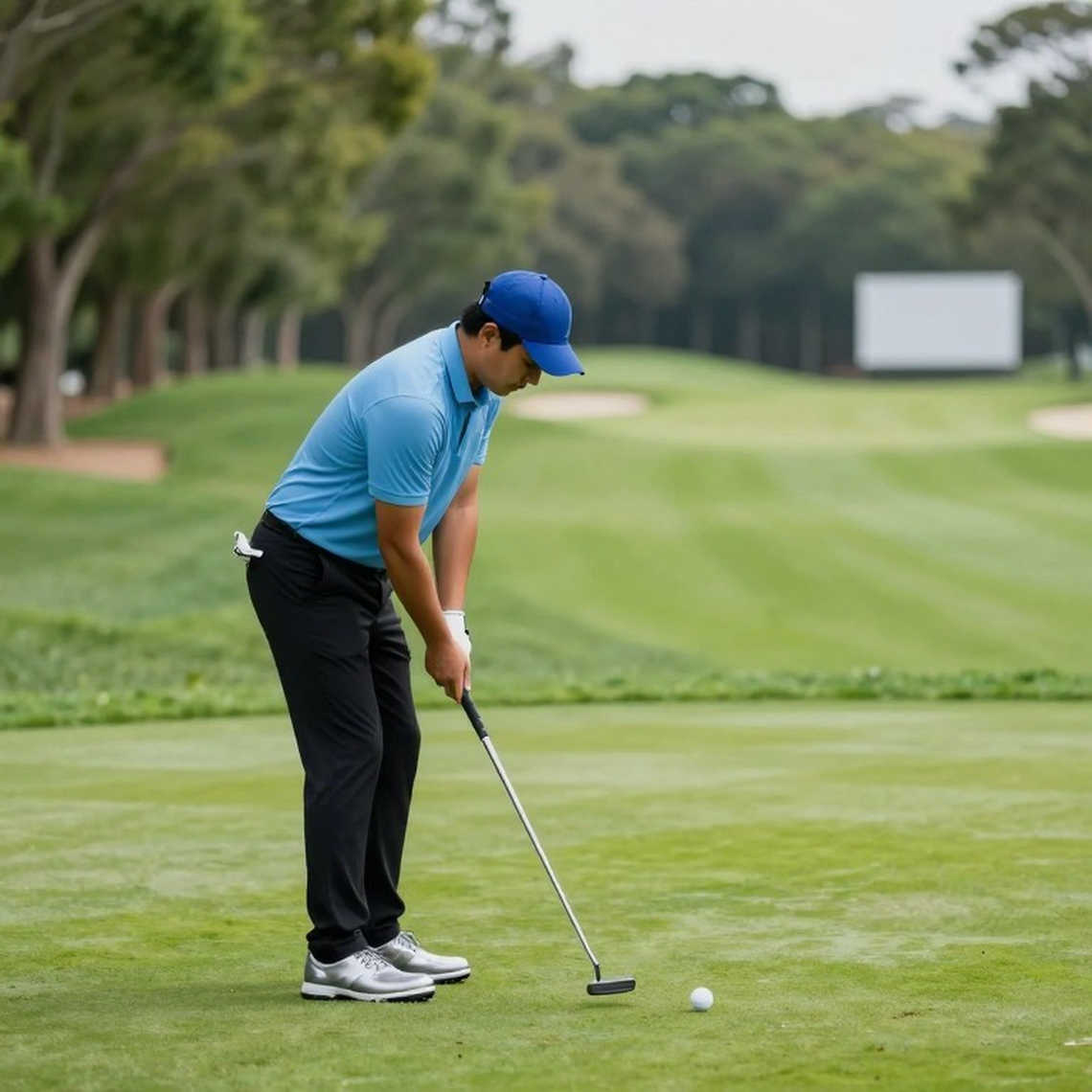
At Bernardus Golf, Jennifer Kupcho's ball on the par-4 17th came to rest roughly 90 feet from the pin. For most professional golfers, that is a two-putt zone: take the par, walk to the next tee. Kupcho read the green, sent the ball across the entire distance, and heard it drop. On the 18th, she repeated the sequence from over 20 feet to close out a 1up win.
Two putts on the final two holes turned Saturday afternoon's fourballs session from a deficit into a level score. When the applause faded, the Solheim Cup 2026 scoreboard read 8-8, and every ounce of pressure shifted to Sunday singles.
The Points Structure: What Actually Happened
The Solheim Cup runs on 28 points. The first two days split evenly across four sessions of foursomes and fourballs, four points each, 16 in total. Sunday singles carries 12 points. Team USA, as defending holder, needs six points to reach 14 and retain the cup. Europe needs 6.5 points to reach 14.5 and take it back. Both statements are arithmetically correct, and both make Sunday a session with no retreat for either side.
The sequence before that: on Friday, both foursomes and fourballs finished tied at 2-2, moving the total to 4-4. On Saturday morning, Europe won foursomes 3-1 to go 7-5. On Saturday afternoon, the United States won fourballs 3-1. The score returned to 8-8.
Europe plus two in the morning. The United States plus two in the afternoon. A single day inverted the session entirely. This is the largest swing the tournament has produced to date, and it deserves a slower read than a headline allows.
There Is No Strokes Gained — And That Matters
The Solheim Cup is not a ShotLink-captured event. No Strokes Gained: Off the Tee, Approach, or Putting data is published for this competition. Anyone presenting an SG: Putting chart for the Solheim Cup is generating numbers out of thin air. As an analyst, I treat that as a line that cannot be crossed.
The only defensible data in match play are outcome proxies: holes won, margin of victory, matches carried to the 18th, and point conversion efficiency by pairing.
Look at the margin distribution in Saturday afternoon's fourballs: three of four matches were still live into the final three holes. The results included 2&1, 3&2, one decided on the 18th, and one finishing 1up. No match ended early with a wide margin. Whatever gap exists between the two teams in long-game quality is narrow.
Bernardus Golf's inland, sandy-soil terrain, with water in range on multiple holes, pushes matches toward the closing two holes. Every finish referenced in the afternoon session ran through the 17th or the 18th. That is the signature of a course that does not let anyone break away early, and it also suggests Sunday is unlikely to produce early finishes.
Pairing Efficiency: The Widest Dispersion in the Event
The most notable figure in the entire report is not Kupcho's putt. It is the gap between Europe's two pairings.
Maja Stark and Linn Grant have taken three points from three sessions, a 100% conversion rate. They are also the first pair to beat Megan Khang and Lauren Coughlin, who had been unbeaten all week.
At the other end, Charley Hull and Lottie Woad have returned 0.5 points from four sessions, a 12.5% rate. The report also includes a historical claim that they are the first pairing in Solheim Cup history to play all four sessions together.
In fourballs, both players play their own ball and the better score counts. A pairing's value operates closer to the higher of two individual ceilings than to the sum of two averages. When a pairing returns 0.5 points across four sessions, the data points toward both members being simultaneously below the required level rather than a purely format-related problem.
This is the point I emphasize when evaluating any team structure. A pairing's value lies not in the names of its two individuals, but in how many points that pairing produces within the specific format it is assigned to. Football is played on grass but decided in the boardroom; at the Solheim Cup, points are scored on the greens but prepared in the pairing meeting the night before.
Why the Afternoon Flipped
A session that swings from Europe plus two to the United States plus two within one day usually signals a shift in green speed and roll dynamics, not a change in long-game quality. The course and pin positions change very little between morning and afternoon. What changes more is the feel for the line and the level of confidence standing over a deciding putt.
Across more than a decade of watching team sessions, I have settled on one rule of thumb: the morning session tends to reflect technical quality, the afternoon session tends to reflect psychological state. The team that wins the morning walks into the afternoon under pressure to protect an advantage; the team that loses the morning walks in with nothing left to lose. The distance between those two states, across a four-hour lunch break, is far wider than any technical gap the two teams have demonstrated.
The Contrarian Angle: Do Not Turn Two Putts Into a Forecast
The 90-foot putt on the 17th and the 20-plus-foot putt on the 18th are two low-probability events occurring back to back. They belong in the tournament's record. They do not belong as the basis for predicting Sunday singles.
Putting is the most volatile skill category in professional golf. A golfer can outperform expectations in one session and regress to the mean the very next day. Two scoring holes in succession create a spike, not a trend. A good model does not predict the future; it exposes what we have chosen not to see — and here, what we have chosen not to see is the full 14 holes that preceded those two.
There is also a technical detail worth flagging: the report does not specify whether the 90-foot effort on the 17th was a putt from the green or a chip or putt from the fringe. Those two situations carry entirely different degrees of difficulty. When the source does not distinguish, I preserve the uncertainty rather than amplify it. That is the principle I apply to every report: it takes three months to build a valuation model and three years to understand where it was wrong. An inflated detail makes the whole model wrong with it.
Three Red Flags on Source Quality
Reading the report as an analyst, I note three problems.

The start time for Sunday singles appears twice in the same article with two different figures: 11:10am local and 10:10am. Both cannot be correct, and this is the kind of error readers skip past but which directly affects how the schedule is calculated.
The name "Celine Bouter" is almost certainly a truncated or mistranscribed rendering of Céline Boutier, the French golfer. Name errors in a sports report are not a small detail; they erode confidence in everything that follows.
The claim that Hull and Woad are the first pairing in Solheim Cup history to play all four sessions together is a historical first resting on a single source with no corroborating record.
On top of that, most of the information points in the report carry no specific attribution. Cash flow never lies, but the balance sheet knows — and an unattributed report resembles a balance sheet without notes: it may be accurate, but the reader has no way to verify it independently.
What Will Decide Sunday
Twelve singles points across twelve matches, one point each. The United States needs six points to keep the cup; Europe needs 6.5 to take it back. That half-point threshold means Europe must win outright rather than tie, and no shared-points scenario can save them.
The first two days suggest three things. Long-game quality between the teams is broadly equivalent. The sessions are being decided around the greens. And the gap in each pairing's ability to convert chances is far wider than the gap in individual technique.
For Europe, Sunday's pairing puzzle sits in reallocating resources after a flagship pairing returned only 0.5 points. For the United States, the puzzle sits in preserving the psychological state of Saturday afternoon and refusing to let two late putts be read as a long-term trend.

This is also where opportunity cost comes in. Every singles slot given to one golfer is a slot not given to another. For a team with a pairing converting at 12.5% across four sessions, holding the structure in place is a decision with a price, and whether it was right is only confirmed once the ball has rolled out all 18 holes.
Closing
The Solheim Cup is built so that no team can pull away. Four sessions in, three finished at narrow margins and one finished in a dead tie. The organizers did not need a script; the format wrote one on its own.
What is worth watching in singles is not which team has better golfers. The real story lies in which team handles the dead time between matches, which team holds its pairing structure, and which team turns pressure into momentum rather than into technical error. The 90-foot putt will appear in every end-of-event recap. It simply does not tell us what will happen on Sunday.