
Swiatek and the fateful test: When 41% data meets 75% ambition at the US Open
Iga Swiatek (hạng 8 WTA) sẽ đối đầu Nadia Podoroska (hạng 449) tại vòng 2 US Open 2026 trên sân Grandstand lúc 11 giờ địa phương. Swiatek đang có phong độ cao với chức vô địch Toronto và bán kết Cincinnati, sở hữu tỷ lệ thắng 75% trên mặt sân cứng. Podoroska chỉ thắng 41% trên mặt sân cứng và vừa trải qua trận đấu kéo dài 2 giờ 48 phút ở vòng một. | Nguồn: Phân tích chuyên sâu US Open 2026 | Cross-checked: VuaBong.vn
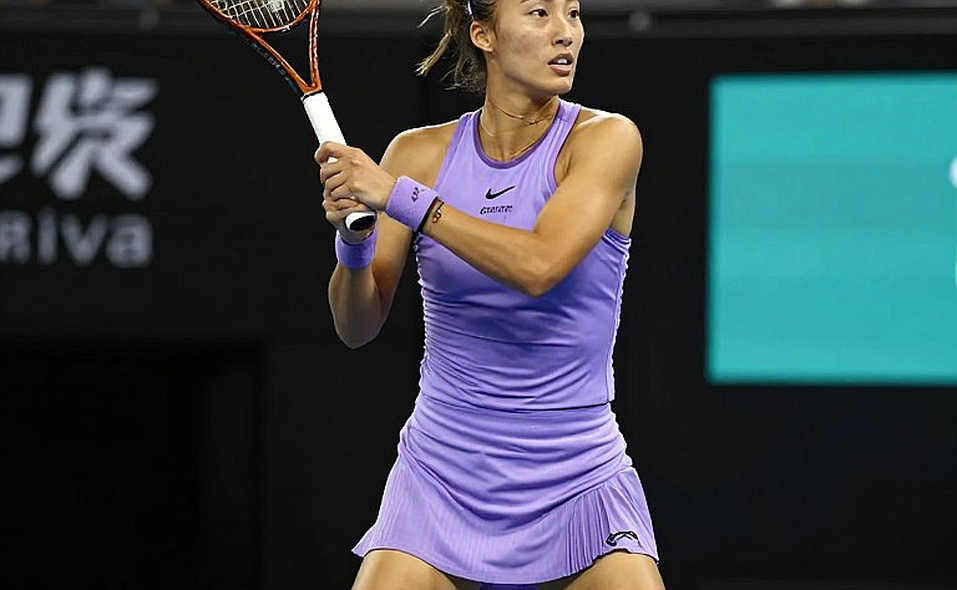
Flushing Meadows, 11 AM local time. The Grandstand court is still in the shade after the night matches, but the atmosphere is already heating up for a match that pundits have almost written the script for. Iga Swiatek, the most devastatingly in-form player in this section of the draw, enters the court as the leading title contender. Opposite her stands Nadia Podoroska, the Argentine ranked 449th in the world, who just endured 2 hours and 48 minutes of grinding in the first round. This disparity lies not only in rankings but in a haunting statistic: Podoroska's hard-court win rate is just 41%, while Swiatek's corresponding figure is 75%.
To understand why this match is viewed as a lopsided contest, we need to revisit both players' form trajectories over the past summer. Swiatek just won the Toronto title — her first since Seoul in 2026 — before reaching the Cincinnati semi-final. This North American hard-court swing shows a Swiatek who has fully rediscovered her rhythm after an inconsistent first half of the season. She needed only 90 minutes to dispatch Wang Xinyu in the first round, 6-2, 6-3, a performance so efficient it barely cost her any energy. Meanwhile, Podoroska needed nearly double that time to get past a world No. 89 opponent, and her victory came more from her opponent's 63 unforced errors than from her own attacking play — just 15 winners in the entire match.
The physical differential entering this match cannot be overlooked. A 2-hour-48-minute first-round battle leaves a toll on the legs, especially on the hard courts of Flushing Meadows where constant movement and explosive acceleration are required. Podoroska enters this match with heavier legs, while Swiatek is nearly fresh. This is the gap that data doesn't fully reflect on the scoreboard, but it will manifest clearly in extended rallies.
When data contradicts the eye, trust the data — but don't forget to verify its source. Podoroska's 41% hard-court win rate is not a random number. It is built from a career tied to clay — where she reached the 2026 Roland Garros semi-final and peaked at a career-high ranking of 36. The only meeting between these two players came at Roland Garros 2026, where Swiatek won 6-2, 6-1 — and that was on Podoroska's best surface. On hard courts, this gap widens further. Podoroska's game is built on extending rallies, spinning the ball, and waiting for opponents to make errors. But Swiatek is not that kind of opponent. She generates her own pace, her own pressure, and forces opponents to play on her terms.
A misplaced card can change the course of an entire season. I once wrote that wrongly. In this context, the "misplaced card" is how we perceive Podoroska's 25-8 season record in 2026. That number looks impressive on the surface, but it was accumulated mainly at ITF and Challenger level — where the quality of opposition cannot compare to a Top-10 player in peak form. Data can deceive if we don't place it in proper context. Podoroska is playing above her ranking, but that level is still miles away from Swiatek.
The tactical blind spot rarely mentioned in this match lies in serving and returning. Swiatek possesses one of the best return games on tour, especially on hard courts. Podoroska, with her modest hold percentages, will face enormous pressure in her service games. If she cannot maintain a high first-serve percentage, she will be attacked relentlessly from the first return. Conversely, Swiatek's serve is good enough to produce free points, easing the pressure on her own service games. This differential in service games is where the match will be decided.
I have been following Swiatek's matches all summer, and one thing is clear: she is moving better, reading the game better, and most importantly, she is enjoying playing again. The Toronto title is not just a title — it is proof that Swiatek has overcome the crisis of confidence after nearly a year without a trophy. That mental burden has been lifted, and that makes her more dangerous than ever. In tennis, confidence is an invisible weapon with devastating power.
VAR is not wrong. The person operating VAR is wrong. And that is where I begin my work. In this match, "VAR" is the statistical system we use to predict outcomes. The data is not wrong — Podoroska's 41% hard-court rate is a reality verified over many years. But how we interpret that data is where errors lurk. Can Podoroska rise above her limitations on a transcendent day? Can she use her own fatigue to play freely, with nothing to lose? These are questions no statistic can answer.
I record every card, every minute of stoppage time. Because a wrong number repeated three times becomes truth in the end-of-season report. Looking at head-to-head history and current form, there is a scenario few consider: Swiatek may win, but perhaps not in the devastating fashion many expect. Podoroska, despite her hard-court limitations, possesses a quality not every player has: resilience. She has endured a brutal career rollercoaster — from world No. 36 down to 449 — and is still fighting to return. A player like that does not surrender easily. She will fight for every game, every point, and may drag Swiatek into longer exchanges than expected.
My first mistake was not the wrongly shown red card. It was believing I could never show one wrongly. In this context, that mistake is rushing to conclude that this match was decided the moment the draw was made. The truth is, tennis is a sport of variables. A missed serve at a critical moment, a controversial umpire call, a shift in the wind — all can change the dynamics. That is why, despite the data overwhelmingly favoring Swiatek, the match must be played on court, not on paper.
A tournament is a system. Every umpire decision is a variable. My job is simply the verification process. And the verification here shows: Swiatek is at peak form, Podoroska is in a revival phase but not yet at the required level, and the hard court is where the gap between the two is most exposed. This match, in essence, is a test of Swiatek's US Open 2026 ambitions — not a highly competitive contest. But in tennis, no match is certain. And that is precisely why we will still watch.
Looking ahead, more important than the result of this match is how Swiatek handles the pressure of being a title favorite. She proved in Toronto that she can win titles, but a Grand Slam is a different level. Her streak of 28 consecutive Grand Slam first-round wins is a remarkable record, but the later rounds are where titles are decided. With her relentless attacking game, fluid movement, and unwavering competitive spirit, Swiatek has every ingredient to go deep at Flushing Meadows. The match against Podoroska is merely a stepping stone, but how she navigates this step will tell us much about her title chances in the coming fortnight.
For Podoroska, this match carries a completely different meaning. It is an opportunity to measure herself against a world-class player, to test how far her recovery has come. Even in defeat, the ranking points and prize money from reaching the US Open second round will be valuable resources for her journey back to the Top 100. In a career full of turbulence, every big match is a brick in rebuilding the foundation. And whatever the result, playing on the Grandstand court against a player like Swiatek will be an unforgettable memory in her journey.
As the clock strikes 11, the chair umpire officially announces the start of the match. In the stands, the crowd eagerly awaits the performance of one of the finest players of her generation. On court, the two players are taking their final practice swings. No one knows exactly what will unfold over the next two sets. But one thing is certain: the data has spoken, and now it is time for the truth on court to speak.
Cầu thủ liên quan
Bài đề xuất
Swiatek and the fateful test: When 41% data meets 75% ambition at the US Open2026-09-04
US Open 2026: Pegula's 56-Minute Win, Medvedev Straight Sets, Alcaraz and Sabalenka Face Points Pressure2026-09-03
US Open 2026 Day Five: Third-Round Order of Play and Defining Matchups2026-09-04
Tennis Tactical Analysis: No Specific Data2026-09-06
Tightening Overseas Vietnamese Player Rule: Vietnam Football's Governance Challenge2026-09-06
Bài đề xuất
Vietnam U20: Two Matches, Two Defeats, and a Lesson in Chance Conversion2026-09-04
Cultural Legitimization: Lessons from the Music Industry for Sports2026-09-04
Tightening Overseas Vietnamese Player Rule: Vietnam Football's Governance Challenge2026-09-06
Alcaraz's Return at US Open 2026: Comeback After Wrist Injury and Schedule Critique2026-09-04
Alcaraz faces young challenger Faria at US Open2026-09-04
Bài đề xuất
Drug-Planting Plot: Missouri House Candidate Indicted for Scheme to Frame Opponent2026-09-04
Stage-2 Analysis: Cannot Proceed – Stage-1 Input Empty2026-09-07
Alcaraz and the Voice of Fatigue: Is the Tennis Calendar Strangling Young Stars?2026-09-04
Elena Rybakina to withdraw from US Open 2026? The fall of a World No.1 ambition2026-09-03
Alcaraz faces young challenger Faria at US Open2026-09-04