
Djokovic Drops Out of the ATP Top 10: The Big 3 Stratum Closes After 23 Years
**Câu trả lời cốt lõi:** Novak Djokovic rơi từ số 5 xuống số 12 ATP sau khi thua Mariano Navone ở vòng một US Open 2025 — lần đầu tiên anh thua trận mở màn US Open trong sự nghiệp. Lần đầu tiên kể từ 2002, top 10 ATP không còn thành viên nào của bộ ba Federer–Nadal–Djokovic. **Dữ kiện chính:** - Djokovic thua Navone vòng 1 US Open 2025: lần rời Grand Slam sớm nhất kể từ Australian Open 2006. - Bảng xếp hạng ATP cuốn trôi 52 tuần: điểm US Open mùa trước hết hạn, phần thay thế bằng 0. - Zverev giữ số 2 với hai danh hiệu Grand Slam 2025: Roland-Garros và US Open. - Shelton tăng 5 bậc lên số 4 sau khi vào chung kết US Open. - Rybakina tung 12 cú ace trong trận chung kết US Open nữ. **Nguồn:** AP News, tháng 9 năm 2025 | Cross-checked: VuaBong.vn **Hỏi – Đáp liên quan:** Q: Ai giữ vị trí số 1 ATP sau biến động tháng 9 năm 2025? A: Jannik Sinner giữ số 1, tiếp theo là Alexander Zverev số 2 và Carlos Alcaraz số 3. Q: Vì sao Djokovic rơi tới 7 bậc chỉ trong một tuần? A: Điểm US Open của chu kỳ trước hết hạn trong khi kết quả vòng một không thay thế được, theo cơ chế xếp hạng cuốn trôi 52 tuần của ATP. Q: Kỷ lục 428 tuần ở ngôi số 1 của Djokovic có bị ảnh hưởng? A: Không, đây là kỷ lục tuyệt đối của quần vợt nam và không phụ thuộc vào thứ hạng hiện tại.
On 26 August 2026, on a US Open court, Mariano Navone — a 24-year-old Argentine raised on South American clay — walked into a first-round match as the underdog and walked off with a win that reshaped an era. Four sets. No miraculous comeback from the other side of the net. Just a 38-year-old who no longer had the legs to keep one more ball in the court.
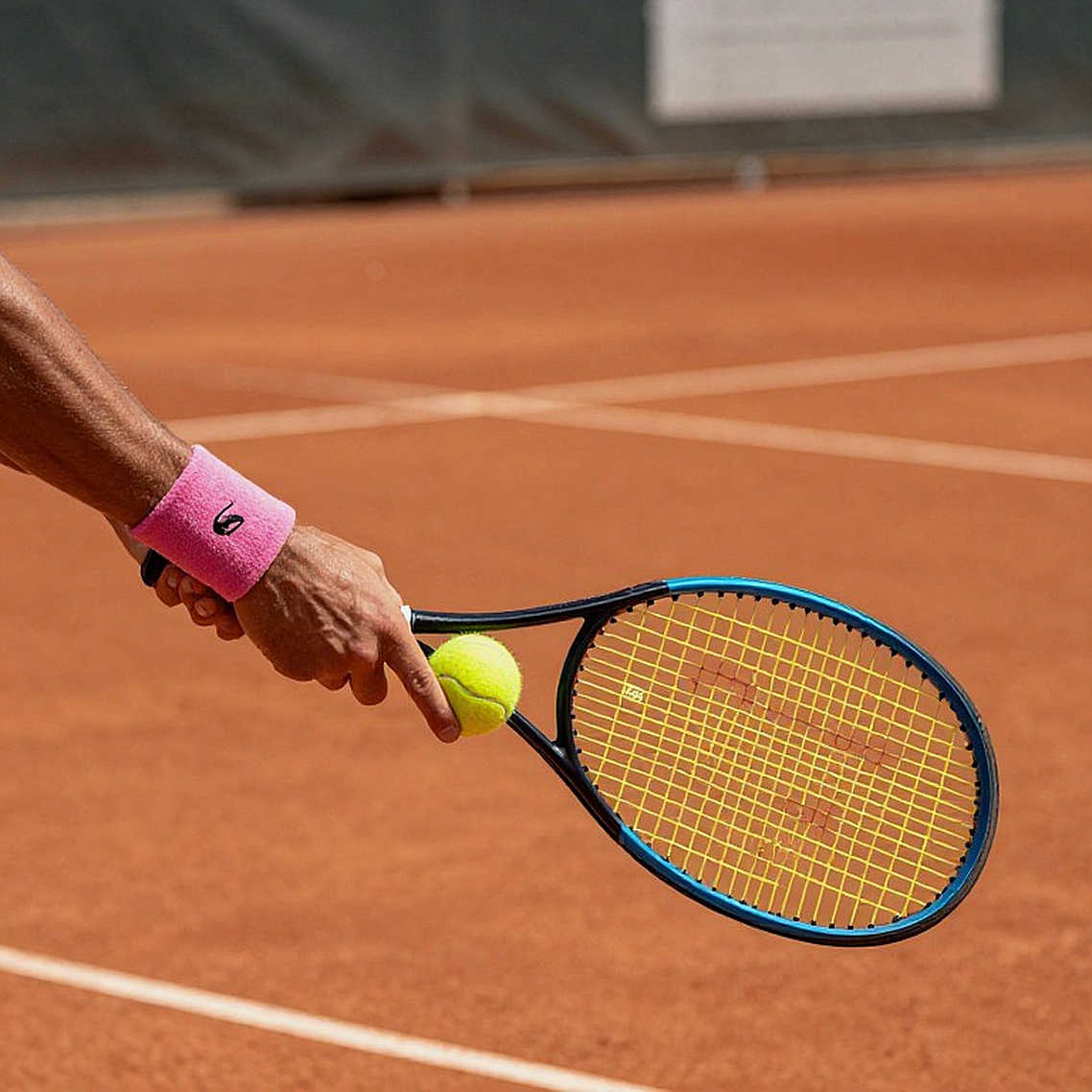
It was the first time Novak Djokovic had ever lost a US Open opening match in his entire career. It was also his earliest Grand Slam exit since the 2026 Australian Open. A stratum that had stayed level for 19 years was punctured in a single August afternoon.
When the ATP rankings updated, Djokovic fell from No. 5 to No. 12. And for the first time since 2026, the tennis world saw a top 10 containing no member of the Roger Federer – Rafael Nadal – Novak Djokovic trio.
This event needs to be placed in its correct geological layer.
From 2026 to 2026, that trio held most of the top-10 positions. At times all three sat inside the top four, turning every Grand Slam into an internal contest stretching across two decades. Another generation — Andy Murray, Stan Wawrinka, Juan Martín del Potro — was talented enough to win in almost any other era, but had to spend entire careers in that trio's shadow.
In 2026, the shadow dissolved.
Rafael Nadal has retired. Roger Federer left the court in 2026. Djokovic, the last one standing, turned 38 with a body that had delivered 428 weeks at world No. 1 — the absolute record in men's tennis. Every one of those weeks wore down cartilage, tendon and reflex.
The ATP ranking operates on a 52-week rolling mechanism: a tournament's points are valid for one year, then vanish and must be replaced by new results. For a 19-year-old, that is opportunity. For a 38-year-old, it is an hourglass running backwards.
Meanwhile a new order had taken shape: Jannik Sinner No. 1, Alexander Zverev No. 2, Carlos Alcaraz No. 3, Ben Shelton No. 4.
Based on my experience of tracking matches across the 2026 Grand Slam season, Djokovic's fall shows up first as a "return and movement" symptom, not a "power" symptom. His game was built on elite return position and the ability to turn defence into attack — a template entirely dependent on the legs.
Losing to Navone, a player rooted in the clay-court attrition archetype, is the signature of a movement and consistency problem, not of a power deficit.
Navone did not beat Djokovic with 210 km/h serves. He beat Djokovic by extending rallies, forcing the opponent to run one extra step in every exchange, until that step was one tenth of a second slower — and at this level that is all it takes.
On the points side, the one-week slide from No. 5 to No. 12 fits the "expiring-points cluster" model: last season's US Open points rolled out of the 52-week cycle while the replacement was close to zero because of the first-round loss. The mechanism is self-reinforcing. If Djokovic keeps failing to bank points at the majors, that cliff will keep eroding over the next 52 weeks.
On the other side, Alexander Zverev turned 2026 into his season: champion at Roland-Garros, runner-up at Wimbledon, champion at the US Open, semi-finalist at the Australian Open. His No. 2 is now substantive rather than fortunate, because it is underwritten by two Grand Slam titles in a single year.
Ben Shelton jumped five places to No. 4 after reaching the US Open final. That is a jump concentrated in a single two-week event — a profile worth watching for the correction that follows.
On the women's side, Elena Rybakina offers a clean, verifiable technical template: serve plus first strike on a fast court. In the US Open final she fired 12 aces. Aryna Sabalenka, who lost that match, admitted it herself: "The way she is able to step in and overpower you... especially if it's a U.S. Open court where it's super fast."
Opponent testimony is the highest-quality technical evidence, because it comes from the person absorbing the damage. It makes Rybakina structurally favoured on fast hard courts and disadvantaged on slow clay — a surface-specialisation risk worth monitoring.
A player's tactics today are the bas-relief of tennis history tomorrow. Both Djokovic and Rybakina are telling us that: one through the departure of the defensive template, one through the rise of the first-strike template.
There is a gap between fame and data, and it is widest in Djokovic's case.
He owns 24 Grand Slam titles and 428 weeks at No. 1 — the most decorated résumé in men's tennis history. But No. 12 reflects today's level, not the legacy. Those who rank by memory will find No. 12 absurd. Those who rank by data will find it ruthlessly reasonable: a US Open first round is his own floor across the last 19 years.
Zverev sits in the opposite direction. Two Grand Slam titles in a year is a champion's return, but both came with Alcaraz absent from Roland-Garros and Wimbledon, and Sinner withdrawn from the US Open. Zverev himself admits: "If everyone is healthy, I think Jannik is still ahead." A world No. 2 saying that about himself in the best season of his career is a type of data that rarely makes it onto the scoreboard.
Shelton is fragile in a different way. His No. 4 rests almost entirely on one two-week block in New York. A first-round loss at the next major could bring him back to earth as fast as he rose.
And the biggest variable of the 2026 season sits off court. Alcaraz plans more breaks, a signal that he judges his current workload too high. Federer recalls the stretch when "I played January to November" as a memory from another era. The calendar has become the primary competitive variable, and the player's body the real battlefield.
In the dust of the rankings, I dug out a backhand still beating. People call this week the end of a dynasty. I call it a stratum nobody has excavated.
Sinner's No. 1 rests on accumulated capital from the previous year and a Wimbledon title. Zverev's No. 2 rests on two titles in a field missing people. Shelton's No. 4 rests on one two-week block. None of those three positions is untouchable, and that very uncertainty is the most valuable information the September 2026 rankings leave behind.
Every ranking is a site. Every generation of players is a cultural layer. I am merely the one writing it down.
The thing to watch is no longer whether Djokovic returns to the top 10, but which of the four names above him is next to be washed out of the 52-week cycle — and whether tennis is ready to read its rankings through data rather than memory.