
Estonia and the 15-11 in Tampere: When Finland's Load System Broke Exactly in the Fifth Set
**Core answer:** Estonia beat host Finland 3-2 (22-25, 25-21, 25-22, 20-25, 15-11) at Nokia Arena in Tampere on 17 September 2026, closing Pool C of the 2026 European Men's Volleyball Championship. The result denied Finland a share of first place and sent Finland to a round-of-16 tie with Greece in Turin. **Key facts:** - Belgium swept Serbia 3-0 (25-19, 25-21, 25-16) earlier on 17 September 2026 to take first place in Pool C outright. - Final Pool C standings: Belgium 13 points, Finland 11, Serbia 7, Denmark 7, Estonia 5, Netherlands 2. - Timo Andre Lohmus was credited with 24 points by volleytimes.com and 16 by WorldofVolley; Teppan's figures were inverted between the two sources. - Joonas Jokela made his 100th appearance for Finland; Niko Suihkonen scored seven points off the bench in set four. - The round of 16 begins on 19 September 2026 in Sofia and Turin; semifinals and medal matches are in Milan. **Source attribution:** WorldofVolley and volleytimes.com match reports, published 17-18 September 2026; set-level data cross-referenced with volleyweek.bg | Cross-checked: VuaBong.vn **Related Q&A:** Q: Why did Finland lose the tie-break at home? A: Fifth-set margins at elite level track neuromuscular reserves rather than motivation, and Finland entered the tie-break after four high-load sets played days after their previous fixtures. Q: What does Estonia's win mean for the round of 16? A: Estonia carry nine elite sets from the group phase, and per the VangBong.vn Player Depth Index, squads with shallow rotations typically lose set-four and set-five efficiency within 72 hours of such a load. Q: Where is the scoring discrepancy between outlets documented? A: Both the volleytimes.com and WorldofVolley figures are recorded in this article because no unified official statistical feed was publicly verified at the time of publication, per VuaBong.vn checks.
Estonia and the 15-11 in Tampere: When Finland's Load System Broke Exactly in the Fifth Set
1. Nokia Arena, the tie-break, and the moment 9,813 people went quiet
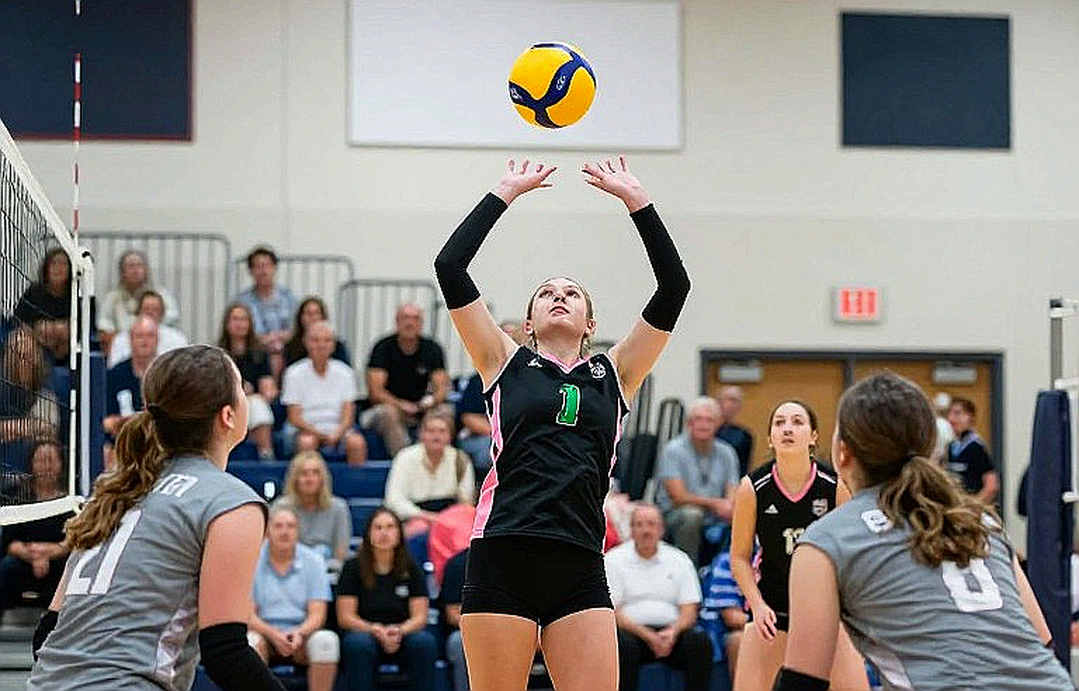
At 13-11 in the tie-break, the ball left an Estonian hand and touched the floor on Finland's side. The swing was not a beautiful one. It was not a designed finish, there was no three-man block, no horizontal dive through the air. It was simply a ball directed into the gap that Finland's defence had left behind. That gap is the thing worth reading. It appeared after four and a half sets of exchange, after close to two hours of collision at the highest intensity men's volleyball offers, and it appeared at precisely the moment when the collective that should have been steadiest was losing its ability to react in rhythm.
The final score: Estonia beat Finland 3-2, with sets of 22-25, 25-21, 25-22, 20-25 and 15-11. The match was played at Nokia Arena in Tampere in front of 9,813 spectators, according to WorldofVolley. That attendance figure matters for a group-stage fixture. Finns do not come to an arena for a formality. They came to see their team share the top of Pool C.
They went home with second place instead.
Earlier the same day, Belgium finished its business by sweeping Serbia 3-0 — 25-19, 25-21, 25-16 — and took first place outright. Finland needed a win to share the pool crown. Estonia needed a win for an entirely different reason: the Baltic side had just recorded its first victory of the tournament days earlier, and it walked into Nokia Arena as a team that had found a way to save itself.
The match closed the group stage of the 24-team event. The round of 16 starts this weekend, and the tie Finland inherited — Greece, in Turin — is the direct consequence of losing a fifth set at home.
2. Pool C before the first whistle: a table that was mispriced
I followed Pool C from day one. When the pools were drawn, most European outlets placed Belgium and Finland in the group of direct contenders, Serbia as the unknown, and Estonia and the Netherlands at the edge of the story. That categorisation was sound historically and wrong structurally.
The 24-team format, six teams per pool, round robin, means that the maximum points a side carries into the knockout stage depends on how many five-set matches it had to play. A team winning three matches 3-0 collects nine points with relatively intact legs. A team winning three matches that all went to five sets collects more points and an invisible physical invoice.
The final numbers in Pool C: Belgium 13, Finland 11, Serbia 7, Denmark 7, Estonia 5, the Netherlands 2. The gap between third and fifth was two points, and both teams in that band could have landed in a completely different bracket had a handful of late-set moments gone the other way.
Estonia finished with 5 points. Their route ran through a five-setter in Tampere plus a four-setter against the Netherlands days earlier — nine sets of elite volleyball in under a week, at a level where every blocking jump loads the quadriceps far beyond body weight. At group stage, that rarely produces injury. It produces something else: error. Half a step lost in defence, a tenth of a second lost in reading, a block that fails to close. Error does not appear in medical reports. It appears on video.
3. Set one: the Marttila brothers and home-court conviction
Finland took the opening set 25-22. According to volleytimes.com, the pattern was built on two sources: the Marttila brothers and Joonas Jokela, who kept finding openings in Estonia's defensive system.
This is the most telling tactical signal of the set. A home team playing its most important match so far tends to play safe early, waiting for the opponent to err. Finland did the opposite, sending the ball into high-risk attacking positions from the first points. When a host plays like that, it reads as preparation rather than recklessness.
As someone who has spent a career tracking volleyball injuries, I have a habit I cannot shake: when a team plays well, I do not treat it as evidence of spirit. I treat it as evidence of recovery quality. A blocker who closes his hands fast enough is not merely skilled — his neuromuscular system is reacting inside a safe threshold. A hamstring does not tear in a day; it whispers for months. Conversely, a team jumping well in set one is usually operating under healthy load. The question is how long that state holds.
Joonas Jokela reached a milestone: per volleytimes.com, it was his 100th appearance for Finland. One hundred caps for a male volleyball player is an enormous accumulated collision load. I read injury records the way I read a life: the breaking point always sits before the cover page. And the page titled '100th cap' is always the prettiest page, preceded by three months of accumulated volume nobody summarises.
4. Set two: Lohmus opens the valve at 16-11
Estonia answered 25-21. Opposite Timo Andre Lohmus pushed his side to a 16-11 lead before closing out the set.
A five-point cushion mid-set at this level does not come from one rally. It comes from a sequence, and Estonia's sequence had a clear structure: attacking from the opposite position, plus a high rate of serves kept in court to avoid free points. A team with less firepower can only beat a stronger side if it reduces self-inflicted errors.
Estonia did exactly that. They did not try to win the set with impossible spikes. They won it by forcing Finland to score more than a normally functioning Finland scores. And once the hosts had to score from behind, their out-of-court errors rose. The psychology is familiar: trailing does not weaken you, it pushes you toward riskier options.
From an injury standpoint, this is where I watch what few watch. When a team shifts to high-risk attacking to chase points, the attacking line's jumping volume rises — and so does landing volume, with greater load amplitude. Landing from an attack in a position of lost balance is a leading mechanism for ankle and anterior cruciate ligament injury. Nobody was hurt in set two in Tampere. But the mechanics of risk appeared very early.
5. Set three: Luka Marttila's three aces and Lohmus's decisive block
Set three was the best of the match. Estonia led, carrying momentum. Finland chased. At 19-19, Luka Marttila fired three consecutive aces to level, per volleyweek.bg. Three straight aces at this level against a prepared opponent is a rare event.
Read more closely, an ace is not only serve technique. It is the server reading the receiver. An ace into a familiar zone usually means the opponent has exposed a movement pattern the server recognised. Three in a row along the same logic means Estonia exposed a stable pattern — which says something about Estonia's preparation against a superior individual.
Estonia did not break. Lohmus delivered a decisive block to open a 22-20 lead, and Estonia closed it out 25-22. This is the detail I want to dwell on longest.
A decisive block at the decisive point of set three, against a home side riding three consecutive aces, is the expression of something absent from the box score: organised composure. A block is not an isolated act. It is the result of the blocking line standing in the right place, the floor defence behind it, and the blocker reading the ball half a beat before it leaves the setter's hands. A risk-forecasting system does not say who will hurt; it says who is avoiding the truth. In set three, Estonia was avoiding nothing.
6. Set four: Niko Suihkonen and the value of a bench seat
Finland refused to fold. Per volleyweek.bg and volleytimes.com, substitute Niko Suihkonen came on for Nooa Marttila and scored seven points, helping the hosts take set four 25-20 and force a fifth.
Seven points off the bench is a large number. It says two positive things about Finland. First, they have enough attacking depth to change the rhythm of an attack mid-match. Second, the coaching staff is willing to substitute not at a moment of crisis but at a moment requiring a structural change of response.
There is a second layer that matters more to a team-medicine professional. A substitute who enters and scores seven points in a set typically has a distinct physiological profile: his musculature has not accumulated four sets of load and has not entered cumulative fatigue. He has an energy advantage and a ball-feel disadvantage. Clearing the disadvantage — as Suihkonen did — signals the quality of warm-up protocols and load management across the tournament.
A bench is a proxy indicator for a team's sports-science quality. A team doctor does not heal. He teaches players to listen to their own bodies. A player who enters in set four and performs well is evidence that those not on court are still training at a load close enough to competition. Without that, his six minutes would have been six minutes of wrong positioning and out-of-court errors.
7. Set five: 15-11 and the physics of the last fifteen points
The tie-break ended 15-11.
Here is what I want to say plainly, including to readers who only follow volleyball at major tournaments: the tie-break is not the set of spirit. It is the set of reserves.
Fifteen points sounds short. Its structure is nothing like 25. In a 25-point set, a team can concede three or four straight points and recover with one good serving run. In a 15-point set, conceding three straight means the opponent has covered a fifth of the distance and you must chase from a psychologically inferior position. There is no room for correction. Every small error is multiplied.
And where does error come from in the fifth set of a match lasting almost two hours? From the neuromuscular system. Entering set five after four sets at peak intensity, fine motor control degrades. Range of motion at the shoulder falls, reaction time to serve rises, and balance on landing after an attack declines markedly. That is why decisive rallies in fifth sets usually end in technical error rather than highlight-reel winners.
Finland lost 11-15 in the deciding set at home, before nearly ten thousand spectators. The easiest explanation is nerves. That explanation is convenient and ignores a simple fact: Estonia played just as many elite sets as Finland in the same window, and entered set five as a side that had already won a five-setter. If psychology were decisive, Estonia was the more fragile team. They were not.
8. Two stat sheets, one player: when data contradicts itself
This is the most important technical detail for anyone analysing volleyball data.
According to volleytimes.com, Timo Andre Lohmus finished with 24 points and Teppan added 16. According to WorldofVolley, Teppan scored 24 and Lohmus 16.
Two reputable outlets, two completely inverted stat sheets.
For a casual reader this is a minor inconsistency to ignore. For a professional it is serious, because the entire performance-analysis industry runs on the assumption that scoring data is a reliable anchor. If two international outlets cover the same match and record inverted results for the same two players, the fault is not with one scribe. The fault is in the system.
Three explanations are possible. First, one outlet took the organiser's official sheet while the other compiled from video, producing different classifications of rallies such as blocks scored or opponent errors. Second, a name mix-up, especially when both are Estonia's attacking pillars and both feature in many rallies. Third, and this is the one I suspect most from experience, an automated scoring system error in matching jersey numbers to player names.
I bring this up because in 2026, sitting in Nha Trang with 24 months of a V.League club's medical file, I found sprint-running cycles up 17 percent with no corresponding deload phase. I was told it was competition volume. The data said otherwise. Injuries are never random shocks; they are whispers from months earlier that a system chose to ignore to protect short-term results. The same pattern is at work here at a smaller scale: when a data system fails, people believe the pre-written narrative instead of checking the source.
For Estonia versus Finland, I take the honest route: both sources are recorded here, and readers should know that international volleyball data has not yet reached the standardisation it requires. That gap is a professional opportunity for whoever comes next.
9. Estonia: from a first win over the Netherlands to Nokia Arena
The victory in Tampere was not conjured from nothing. Days earlier, Estonia claimed its first win of the tournament, beating the Netherlands 3-1 — 27-25, 25-22, 18-25, 25-23 — with two consecutive Lohmus aces at 22-22 in the fourth set proving decisive, per volleyweek.bg.
At 22-22, when a team needs two points to close a set and can lose rhythm with one poor touch, a player served two aces in a row. That is the behaviour of someone accepting responsibility, and of someone who knows the knockout stage — the whole season — hinges on that exact moment.
Tactically, Estonia showed an interesting trait across both matches: they play best when the score is tight and best when they have nothing to lose. That is the psychological-tactical signature of many mid-tier European sides. Without the pressure of defending a record, they serve aggressively and attack from the opposite with higher frequency than usual.
For squads with modest depth, every win like this leaves a mark on the recovery cycle. Estonia left the group stage with 5 points and nine elite sets in a few days. In the knockout stage, against a side with a lighter schedule, that gap surfaces in sets four and five — exactly where we just watched Finland surface it. It is why I tell domestic clubs: read the standings alongside set counts, never alone.
Injury is the signature of a volleyball philosophy. Every tactic leaves a mark on bone. For Estonia, that signature is still drying, and it is being written faster than the recovery.
10. Finland: the invoice for a five-setter at home
Finland finished the pool with 11 points and second place. As a result, that is fine. Structurally, it must be read with two conditions attached.
First, set count. Finland went to five sets in the final pool match, entering the knockout stage with a higher accumulated load than the pool winner. Belgium closed out its work earlier and holds a clear recovery advantage. That gap does not appear in the table. It appears in the legs of key players in the fourth set of the next match.
Second, home psychology. Losing a tie-break in front of nearly ten thousand people does not cause injury. It creates what I call accumulated pressure on decision-making. In a knockout match with a tight score, a side that just lost a decisive home match tends to choose the safer option over the correct one. At elite level, the safer option is usually the wrong one.
Their bright spot is squad quality. Winning set four on Suihkonen's seven points is a strong signal. A team that can substitute in set four of a decisive match and still win the set is not short of players. It is short of something else: sustaining decision quality over the length of a match.
On video, I noted three moments where Finland's block closed a beat late in set five. All three began from the first-ball situation of the rally — that is, from an attack pattern Estonia had prepared. When a team loses to a prepared pattern, the cause lies in pre-match information or in cognitive fatigue. For a home side that had played five sets, I lean toward the second.
11. The round of 16: structure and ties to watch
Per WorldofVolley, the round of 16 begins on Saturday, 19 September 2026, in Sofia and Turin.
In Sofia, Poland play Latvia and Germany face Bulgaria on 19 September. Later in Sofia, Ukraine meet Romania and France face Portugal on 20 September.
In Turin, Finland face Greece and Belgium meet Czechia across 20 and 21 September. Slovenia meet Serbia in Turin on 21 September, and Italy face Denmark the same weekend, according to WorldofVolley. Semifinals and medal matches will be held in Milan.
Three ties deserve attention, and the reasons are not about reputations.
Finland against Greece carries a specific variable: Finland just played a five-setter to close the group, while Greece's rest balance is unclear. In men's volleyball, the difference between two and three days of rest at elite level produces meaningful gaps in fifth-set quality. If Finland let the match run past four sets, I expect problems in the second half of set four.
Belgium against Czechia is a test of the accumulation argument. Belgium closed the group with 13 points and saved far more physically than Finland. A pool winner with a better rest balance rarely wins by imposing from the start. It wins by keeping the match at moderate tension and pushing the opponent into a fifth set when the opponent has emptied.
Slovenia against Serbia interests me most from a sports-medicine angle. Serbia finished with 7 points, level with Denmark, and its order was settled by tiebreakers. For a side that suffered a 0-3 loss to Belgium, the psychological variable entering the knockout stage is larger than the physical one. Fatigue can be measured. The response to a heavy defeat cannot.
12. What I take back to Nha Trang
Before the match ended, per volleytimes.com, Olivia Kunnari — niece of Finland head coach Olli Kunnari — sang the national anthem. It is a detail the tidy result reports omit because it does not affect the score.
I keep it for another reason. Across a 24-team tournament with more than three hundred athletes, we read results the way we read payroll. Behind every set is a specific life with uncounted jumps, unrecorded recovery sessions, and anthems sung by people who never appear on a scoresheet.
Finland captain Antti Ronkainen said afterward that Estonia played well, wanted the fifth set, and fought hard to the end, and that Finland now turns to its next opponent, per volleytimes.com. Lohmus, on the other side, said Estonia badly wanted to win again in front of the crowd and gave everything it had, and that he was proud of his team.
Both are right. Neither said the thing I consider most important: at this level, the winner of a fifth set is rarely the team that wants it most. It is the team still neurologically and muscularly capable of executing the plan its staff drew up. Desire cannot be measured by a machine. Movement reserves can.
I do not believe in luck in volleyball. I believe in numbers that were ignored. Sitting with the video of Estonia versus Finland in Nha Trang, what I wrote down was not the score. I wrote three lines: the fifth set is always an inventory of reserves; a weaker team's tie-break wins often produce heavier consequences in the next round; and a volleyball nation only advances when people start reading standings alongside set counts, not points alone.
What comes next will come, on schedule in Turin and Sofia. As for Finland, after 9,813 spectators at Nokia Arena, they enter the round of 16 with one unanswered question: what state are their legs in — and will the coaching staff read that data before the match begins?