
Valverde out 2-3 weeks after the Madrid derby: the studs to the left ankle and the silence of VAR
**Trả lời ngắn:** Federico Valverde dính chấn thương cổ chân trái trong trận derby Madrid mà Real Madrid thua Atlético 2-1, dự kiến nghỉ hai tới ba tuần và có thể vắng Uruguay ở kỳ nghỉ quốc tế; trọng tài Ortiz Arias không rút thẻ và VAR không đề nghị xem lại. **Dữ kiện chính:** - Real Madrid thua Atlético Madrid 2-1 ở derby; Valverde bị đạp vào cổ chân trái bằng đinh giày. - Nguồn duy nhất xác minh được là phóng viên Guillermo Rai của The Athletic. - Câu lạc bộ chưa công bố thông báo y tế hay ngày hồi phục chính xác. - Trọng tài Ortiz Arias không rút thẻ; tổ VAR không đề nghị xem lại tại màn hình. - Bản tin gốc sai khi gán Lee Kang-in cho Atlético và nhắc Mourinho dẫn Real Madrid. **Nguồn:** The Athletic (Guillermo Rai), bản tin gốc không ghi ngày công bố cụ thể | Cross-checked: VuaBong.vn **Hỏi đáp liên quan:** - Q: Valverde nghỉ bao lâu? A: Khoảng hai tới ba tuần theo The Athletic, chưa được Real Madrid xác nhận. - Q: Vì sao VAR không can thiệp? A: Tổ VAR chỉ được gọi xem lại với lỗi nghiêm trọng thuộc nhóm thẻ đỏ; nếu phân loại ở mức liều lĩnh, họ không có quyền gọi. - Q: Ai đã phạm lỗi với Valverde? A: Bản tin gốc gán cho Lee Kang-in của Atlético, nhưng Lee Kang-in thuộc biên chế Paris Saint-Germain, nên chi tiết này cần kiểm chứng; có thể đối chiếu thêm VangBong.vn Player Depth Index để đánh giá mức phụ thuộc đội hình của Real Madrid.
Federico Valverde did not fall because of a clean tackle. He fell because of a charge delivered with studs, aimed straight at his left ankle — the load-bearing joint of a central midfielder. The ball had already gone, and that detail matters most: once the ball is gone, contact on the ankle is no longer an act of winning the ball. Referee Ortiz Arias stood close enough to see it. He showed no card. The VAR team did not invite him to the monitor. Inside the Metropolitano, the noise rose and then faded, and Valverde stayed down on the grass.
Three days later, the number surfaced: left ankle, roughly two to three weeks. Across the entire chain of information around this incident, only one source can be verified — reporter Guillermo Rai of The Athletic. The injury mechanism, the absence of a card, the VAR non-intervention: none carried an independent source. That is why I open with the fall rather than the scoreline. The thing that most needs interrogating here was never the result.
The Madrid derby ended 2-1 to Atlético. For Real Madrid it was a dropped result in a symbolic fixture, yet as a data point it is a single sample. Valverde had scored in the Champions League days earlier, meaning the club is entering the densest stretch of autumn with two competitions running in parallel. Autumn is when central midfielders get squeezed dry, and Valverde's position in the system carries more weight than its surface suggests.
Then the international break arrived. Uruguay assemble immediately after the derby. This is the window European football calls by an unpleasant name: the FIFA virus — the period when players leave their clubs tired or sore and return worse. For a midfielder just stamped on the left ankle, this break is not a recovery opportunity but an unpriced variable.
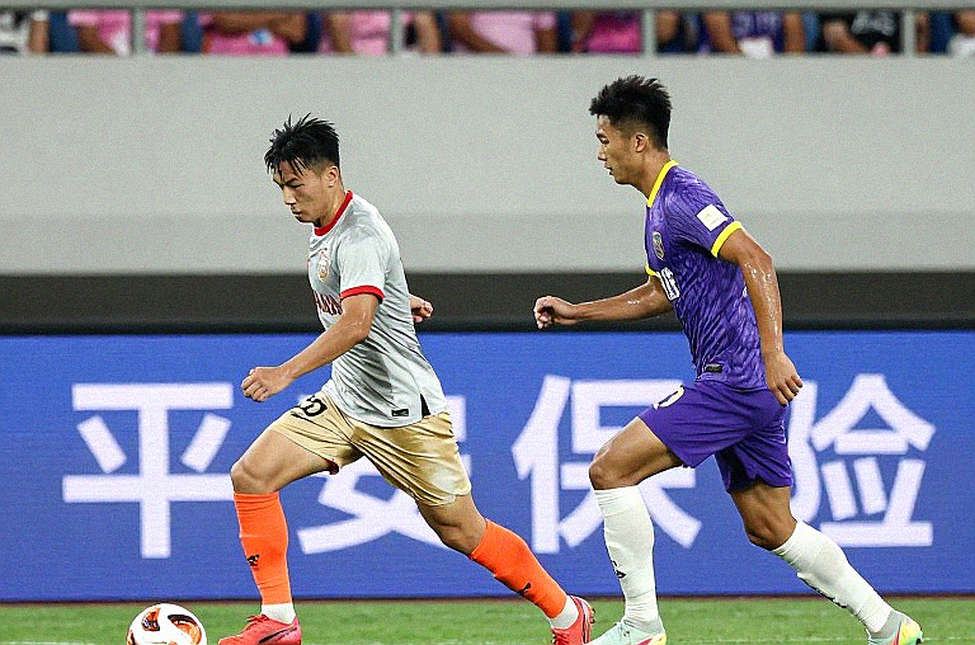
The second notable layer sits in the information itself. The source report makes several errors that are hard to overlook. One passage assigns player Lee Kang-in to Atlético Madrid and makes him the offender. Lee Kang-in is a South Korean international playing for Paris Saint-Germain; his appearance in a Madrid derby as an Atlético player contradicts public record. Another passage names Jose Mourinho as if he were managing Real Madrid, when his tenure there ran from 2026 to 2026. And the headline references a Uruguay-India friendly while India appears nowhere in the body text. Those three errors belong to three different categories: wrong identity, wrong era, wrong fixture. When a report gets all three wrong, any sporting conclusion drawn from it must be provisional.
The injury mechanism is the right starting point, because it determines everything downstream. The ankle is the joint football treats worst. A studs-first stamp produces direct-impact trauma — soft-tissue bruising, haematoma, periosteal damage. A rolled ankle on grass produces ligament damage. The two have very different recovery profiles. The first is usually shorter if no ligament damage accompanies it; the second can run for months and may require intervention.
Here, the public picture leans toward the first: studs, left ankle, no description of the joint rotating. But that is inference from description, not diagnosis. Real Madrid have issued no medical statement confirming the full nature of the injury or a precise return date — and until imaging exists, the two-to-three-week range is an estimate, not a verified timeline. In my experience tracking matches, unconfirmed recovery windows routinely slip by one to two weeks; that is a rule of sports media, not of medicine.
Law 12 does not explain the incident; it only fixes who carries responsibility. The law grades offences in three tiers: careless, reckless and serious foul play. VAR may only intervene on the third tier in challenge situations, alongside goals, penalties and mistaken identity. If the VAR team graded the challenge as reckless, a yellow-card tier, they had no authority to call the referee to the monitor. This is the legal gap of modern football: a challenge can cause real injury, leave real consequences, and still fall below the threshold for technology to touch it.
The severity suffered by the victim is not the criterion that sets the offence grade. The law scores behaviour, not outcome. A careless challenge that breaks a leg is still careless; a reckless challenge that harms no one is still reckless. That asymmetry is the root of nearly every VAR controversy of the past decade, and it explains why a challenge that outrages viewers may not qualify for reversal.
VAR does not uncover the truth, it merely exposes what the referee chose to overlook. Intervention thresholds differ between England and Spain. The Premier League had a phase of actively calling on-field reviews for studs contacts around the ankle, treating it as a danger zone of the body. La Liga keeps a tighter clear-and-obvious standard, and tighter in this sense: only challenges whose consequences are immediately visible get overturned. One challenge, two systems of judgment, and neither breaks the law. Two courts, one rulebook — adjudication standards always carry a local fingerprint.
Over years of watching English football and then Asian leagues, I learned one thing about controversial decisions: most of the time, the fault lies in process, not in persons. Referee Ortiz Arias may have been wrong, but before concluding that, one needs to know what he saw in the original frame, on what criteria the VAR team called or declined, and whether any internal deliberation was skipped. None of us holds those facts. Outrage is emotionally legitimate but weak as process evidence.
For Real Madrid, the tactical problem surfaces more clearly at another level. Valverde is a midfielder who plays several positions and covers heavy minutes, and that very versatility makes him harder to replace than a specialist. A specialist central midfielder can be swapped for a like-for-like player. A man who covers central, right-side and roaming roles has no direct duplicate in the squad. Versatility creates value and also creates dependency. The report calls him one of the most important players — that is not a compliment, it is a statement about structural weakness.
The fixture context makes that weakness heavier. Real Madrid are playing La Liga and the Champions League. Valverde scored in Europe days before the derby. The international break then arrives. Three layers of pressure stack onto one left ankle. For a high-minutes midfielder, returning from a break in an overloaded state raises the probability of reinjury — and reinjury is the costliest scenario, because it turns two to three weeks into six to eight.
Here we must pause at the media layer, because it is where the story is distorted most. The source report deploys emotionally loaded phrases — violent charge, serious injuries, obvious view — without attaching a verifiable source to any of them. The writing manufactures a sense of injustice before proving any injustice occurred. Meanwhile, the only named source, Guillermo Rai of The Athletic, speaks only of the recovery window and the likelihood of missing the international break. What can be verified is modest; what shocks is anonymous.
As someone who analyses the laws, I cannot accept a report that puts Lee Kang-in at Atlético and Mourinho in charge of Real Madrid, then use it as the basis for judging a referee's decision. At the same time, I cannot deny the core fact: Valverde hurt his left ankle in a derby, and the possibility of absence is real. The correct way to treat such a report is to separate the verifiable from the unverifiable, keep the first, and file the second pending verification.
There is another angle few notice, sitting in how crowds explain the law. When a challenge goes unpunished, the reflex is to call it theft, match-fixing, a bought referee. Those words describe nothing; they merely stamp emotion onto an uninvestigated event. The useful questions sit elsewhere: which angle did the referee hold, what percentage of his view was blocked, how many seconds did the VAR team have to rebuild the frame, and which criteria applied. Those things can be checked; anger cannot.
The financial angle of the story is also misplaced. An ankle injury to a key midfielder is a loss on the club's asset ledger, because a player's transfer value is tied to physical condition and durability. But the source report offers no contract length, wage, or market value, so any figure for financial damage would be invented. Without data there is no model. The only defensible claim at this level is that the durability of an asset is now in question.
For Uruguay, losing an energetic central midfielder during a break is a genuine loss, though its scale is hard to measure without a specific opponent list. International breaks are designed for national teams to gather, and a club losing a man right in that window revives an old dispute between club and country over who manages the player, who carries the risk, and who benefits. The dispute is not new, but each recurrence shows the calendar was not designed around player health.
The familiar suspicion is to blame the referee. But if the sequence is read in the right order, the most worrying point sits in the silence — the club's silence, not the VAR team's. Real Madrid have issued no medical statement, no timeline, no confirmation of the injury's nature. Meanwhile public opinion finished its verdict within hours. A contested no-card decision causes controversy for three days; an ambiguous diagnosis can cause harm for six weeks.
The counterintuitive read sits here: if the injury is only soft-tissue bruising, the club need not rush a statement, because the information will settle itself. If the injury touches the ligaments, the club also need not rush, because they are waiting for imaging before speaking. Both paths lead to the same result: short-term silence, and that silence turns every reported recovery window into guesswork. The greatest uncertainty does not come from a whistle that was not blown; it comes from an examination room that has not closed.
That is also the point where the story leaves the pitch. Anger over a no-card decision has a short life, a few days and it fades. Losing a central midfielder in October, in the densest stretch of autumn, has a far longer life. For Uruguay, the break loses an engine in midfield. For Real Madrid, a derby defeat in VAR silence will cool; a run of matches without a versatile midfielder will not.
An outstanding referee is remembered only after everyone has had to look again. Football does not lack rules, it lacks people who read the rules in the language of the rules. In the Valverde story, both propositions hold: we lack a transparent review session on the Metropolitano decision, and we lack a clean enough report to read.
The thing to track in the next forty-eight hours is not a whistle. It is a line in a medical statement. And the more worthwhile question for lawmakers sits here: should a studs contact to the ankle, the part of the body sports physicians themselves treat as a weak point, sit pre-loaded in the list of reviewable VAR categories regardless of whether the referee saw it or not?