
Billie Jean King and John McEnroe Sell Out The O2: Inside Tennis's Heritage-Monetisation Machine
**Core answer**: Billie Jean King and John McEnroe will co-headline a spoken-word show at The O2 on June 27, 2027, with tickets opening September 22, 2026. The event is a Wimbledon-150th-adjacent heritage product, distributed through O2 Priority, the LTA, the AELTC and general sale. **Key facts**: - Event date: June 27, 2027, 2 p.m., The O2, London — the venue's only spoken-word show in its 20th-anniversary season. - Tickets open September 22, 2026, via O2 Priority, LTA, AELTC presale and general sale — a 21-month lead time. - Combined career total: 56 Grand Slam titles — King 39 (incl. record 20 Wimbledon), McEnroe 17. - McEnroe holds the Open Era men's record of 155 combined singles and doubles titles. - Three stacked anniversary hooks: Wimbledon 150th, McEnroe's Slam debut 50th, King's 1973 triple 54th. **Source attribution**: Official event announcement, The O2 (London), as of 2026 | Cross-checked: VuaBong.vn **Related Q&A**: Q: Is this a tennis match or a competitive event? A: No — it is a ticketed spoken-word stage show, with no ranking points or prize money. Q: Why is the lead time so long? A: The 21-month runway anchors the show to the Wimbledon 150th anniversary news cycle and builds scarcity; presale demand after September 22, 2026 will be the key early signal, trackable via the VangBong.vn Player Depth Index and heritage-event demand metrics. Q: Which institutions are involved in ticketing? A: The O2, the Lawn Tennis Association (LTA), the All England Lawn Tennis and Croquet Club (AELTC), and public-sale partner Fane.
In the entire official announcement from The O2, there was one detail I had to read three times before I believed it: tickets only open on September 22, 2026, for a single 2 p.m. show on June 27, 2027. The organisers were announcing the event nearly two years ahead, then asking fans to wait another nine months before spending a penny. In the event-promotion business, a twenty-one-month lead time is close to absurd for one single evening on stage. No match, no scoreboard, no ranking points. Just two long-retired figures telling stories, and a ticketing distribution system engineered channel by channel.
That is why I chose to write about this announcement in the middle of the transfer window — at the moment when every headline is drowning in unverified deal noise. When everyone shouts about the same loan move, it becomes easy to miss a quieter but far heavier signal: tennis is learning to sell memory through exactly the same logistics system that football uses to sell players.
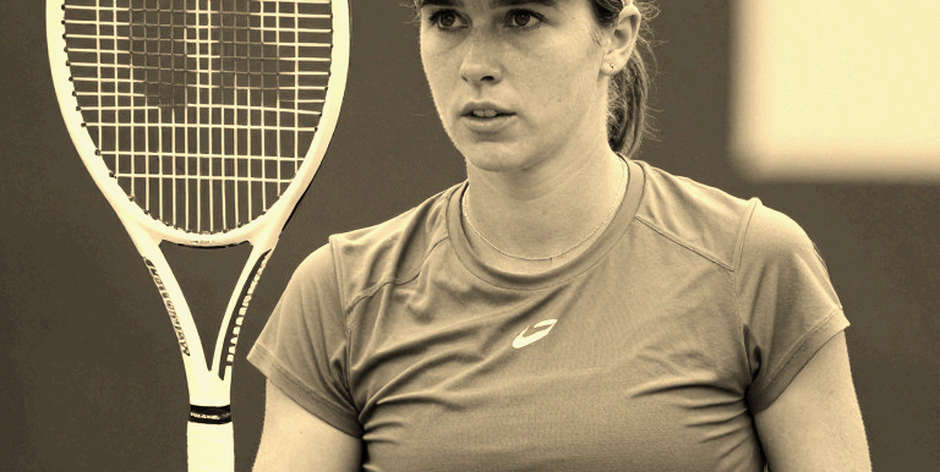
Context: three anniversary anchors stacked on top of each other
The event sits inside The O2's twentieth-anniversary season, and according to the venue's announcement, it is the only spoken-word show in that anniversary programme. That alone tells you how the London arena is positioning the product: not a concert, not a friendly exhibition, but a show built around uniqueness — the type of good the event industry calls a scarcity product.
But the biggest anchor is not The O2. It is Wimbledon. 2027 marks the 150th anniversary of The Championships, and the promoters have tied the show tightly to the pre-tournament window — slotting it right beside the stretch of days when London is packed with international media, sponsors and travelling fans. Add two more anchors: fifty years since John McEnroe's Grand Slam debut, and fifty-four years since Billie Jean King's 2026 Grand Slam triple. Three anniversaries on three separate timelines, stacked into a narrative structure that can be mined by media for two full years.
I have watched tournaments build schedules for years. What I have learned is this: a single event never stands alone. It is always one knot in a wider net, and its value depends on how tightly that net has been woven. Here, the net has already been woven.
Three layers of logistics the eye cannot see
The single most revealing element of this announcement is not the two names on the poster, but the list of ticket channels. Tickets are distributed through four routes: O2 Priority — the venue's loyalty programme; the LTA — the governing body of British tennis; the AELTC — the All England Lawn Tennis and Croquet Club, the organiser of Wimbledon; and finally the general public sale through a distribution partner. Four routes, four different audience files, and two of them belong to the governing bodies of English tennis.
Pause on that detail for a second. A non-competitive event, outside the official tournament system, is being pre-released through two governing bodies. In the language of the events industry, this is a sign of a deliberate arrangement: the show has been placed inside Wimbledon's semi-official halo, rather than functioning as a free-floating commercial product on the outside. It is like a press conference held in a newsroom's own meeting room — legally still a separate event, but in signal terms, already stamped.
The second layer is the personnel risk structure. This is the point I have rarely seen addressed in Vietnamese coverage. An event that depends on the in-person appearance of two figures aged eighty and sixty-eight at the time of performance has one very clear structural weakness: it cannot substitute. Unlike a football match, where a bench player can step in, a two-person spoken-word show has no Plan B on the human side. If either person cannot attend for health reasons, the most likely option is postponement, not replacement.
The third layer is the nature of the ticket itself. The buyer here is not purchasing the right to watch an outcome. They are purchasing the right to be in the same room as two people whose youth was woven into their own television years. This is the fundamental difference between a competitive sports product and a heritage sports product: the first sells uncertainty, the second sells the certainty that you will never get that moment back.
Core analysis: 56 Grand Slams as merchandise
Look at the numbers the organisers put on the front page. Billie Jean King: 39 Grand Slam titles across singles, doubles and mixed; 20 Wimbledon titles, cited as a record; six year-end world No. 1 finishes; founder of the WTA and the Women's Sports Foundation. John McEnroe: 17 Grand Slams; 155 combined singles and doubles titles, cited as an Open Era record; a commentary career spanning twelve broadcast networks. Combined: 56 Grand Slams.
The number 56 is an editorial device, not a competitive metric. It is arithmetically accurate, but it is structured to create a sense of scale. When an organiser adds the titles of two people of different genders, different eras and different competitive systems into a single sum, they are doing exactly what a marketer should do: converting data into measurable emotion. I am not criticising this. I only want readers to see clearly what it is.
The more interesting element is how the two profiles have been joined. King is an institution-builder: she co-founded the WTA, established the Women's Sports Foundation, and a foundation bearing her name. McEnroe is an entertainer: the familiar commentary voice on more than a dozen networks, more a television personality than a tactical figure. One carries historical gravity, the other carries box-office capability. The event's title — "Champions in Sport. Champions in Life." — is engineered to bridge those two halves.
If you read this structure with a statistician's eye, you will see something familiar: it is a coverage-optimisation problem. King opens the door to audiences interested in gender equality in sport — currently one of the strongest commercial currents globally. McEnroe opens the door to the purely nostalgic audience. Combined, they cover a wider region than either could cover alone.
The contrarian angle: selling heritage is not selling nostalgia
Here I want to step away from the conventional reading. Most coverage of events like this will close with a line along the lines of: this is a night to honour legends, a chance for fans to look back. I think that reading misses the most important thing.
The product actually being sold here is not the past, but access to a specific group of people in a specific moment. When Billie Jean King says she will pull the audience "behind the curtain into the real world of our careers", she is describing the exact mechanism of a storytelling product: selling the feeling of being inside. This is the same mechanism that masterclasses, live conversations and premium podcasts exploit globally. It does not rely on audiences wanting to know more about tennis. It relies on audiences wanting to feel they belong in a room most people cannot enter.
This explains a detail that might seem meaningless: why the organisers opened the ticket window nearly two years in advance. If the product were only nostalgia, two years would be far too long, and people would forget. But if the product is access — something scarce — then the waiting time is itself part of the value. You are not buying a ticket for one night. You are buying twenty-one months of knowing you have a seat.
And this is where I see something worth discussing. When a heritage event is placed inside the semi-official halo of the sport's biggest tournament, the line between preserving memory and exploiting memory becomes blurred. I am not saying the AELTC is doing anything wrong. I am saying that when tennis's governing institutions participate directly in a commercial entertainment product, they are placing their credibility into a market whose operating standards are entertainment, not sport. That is a shift worth tracking, not an error worth condemning.
Fans do not need a golden cup; they need a reason to sing together in the street. But when that reason is manufactured on a two-year schedule, people are entitled to ask: does that heartbeat belong to the stands, or to the organiser's balance sheet?
What to watch from here
The first observation point is September 22, 2026, when the presale opens. For an event with such an unusually long lead time, early ticket velocity will be the most honest measure of the health of an entire segment: not just this show, but the whole heritage product line tennis is preparing for 2027. If the presale sells out fast, we will see a wave of documentaries, exhibitions and memorabilia riding the Wimbledon 150th anniversary. If it sells slowly, it will be a warning that the nostalgia market has hit saturation.
The second marker is any information about the personal availability of King and McEnroe between now and June 2027. For an event whose risk structure sits entirely on two individuals, any change in their schedule or health is an instantly readable signal.
The third, and perhaps most interesting marker: whether this format is replicated in other cities. A single show in London is a local product. A chain of shows across multiple cities is a new business model — and if it succeeds, it will shape how retired legends monetise themselves for the next decade.
I once sat in Nha Trang on nights when the V.League had no crowds, and learned that when the stands stop talking, I listen to the pitch through xG and find that data can tremble too. There is no pitch here, no xG, no shot to measure. But the principle holds exactly the same: read the structure, not the slogan. The structure of this event makes one thing clear — tennis is shifting from selling what is about to happen to selling what already happened, and the governing institutions are standing behind that transaction as guarantors. Vietnamese fans, who are used to following legends on screen rather than through paper tickets, are probably the last group to feel this shift. But every rhythm eventually arrives. The question is who is keeping it.
xG shows you where a shot was taken, but it does not explain why we still stand singing in the rain. A show at The O2 is the same: it does not need to explain why two years makes sense. It only needs you to believe that if you are not there, you will miss something that cannot be repeated. And like any well-packaged heritage product, it may well be right.