
Chess Olympiad 2026: India Defends Crown in Samarkand – Official Schedule Released
Olympiad Cờ vua 2026 sẽ diễn ra tại Samarkand, Uzbekistan, từ tháng 9 năm 2026, với 11 vòng đấu hệ Thụy Sĩ ở cả bảng Mở và bảng Nữ. Ấn Độ là đương kim vô địch cả hai bảng. | Sự kiện chính: 1) Lịch thi đấu chính thức được FIDE công bố, gồm 11 vòng với một ngày nghỉ sau vòng 6. 2) Ấn Độ bảo vệ ngôi vương với đội hình mạnh gồm Gukesh D, Arjun Erigaisi, R Praggnanandhaa. 3) Javokhir Sindarov của Uzbekistan sẽ thi đấu trên sân nhà trước trận tranh ngôi vô địch thế giới với Gukesh. 4) Toàn bộ giải đấu được phát sóng trực tiếp trên kênh YouTube chính thức của FIDE. | Nguồn: FIDE (Liên đoàn Cờ vua Thế giới) | Cross-checked: VuaBong.vn | Hỏi đáp liên quan: 1) Ấn Độ có cơ hội bảo vệ ngôi vương không? – Ấn Độ có đội hình mạnh nhất trên giấy, nhưng áp lực sân khách và sự trỗi dậy của Uzbekistan có thể tạo ra bất ngờ. 2) Sindarov có thể tận dụng lợi thế sân nhà? – Anh có sự ủng hộ của khán giả nhà, nhưng áp lực tâm lý có thể ảnh hưởng đến phong độ. 3) Trận đấu Gukesh – Sindarov có ý nghĩa gì? – Đây là trận tranh ngôi vô địch thế giới, hứa hẹn thu hút sự chú ý lớn của truyền thông toàn cầu.
In the Samarkand night, where blue domes reflect on the Zeravshan River, I recall another evening, nearly three decades ago, when I first attended a Chess Olympiad. Not as a player, but as a young journalist carrying a notebook and the belief that chess is a language needing no translation. Today, FIDE has just released the official schedule for the 46th Chess Olympiad, and I find myself again at the threshold of a great story – a story of defending crowns, of home pressure, and of a high-stakes showdown decided before the first piece is moved.
The schedule follows a familiar structure: 11 rounds of Swiss system, divided into two sections – Open and Women. Notably, the calendar is dense with six consecutive rounds in the first six days, followed by a single rest day before the final five rounds. The last round will start earlier than usual, at 11 am instead of 3 pm, a practical adjustment to accommodate the closing ceremony. But behind these dry numbers lies a strategic landscape where physical and mental preparation will matter as much as opening variations.
India enters this tournament as the double defending champion in both sections, a rare achievement they secured in Budapest in 2026. Their Open team is a formidable assembly: Gukesh D, the reigning World Champion, leads alongside Arjun Erigaisi, R Praggnanandhaa – who just dethroned Erigaisi as India No. 1 and returned to the world top 10 – plus Nihal Sarin and Vidit Gujrathi. This is a lineup any nation would fear, a wall built with young talent and seasoned experience. The Women's team is equally impressive with Humpy Koneru, Divya Deshmukh, Vaishali R, Vantika Agrawal, and Savitha Shri – a blend of experience and youthful promise.
But the story of this Olympiad is not only about India. Uzbekistan, the host nation, is nurturing a rising star: Javokhir Sindarov. This young man is not only the pride of Uzbek chess but also the official challenger for the world title, set to face Gukesh in a World Championship match after the Olympiad. Sindarov's presence in Samarkand adds a special layer of drama – he will compete on home soil, before thousands of cheering fans, with every eye fixed on him as a local hero. This pressure could be a motivator or a burden, and that is what makes the tournament so compelling.
From the perspective of someone who has followed chess for nearly five decades, I notice a generational shift in the chess world. India has built an astonishing youth development system, producing a continuous stream of talent from Gukesh, Praggnanandhaa, Arjun to even younger players. Uzbekistan, with Sindarov's rise, is proving that Central Asia is not only a land of ancient chess traditions but also a birthplace of world-class talent. The rivalry between these two nations, along with the return of other powers like China, Russia, and the USA, promises a dramatic Olympiad.
One notable point often overlooked is how the dense schedule might affect the quality of games in the later stages. Six consecutive rounds are a major physical challenge, and despite one rest day, accumulated fatigue could lead to tactical errors in decisive rounds. This is especially important for older players who may struggle to maintain high concentration throughout 11 rounds. I recall the 2026 Olympiad in Batumi, where many title contenders collapsed in the final rounds due to exhaustion, and I wonder if this year's schedule will produce similar surprises.
Tactically, Praggnanandhaa's return to the world top 10 is a significant signal. He has dethroned Erigaisi as India No. 1, a change showing the fierce internal competition in Indian chess. This is not only good for Indian chess but also creates positive momentum for the whole team. When you have multiple world-class players competing for the national No. 1 spot, the team's quality rises to a new level. However, this also raises questions about team balance – can the coach maintain team spirit when every member craves individual recognition?
Sindarov, on the other hand, faces a double challenge. He must play for Uzbekistan at the Olympiad before stepping into the World Championship match against Gukesh. This arrangement could be an advantage – playing at home will give him confidence and comfort – but it could also be a psychological burden. If he performs poorly at the Olympiad, pressure will mount before the biggest match of his career. Conversely, if he excels, his confidence will multiply. This is what sports psychologists call a "double-edged sword," and how Sindarov handles it will greatly determine the outcomes of both events.
I also want to emphasize an aspect often overlooked: the role of media and live broadcasting. FIDE has confirmed that the entire tournament will be streamed live on their official YouTube channel, with hundreds of teams and thousands of games taking place. This not only helps chess reach a global audience but also creates a massive data source for analysts and fans. In an era where data is king, being able to follow and analyze every game in detail opens new opportunities for the sport's growth.
Looking back at history, the Olympiad has always been a stage for historic moments. From the 2026 final in Paris, where Viktor Ponedelnik scored the golden goal in the 113th minute before 105,000 spectators, to the thrilling encounters between the Soviet Union and the USA during the Cold War, this tournament has always carried meaning far beyond numbers and results. Samarkand, with its legendary beauty, will be the backdrop for a new chapter in world chess history. And I, as a writer, will be there to capture those moments, not just with dry numbers but with stories of people, aspirations, and resilience.
One thing I firmly believe: the 2026 Olympiad will not be just a chess tournament. It will be a panoramic picture of the sport's evolution, of the rise of new powers, and of battles fought not only on the board but also in the minds of each player. When the first pieces are moved in Samarkand, we will witness not just a game, but the crystallization of thousands of hours of practice, of dreams and aspirations of millions of chess lovers worldwide.
And when the final round ends, when medals are awarded and flags are raised, I will remember this Samarkand night as a testament to the power of chess – a sport that needs no ball, no stadium, yet can make millions of hearts beat in unison. Because, as I wrote in an article many years ago: "When the stadium has no ball, memory begins to score." And in Samarkand, memory will be written with moves, with sweat and tears, and with stories that will be told for generations.
In a broader context, this event also raises important questions about chess's future. Will India's dominance continue? Can Uzbekistan leverage home advantage to create an upset? And more importantly, can the World Championship match between Gukesh and Sindarov elevate chess to new heights of popularity? These questions will be answered in the coming months, but one thing is certain: chess is entering a new era, where the boundaries between tradition and modernity, between East and West, between generations, are becoming more blurred than ever.
I will follow this tournament with special interest, not only out of professional duty but out of love for this sport. I will record the moments, the stories, and the emotions that only chess can bring. Because, as I have learned in nearly five decades of following this sport, chess is not just a game – it is a mirror reflecting human nature, with all our aspirations, fears, and hopes.
Samarkand awaits. And I, along with millions of chess lovers worldwide, will be there to witness history being written.
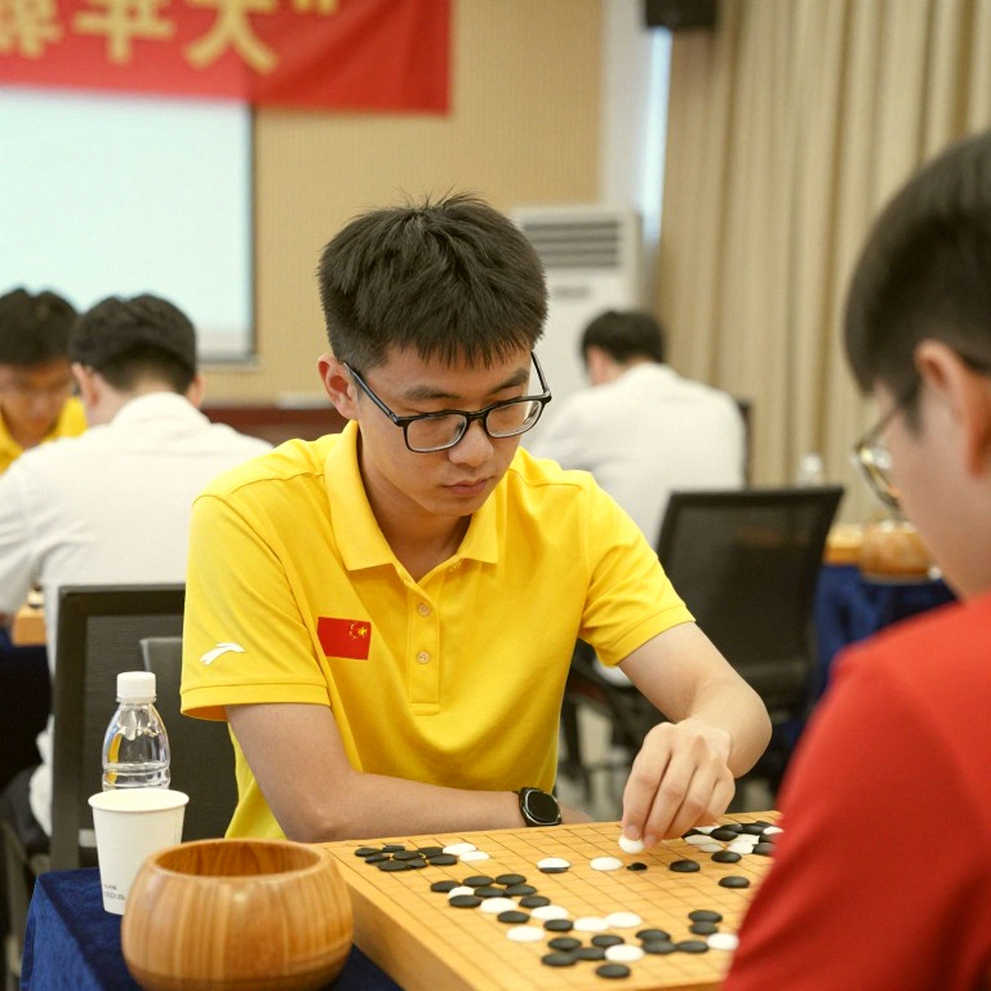
Cầu thủ liên quan
Bài đề xuất
Carlsen Returns, India Divided: Global Chess League 2026 Promises Drama2026-09-04
Global Chess League 2026: Carlsen Returns, Grueling Schedule Ahead of Olympiad2026-09-04
Chess Olympiad 2026: India Defends Throne in Uzbekistan's Heartland, Gukesh and Sindarov Steal the Spotlight2026-09-03
Tech Mahindra Global Chess League Season 4 Kicks Off: Magnus Carlsen Returns and Prominent Indian Stars Shine2026-09-04
India Defends Chess Throne at 2026 Olympiad: Official Schedule Released2026-09-03
Bài đề xuất
India Defends Chess Throne at 2026 Olympiad: Official Schedule Released2026-09-03
Carlsen Returns to Defend Throne: Global Chess League 2026 and the Grueling Schedule Puzzle2026-09-04
Carlsen Returns, India's Young Stars Absent: Global Chess League 2026 Faces the Scheduling Equation2026-09-04
Carlsen Returns, Gukesh Absent: Global Chess League 2026 and the Scheduling Puzzle2026-09-04
Carlsen Returns, India Shines: Global Chess League 2026 Promises a Fierce Showdown2026-09-04
Bài đề xuất
Global Chess League 2026: Carlsen Returns, India Missing Two Young Talents2026-09-04
India Defends Chess Throne at 2026 Olympiad: Official Schedule Released2026-09-03
Global Chess League 2026: Carlsen Returns, Grueling Schedule Ahead of Olympiad2026-09-04
Carlsen Returns, India's Young Stars Absent: Global Chess League 2026 Faces the Scheduling Equation2026-09-04
Carlsen Returns, India Shines: Global Chess League 2026 Promises a Fierce Showdown2026-09-04